Few art forms capture the soul of an island the way Balinese dance captures Bali. Dynamic, angular, and intensely expressive, it is far more than entertainment: for centuries it has been a form of devotion, a way of telling sacred stories, and a bridge between the human world and the divine. From the flickering eyes of a Legong dancer to the hypnotic chant of a hundred men in the Kecak, Balinese dance is the living heartbeat of the island’s culture.
This guide explains what makes Balinese dance so distinctive, why UNESCO recognises it as a treasure of humanity, the three sacred-to-secular genres and the nine landmark dances within them, the most famous performances to know, where to watch them, and how families can even learn the art first-hand during a stay in Sanur.
How to Watch (and Learn) Balinese Dance
- What Makes It Unique: Balinese dance tells stories through the entire body — gestures of the hands, eyes, and posture — rather than through words.
- The Music: Balinese dance is inseparable from the gamelan, the percussion-led orchestra of bronze metallophones, gongs, and drums that accompanies it.
- For Families: The Meru Sanur offers guests the chance to learn Balinese dance as a family, turning watching into hands-on participation.
- Program Details: The Meru Sanur’s family dance offering has run since 2025 and continues into the 2026 season.
- What to Watch For: Eye movement and posture carry as much of the story as hand gestures, and are easy to miss on a first viewing.
What Makes Balinese Dance Unique?
Balinese dance tells stories not through words but through the entire body, with meaning carried in the gestures of the fingers, hands, head, and especially the eyes. Where Western dance often flows in soft, continuous lines, Balinese dance is built on sharp angles, sudden accents, and a coiled, grounded energy that can shift from stillness to explosive movement in an instant. That same physical devotion, channeling the body toward something sacred, appears again in Bali’s purification rituals.
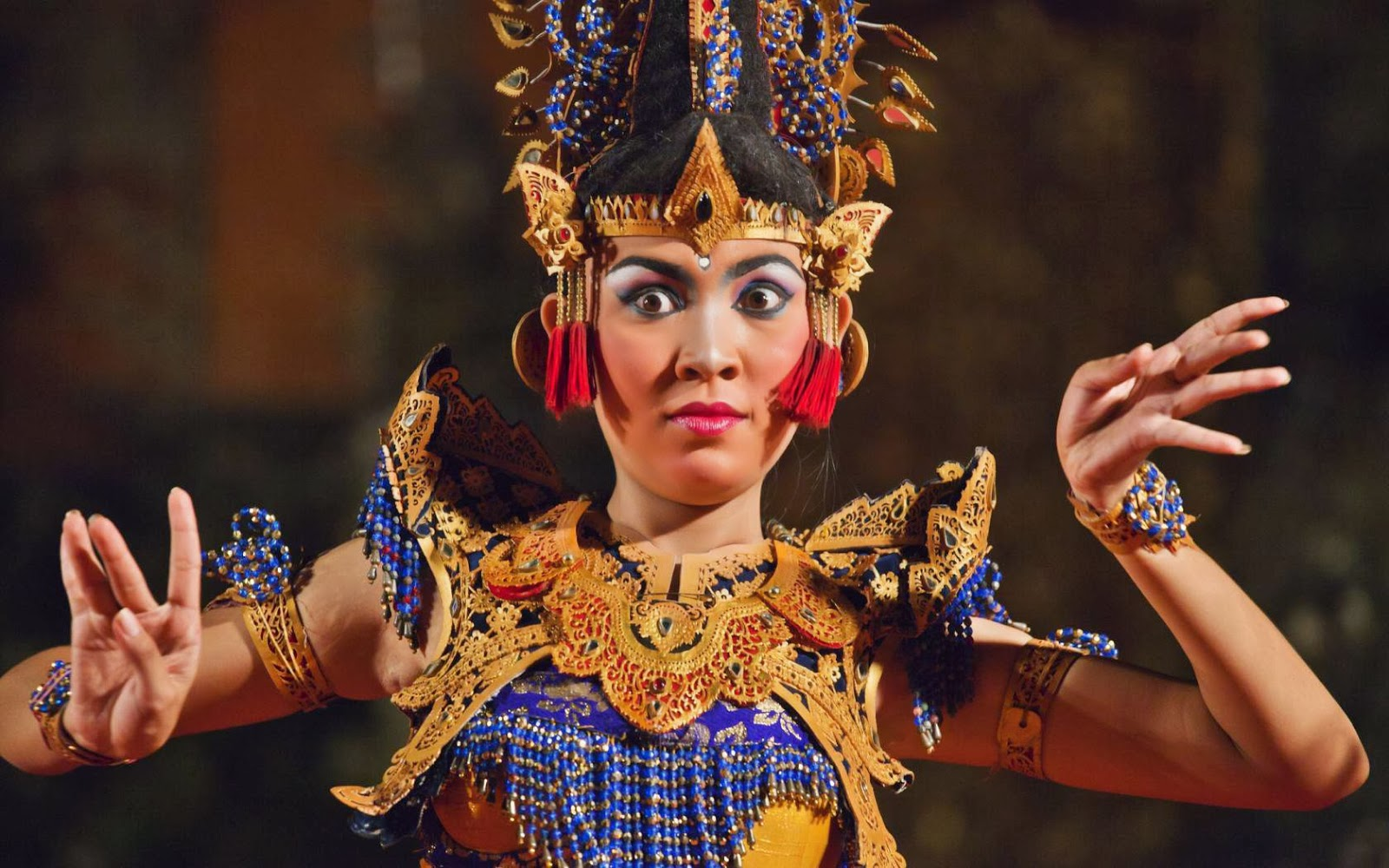
Several signature elements define the form. The agem is the foundational posture, knees turned outward, stomach drawn in, body held in a low, stable stance. The seledet is the dance’s most mesmerising feature: the rapid, darting flick of the eyes to one side, perfectly timed to a beat of the music, conveying emotion with startling precision. The hands speak through mudra, intricate symbolic gestures, while the face moves through a vocabulary of expressions revealing happiness, sadness, anger, fear, and love.
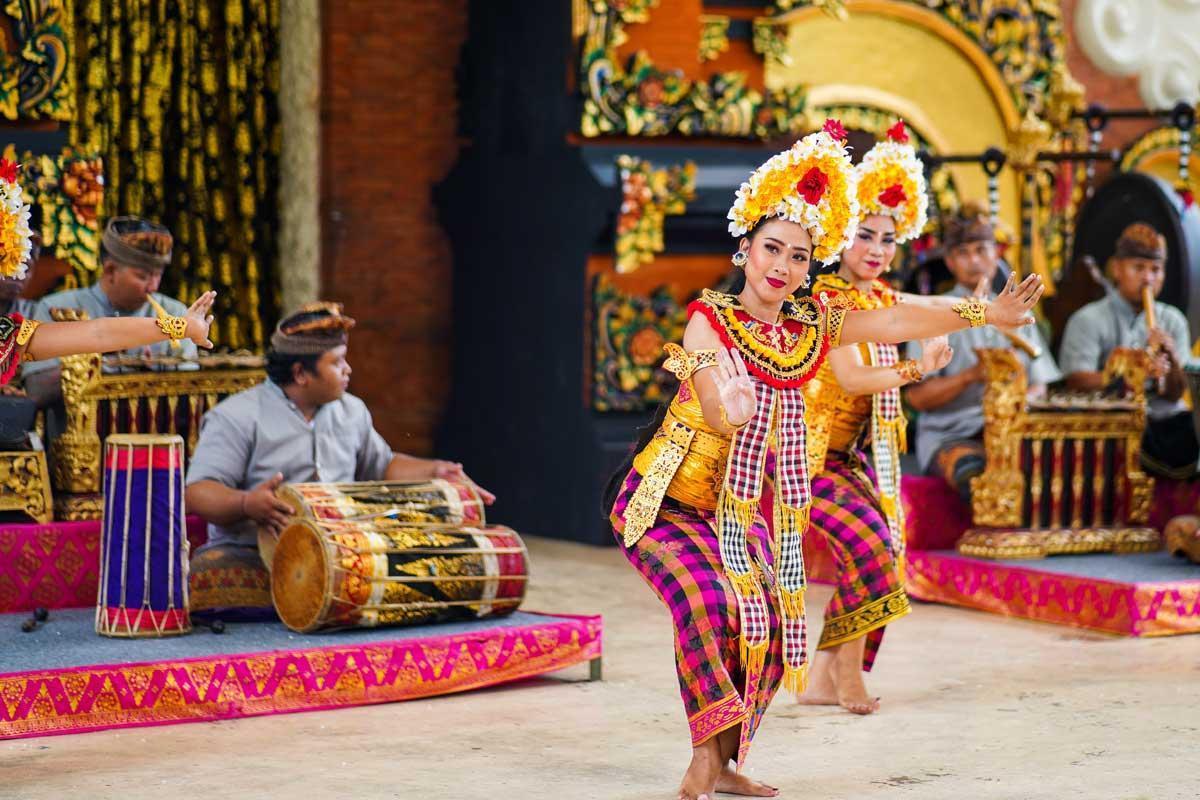
None of this happens in isolation. Every movement is locked to the shimmering, percussive music of the gamelan orchestra, and dancers wear elaborate costumes of brightly coloured cloth painted with gold floral and faunal motifs, finished with gold-leafed, jewelled accessories and towering headdresses. Crucially, Balinese dancers are not merely technicians. As UNESCO notes, they must also possess charisma, humility, discipline, and a special spiritual energy that brings the performance to life, qualities instilled through training that traditionally begins in early childhood and is passed informally from one generation to the next.
The whole body is the vocabulary, not just the hands
What sets Balinese dance apart is that meaning is carried through the entire body at once — eye movement, finger position, and posture all combine into a single expressive vocabulary, rather than gesture alone doing the storytelling work.
That’s worth knowing before watching a performance: paying attention to the eyes and posture, not just the hand movements, reveals a layer of the story that’s easy to miss otherwise.
A UNESCO-Recognised Cultural Treasure
On 2 December 2015, at a meeting in Windhoek, Namibia, UNESCO inscribed the “Three Genres of Traditional Dance in Bali” on its Representative List of the Intangible Cultural Heritage of Humanity. The inscription recognised nine specific dances, grouped into three genres that range from the deeply sacred to the purely celebratory.
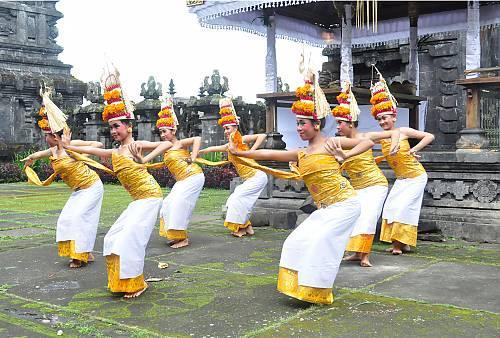
The recognition did more than honor the art’s beauty. It affirmed the central role Balinese dance plays in religious life and underscored the need to safeguard these traditions for future generations, even as the island’s tourism economy grows around them. For visitors, understanding the three genres is key to appreciating what they are actually watching and why some dances are performed in temple sanctuaries while others fill open-air stages every night.
The Nine UNESCO-Inscribed Balinese Dances
| Genre | Character | Inscribed dances |
|---|---|---|
| Wali | Sacred (temple ritual) | Rejang, Sanghyang Dedari, Baris Upacara |
| Bebali | Semi-sacred (ceremonial dance-drama) | Topeng Sidakarya, Gambuh, Wayang Wong |
| Balih-balihan | Entertainment (public enjoyment) | Legong Kraton, Joged Bumbung, Barong Ket “Kuntisraya” |
The Three Genres of Balinese Dance
Wali — Sacred Temple Dances
Wali dances are the oldest and most sacred genre, performed exclusively within temple ceremonies as offerings to the gods. They are staged in the jeroan, the temple’s innermost sanctum, close to where the priest conducts worship, and cannot be performed at any other time or place.
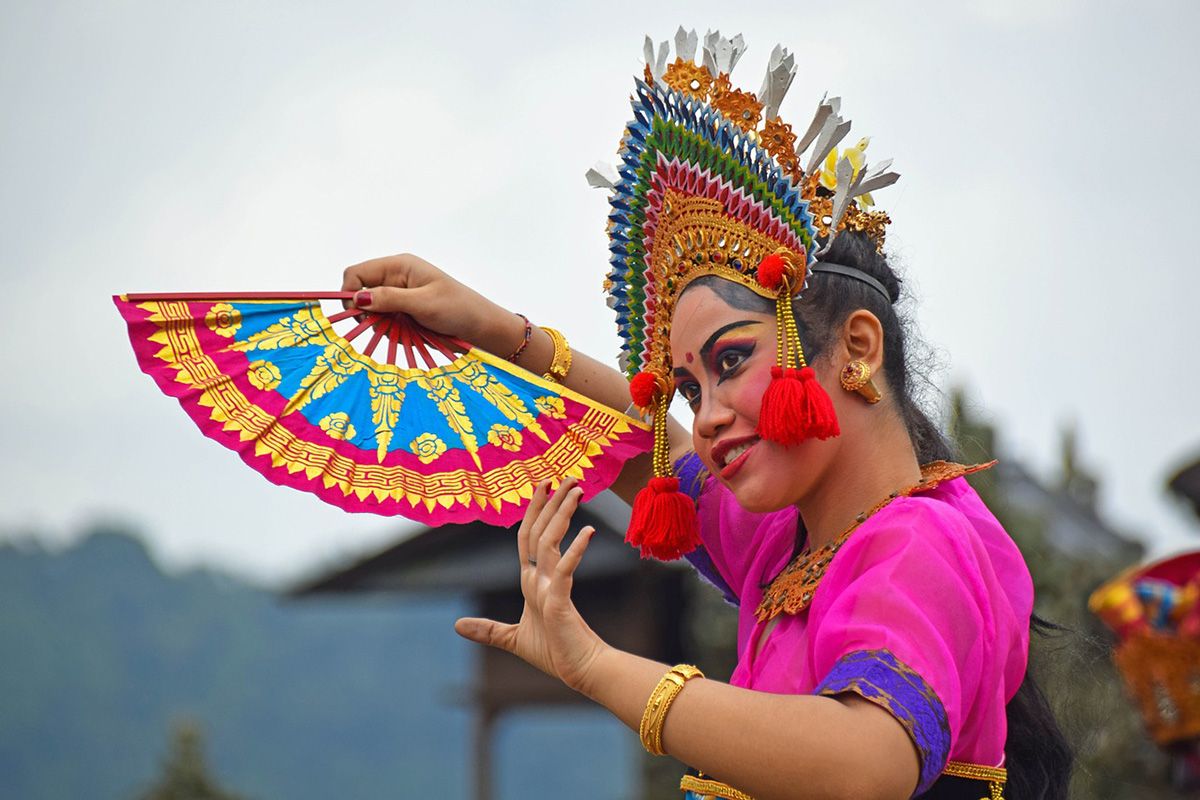
These are not shows for an audience but spiritual acts believed to function as a bridge between the human and divine realms. The Sanghyang Dedari, for instance, is a trance dance in which young dancers are believed to be possessed by benevolent hyang spirits, while the graceful Rejang is performed by rows of women as a devotional welcome to the deities.
Bebali — Semi-Sacred Dances
Bebali dances occupy the middle ground, both literally and spiritually. Often performed in the temple’s central courtyard (jaba tengah) as part of ceremonies, they blend ritual function with storytelling and dance-drama.
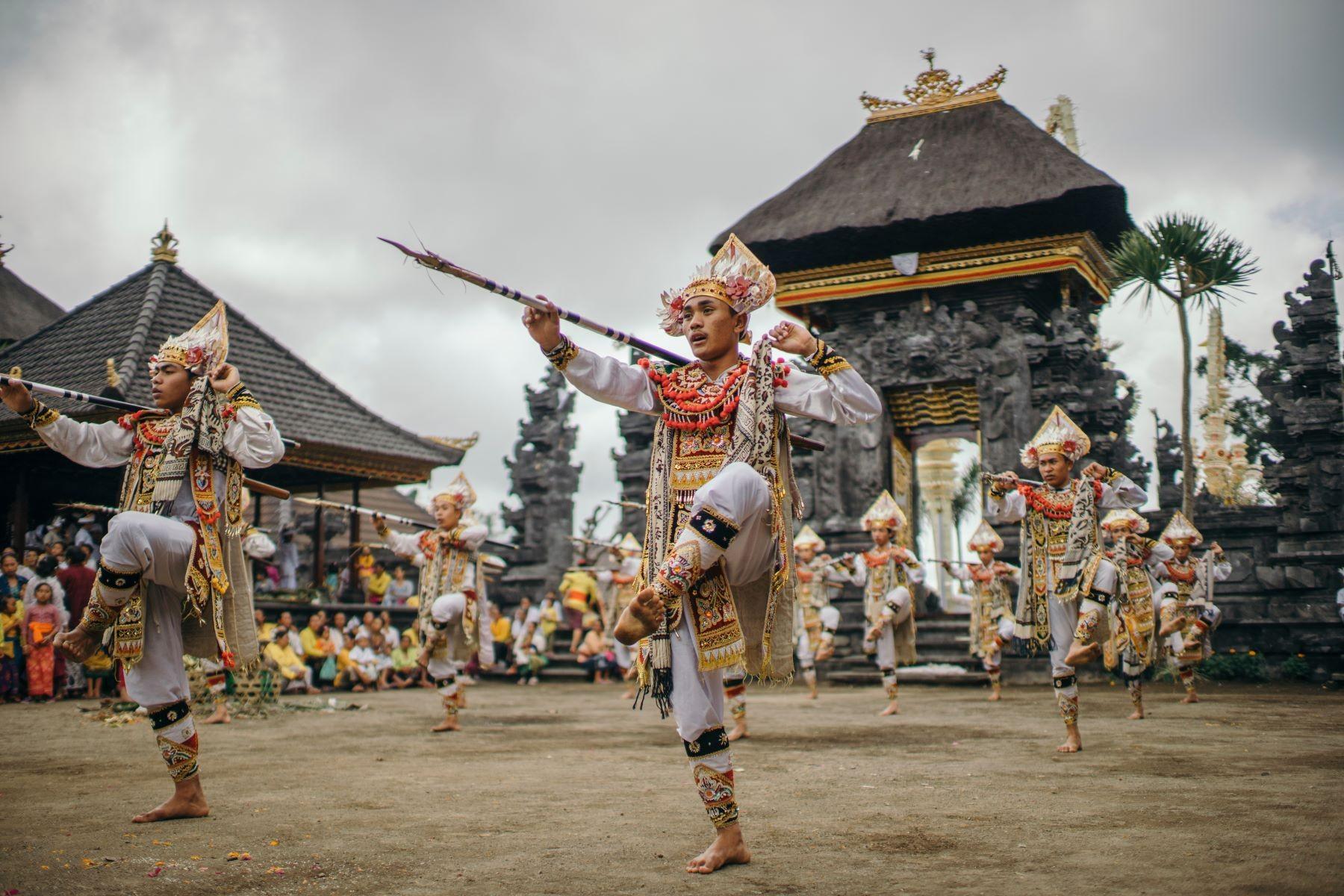
This genre carries narratives and moral lessons through a fusion of acting, music, and movement. Gambuh, considered one of the oldest and most refined Balinese dance-dramas with roots in the courtly tradition, and Topeng (masked) dances such as Topeng Sidakarya, which is essential to completing many ceremonies, belong to this category. Ceremony and timing are deeply connected in Balinese life, a relationship explored further in our guide to the Sandikala ritual.
Balih-balihan — Entertainment Dances
Balih-balihan is the genre most visitors will encounter. These are dances for public enjoyment, free from the time-and-place restrictions of the sacred forms, and they can be performed anywhere.
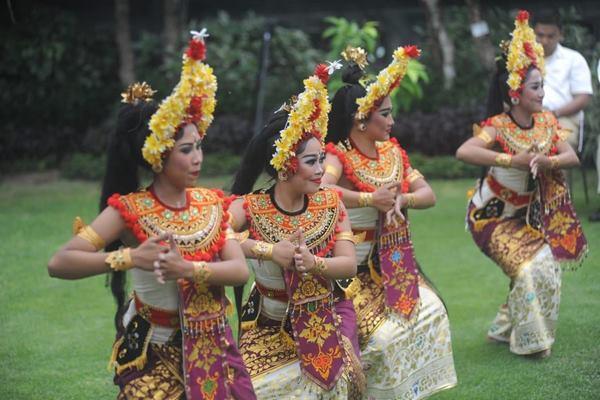
They feature dynamic movement, folkloric and mythological narratives, and often a touch of humor, making them accessible and captivating for audiences from any background. Because hotels, cultural centers, and tour operators stage them regularly, the balih-balihan dances, Legong, Barong, the Kecak, and others have become the public face of Balinese dance worldwide.
The Most Famous Balinese Dances to Know
Legong
Often considered the most refined and feminine of all Balinese dances, Legong emerged in the 19th century as an entertainment for the royal courts. Legend traces it to a prince of Sukawati who, during a feverish illness, dreamed of two maidens dancing to gamelan music, and recreated what he had seen upon recovering.
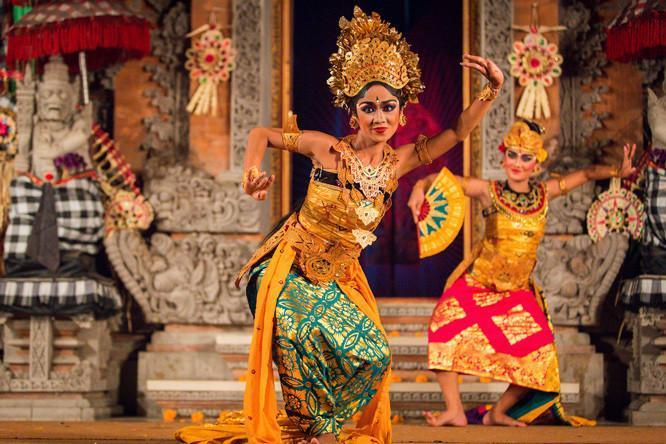
Performed by young women in dazzling gold-and-red costumes and elaborate headdresses, Legong is a study in precision: intricate footwork, expressive faces, and finger gestures so detailed that even the smallest movement carries meaning. Dancers often perform in mirror-like pairs, enacting tales of kings, princesses, and palace intrigue.
Barong
The Barong dance dramatizes the eternal struggle between good and evil. The Barong, a lion-like protective spirit and king of the good spirits, battles Rangda, the demon-queen witch who personifies darkness.
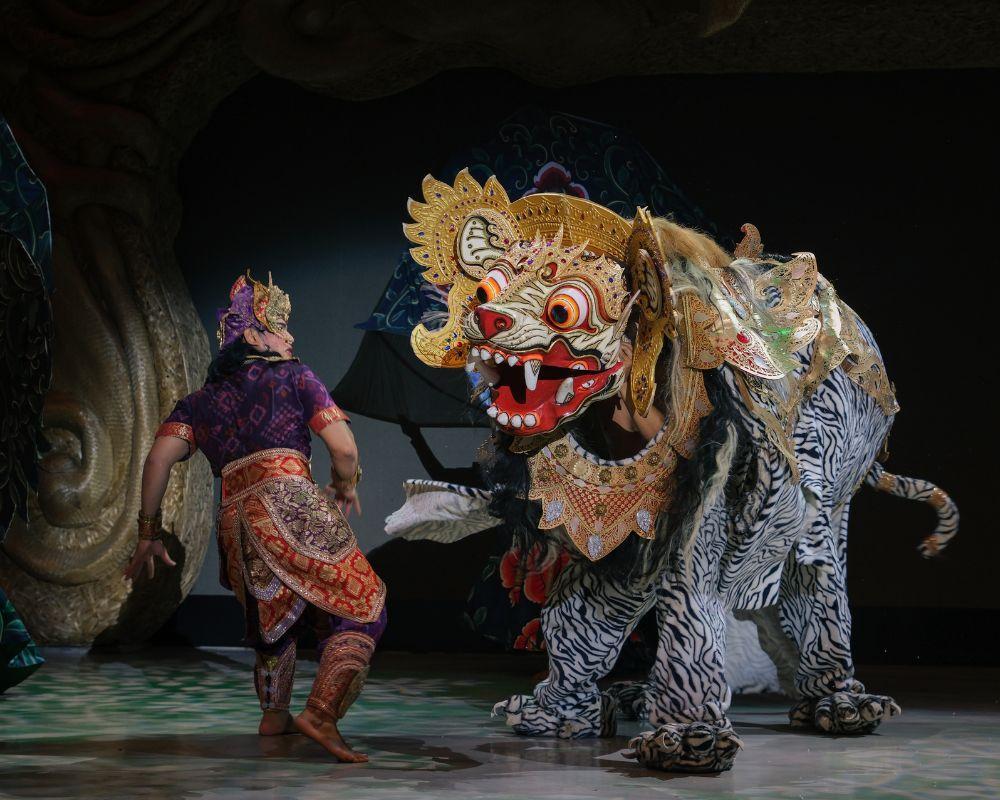
The Barong is brought to life by two dancers sharing one extraordinarily ornate costume, and the performance is famous for its dramatic climax: the keris (dagger) dance, in which male performers fall into a trance and turn their blades against themselves, yet remain unharmed, protected, it is believed, by the Barong’s power. It is a vivid expression of the Balinese principle that good and evil must always be held in balance.
Kecak — The “Monkey Chant” and Fire Dance
Perhaps Bali’s most internationally recognized performance, the Kecak is unlike any other. Instead of a gamelan, its soundtrack is the human voice: a circle of dozens of men chanting “cak-cak-cak” in interlocking, hypnotic rhythm.
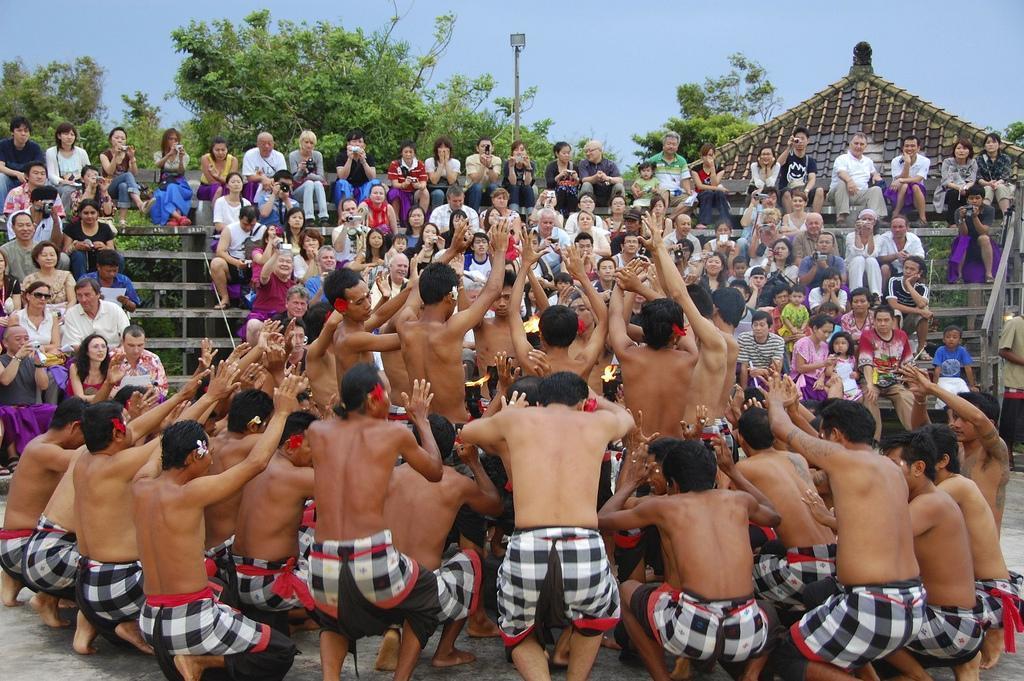
The dance typically retells an episode from the Ramayana, the love story of Rama and Sita, often around a blazing fire. The Kecak was developed into its current theatrical form in the 1930s, drawing on the trance-based Sanghyang ritual, in a collaboration commonly credited to Balinese dancer Wayan Limbak and German painter Walter Spies. Watched at sunset on a clifftop, it is unforgettable.
Pendet
Pendet began as a sacred temple dance, a devotional offering to welcome deities descending to earth. Today, it has gracefully evolved into a welcome dance that greets honored guests, while retaining its spiritual character.
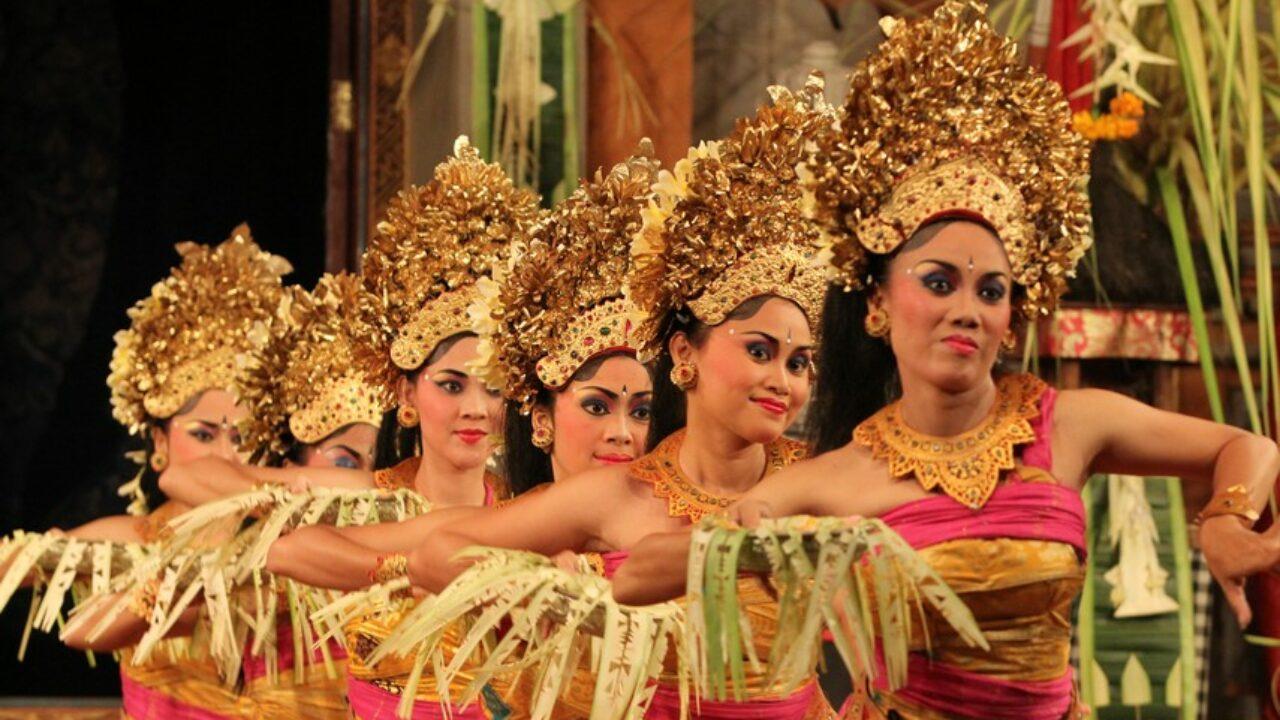
Female dancers in temple attire carry bowls of flower petals, which they scatter in flowing, serene gestures as a sign of gratitude and reverence. It frequently opens ceremonies and cultural events across the island.
Baris
Baris is the classic warrior’s dance, usually performed solo by a male dancer. Through powerful stances, vigorous movement, and fierce facial expressions, it portrays the courage and emotions of a young warrior preparing for battle.
The ceremonial form, Baris Upacara, is one of the sacred wali dances, while secular versions showcase a dancer’s strength, control, and dramatic range.
Famous Balinese Dances at a Glance
| Dance | Genre | Performers | Story/theme |
|---|---|---|---|
| Legong | Balih-balihan | Young women (often in pairs) | Royal tales, palace intrigue |
| Barong | Balih-balihan | Two in lion costume + cast | Good vs evil (Barong vs Rangda) |
| Kecak | Entertainment (Sanghyang-derived) | Large male chorus + leads | Ramayana (Rama and Sita) |
| Pendet | Originally sacred, now welcome | Women with flower bowls | Welcome and devotion |
| Baris | Wali (ceremonial) / secular | Solo male | Warrior’s valor |
The Music Behind the Movement: Gamelan
Balinese dance is inseparable from the gamelan, the percussion-led orchestra of bronze metallophones, gongs, drums, cymbals, and bamboo instruments that drives every performance. The relationship is precise and reciprocal: dancers respond to the music’s sudden accents and tempo shifts, while drummers watch the dancers and cue the ensemble to match their movements.
The result is a tight, electric synchronization in which a flick of the eyes or a snap of the wrist lands exactly on the beat. The bright, interlocking sound of the Balinese gamelan, faster and more dramatic than its Javanese cousin, is as essential to the experience as the dance itself.
Dance and music aren’t separate performances
Balinese dance and the gamelan that accompanies it aren’t really two separate art forms performed together — the percussion-led orchestra of bronze metallophones, gongs, and drums is woven so tightly into the choreography that the two function as one.
Watching a performance with that in mind — listening for how the dancer’s movement tracks the gamelan’s rhythm — changes how the whole piece reads, rather than treating the music as background.
Where to Watch Balinese Dance in Bali
For most visitors, the entertainment (balih-balihan) dances are the gateway, and several venues stage them on regular schedules. Ubud, the island’s cultural heart, is the best base for classical performances, while Uluwatu offers the most dramatic setting of all.
The Ubud Palace (Puri Saren Agung) is the most beloved venue for classical dance, hosting open-air performances in its royal courtyard most evenings. A typical program weaves together several dances, often opening with Pendet and culminating in Legong, accompanied by a full live gamelan.
- Ubud Palace (Puri Saren Agung) — Information Address: Jl. Raya Ubud No. 8, Ubud, Gianyar, Bali
- Performances: Most evenings, typically from 7:30 PM (program ~90 minutes). Tickets: Around IDR 100,000 per person
- Reviews: Consistently ranked among Ubud’s top cultural attractions
- Tip: Arrive 30–45 minutes early for the best seats; the palace is free to explore by day
The Kecak Fire Dance at Uluwatu Temple (Pura Luhur Uluwatu) is the island’s most spectacular performance, staged in a clifftop amphitheater against the backdrop of the open ocean at sunset. The dramatic setting, with waves crashing far below, makes it the bucket-list choice, though it sells out in high season.
- Kecak Fire Dance, Uluwatu Temple — Information Address: Pura Luhur Uluwatu, Pecatu, South Kuta, Badung, Bali
- Performances: Daily at sunset (around 6:00 PM)
- Tickets: Around IDR 150,000 per person (temple entry may be separate)
- Reviews: One of Bali’s most popular and highly rated cultural experiences
- Tip: Book 1–2 days ahead in peak season; mind the temple’s resident monkeys
Beyond these, the village of Batubulan, just north of Denpasar, stages daily Barong dance performances (typically mornings, around 9:30 AM), making it easy to combine with a day trip to Ubud. Atmospheric Ubud venues like Pura Taman Saraswati, with its lotus-pond stage, and Pura Dalem Ubud also host regular evening shows.
Where to Watch: Quick Comparison
| Venue | Dance highlight | When | Approx. ticket |
|---|---|---|---|
| Ubud Palace (Puri Saren Agung) | Legong & classical mix | Most evenings, ~7:30 PM | ~IDR 100,000 |
| Uluwatu Temple | Kecak Fire Dance | Daily at sunset | ~IDR 150,000 |
| Batubulan village | Barong & Keris | Daily, ~9:30 AM | ~IDR 100,000 |
| Pura Taman Saraswati, Ubud | Legong & Kecak | Select evenings | ~IDR 100,000 |
Times and prices vary by season and troupe; confirm locally before traveling.
*Prices are for reference only and may change without notice. Please contact us directly for current rates.
Learn Balinese Dance as a Family at The Meru Sanur
Watching Balinese dance is unforgettable, but learning even a few of its movements first-hand transforms appreciation into genuine understanding, and it is one of the most memorable things a family can do together in Bali. At The Meru Sanur, the all-suite beachfront resort on Sanur’s tranquil sunrise coast, this is woven directly into the guest experience through the Family Luxury Holiday package.
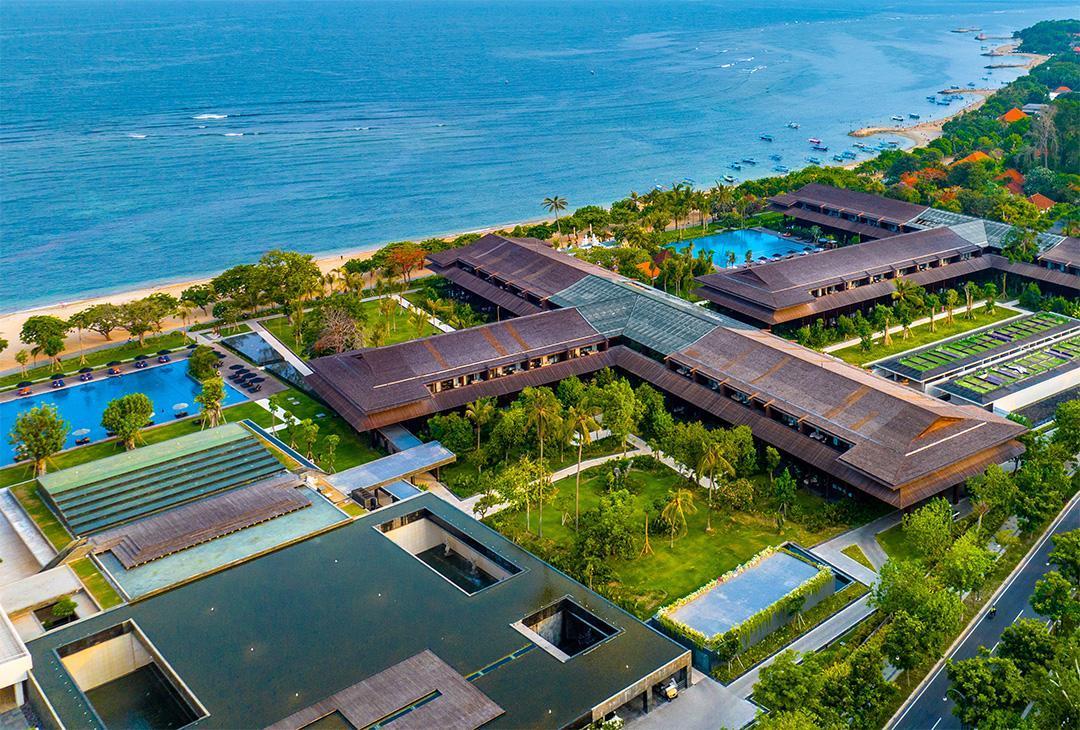
Designed for two adults and one child across a minimum five-night stay, the package is built around curated cultural experiences, and a standout inclusion is a one-hour Balinese dance lesson, complete with professional documentation, so the family can keep the memory long after the trip. Guided by skilled instructors, parents and children learn the fundamentals of age-appropriate posture, expressive hand mudra, and the famous darting-splayed-eye movements, gaining a hands-on feel for just how much discipline and grace the art demands.
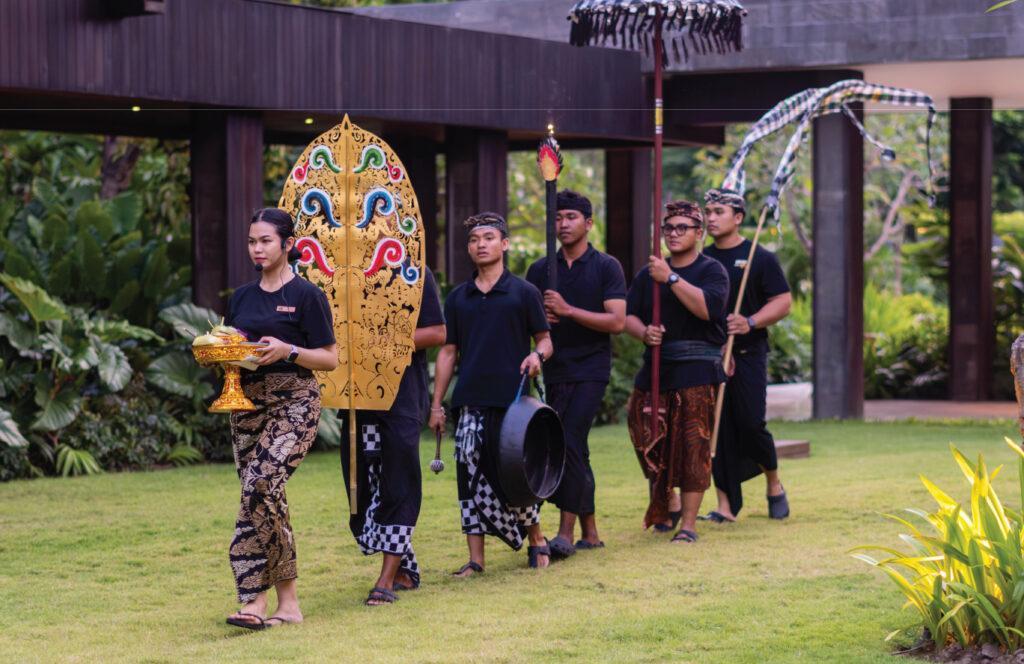
The dance lesson sits within a wider tapestry of cultural immersion. The same Family Luxury Holiday package includes a family Melukat purification and temple blessing, a traditional Balinese-costume photo shoot with makeup, a cooking class, and a half-day pottery workshop, alongside family comforts like daily breakfast at Arunika Restaurant, a private car with driver, a beachfront BBQ dinner with a bonfire, and child-friendly touches such as a kids’ movie night and welcome treats. It is a thoughtfully complete way to introduce children to Balinese heritage while relaxing in luxury by the sea.
For further information:
- Family Luxury Holiday at The Meru Sanur — Package Information Stay: Minimum 5 nights, for 2 adults + 1 child (under 12)
- Cultural highlights: 1-hour Balinese dance lesson with documentation, family Melukat & temple blessing, Balinese-costume photo shoot, cooking class, pottery workshop
- Family inclusions: Daily breakfast at Arunika, private car with driver, beachfront BBQ dinner with bonfire, kids’ movie night, welcome chocolate, and more
- Booking period: 23 September 2025 – 31 July 2026
- Stay period: 1 October 2025 – 31 July 2026 (blackout 30 December 2025 – 1 January 2026)
Participation goes further than watching
The Meru Sanur’s family dance sessions turn what’s usually a spectator experience into a hands-on one, letting guests learn a few of the actual movements rather than only observing a performance from the audience.
For families with children in particular, that shift from watching to doing tends to make the cultural experience stick in a way passive viewing rarely does.
Tips for Watching Balinese Dance Respectfully
Whether at a temple, a palace courtyard, or a resort, a little awareness deepens the experience and honors the tradition:
- Dress modestly. A sarong and sash are required for temple-based performances; they can usually be borrowed or bought at the entrance.
- Arrive early. Popular shows fill up, and arriving 30–45 minutes ahead secures a good seat and time to soak in the setting.
- Photograph thoughtfully. Photography is generally allowed, but avoid flash, which is both distracting and disrespectful, especially during sacred or ceremonial moments.
- Stay for the whole performance. Programs build toward a climax, such as the Barong’s keris dance or the Kecak’s fire finale; leaving early breaks the spell for performers and audience alike.
- Remember the sacred context. Some dances are devotional acts, not shows. Watch quietly and follow the lead of local audiences.
- Book ahead in high season. Marquee performances like the Uluwatu Kecak sell out; reserve a day or two in advance.
Frequently Asked Questions
What is Balinese dance?
Balinese dance is an ancient, deeply expressive tradition central to the religious and artistic life of Bali. Dancers tell stories, often from Hindu epics like the Ramayana and Mahabharata, through precise gestures of the hands, head, and eyes, all synchronized to gamelan music. It ranges from sacred temple rituals to popular entertainment performances.
Why is Balinese dance important to UNESCO?
In 2015, UNESCO inscribed the “Three Genres of Traditional Dance in Bali” on its Representative List of the Intangible Cultural Heritage of Humanity, recognizing nine dances across the sacred (wali), semi-sacred (bebali), and entertainment (balih-balihan) genres. The listing honors the art’s cultural and spiritual significance and supports its preservation.
What are the most famous Balinese dances?
The best known are the Legong (an elegant women’s court dance), the Barong (the lion-like spirit’s battle with the witch Rangda), the Kecak (the “monkey chant” fire dance retelling the Ramayana), the Pendet (a graceful welcome dance), and the Baris (a solo warrior’s dance).
Where can I watch Balinese dance?
Ubud is the best base, with nightly classical performances at the Ubud Palace (Puri Saren Agung) and other venues. The Kecak Fire Dance at Uluwatu Temple, staged at sunset on a clifftop, is the most dramatic, while Batubulan village hosts daily Barong performances. Tickets typically run around IDR 100,000–150,000.
What is the difference between sacred and entertainment Balinese dances?
Sacred (wali) dances are performed only within temple ceremonies as offerings to the gods and are not staged for audiences. Entertainment (balih-balihan) dances are intended for public enjoyment and can be performed anywhere, which is why most of the dances tourists see, such as Legong and Kecak, belong to this genre.
Can tourists learn Balinese dance?
Yes. Some cultural centers and resorts offer Balinese dance classes. At The Meru Sanur in Sanur, for example, a one-hour Balinese dance lesson (with professional documentation) is included in the Family Luxury Holiday package, letting parents and children learn the art’s signature postures and movements together.
What music accompanies Balinese dance?
Balinese dance is accompanied by the gamelan, a percussion-led orchestra of bronze metallophones, gongs, drums, and cymbals. Its bright, fast, interlocking rhythms are tightly synchronized with the dancers’ movements.
Final Thoughts
Balinese dance is a window into the island’s very soul, a 1,000-year-old art in which every flick of the eyes and curl of the fingers carries meaning, and where beauty and devotion are inseparable. Whether you witness the hypnotic Kecak at a clifftop temple, the refined Legong in a royal courtyard, or take your first steps into the art yourself during a family stay at The Meru Sanur, encountering Balinese dance is to encounter Bali at its most luminous and alive.
Whichever of the many types of Balinese dance you end up seeing, the shared thread is that every gesture carries specific, intentional meaning.