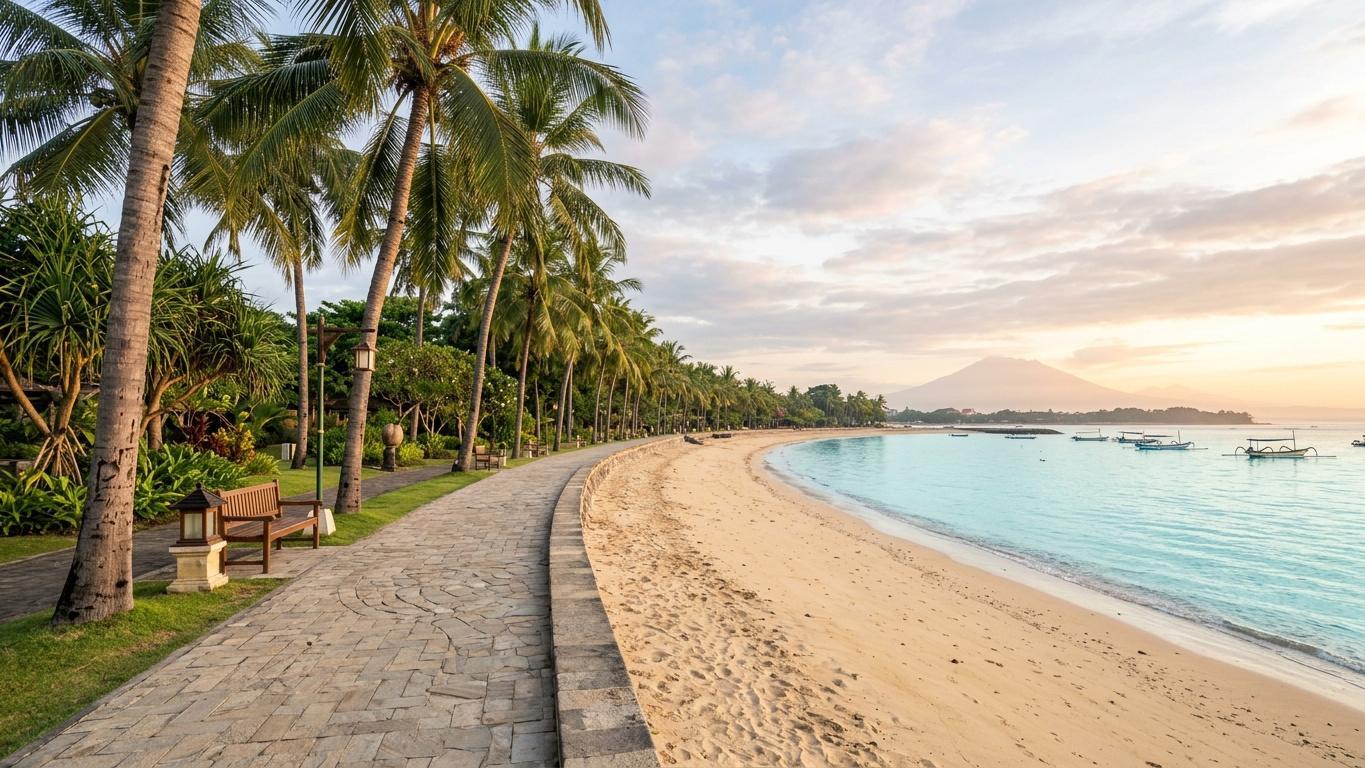
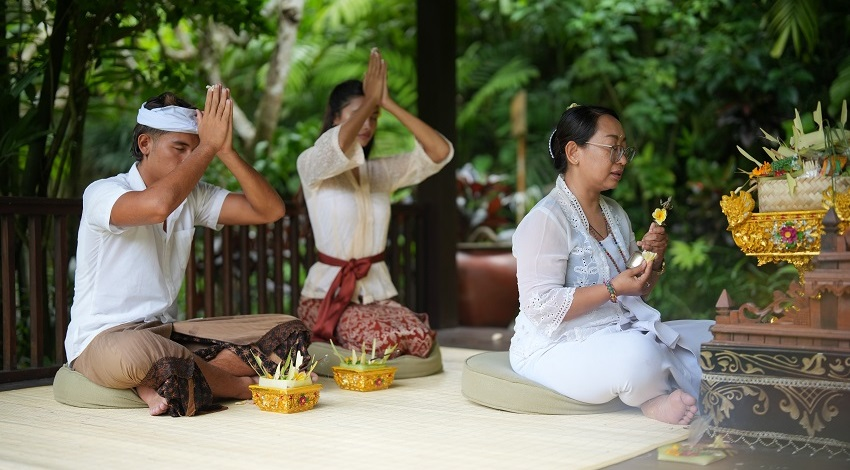
In Bali, the moment the sun slips below the horizon is not simply the end of the day. It is a threshold, a brief and charged interval the Balinese call Sandikala, when the visible world and the unseen world are believed to draw closest together. For centuries, this twilight hour has shaped how Balinese Hindus pray, make offerings, and move through their evenings, and it remains one of the most quietly profound expressions of the island’s living spirituality.
This guide explains what the Sandikala ritual truly means, the cosmology of sekala and niskala that gives it weight, the offerings and prayers tied to dusk, and how visitors can experience this timeless tradition respectfully, including at The Meru Sanur, where the ritual is performed for guests on the sunrise coast of Sanur.
Understanding Sandikala, Bali’s Sacred Twilight
- Concept: Bali recognizes three daily transition points, or junctures, when the state of the day changes — dawn, twilight, and night.
- Definition: Sandikala (also written Sandhya Kala) refers specifically to the transitional moment of evening twilight.
- Worldview: Understanding Sandikala requires understanding the underlying cosmology of Sekala and Niskala — the seen and unseen worlds.
- Timing: The twilight juncture is generally understood to fall in the early evening hours, around 6:00 to 7:00 PM.
- Why It Matters: Certain everyday customs and cautions are tied specifically to this window rather than to evening hours generally.
What Is Sandikala? The Meaning Behind Bali’s Twilight
Sandikala (also written Sandhya Kala or Sandikala) refers to the transitional moment of evening twilight, the meeting point between day and night. The word itself reveals the idea: it derives from the Sanskrit-rooted sandhi, meaning a junction or the joining of two segments, and kala, meaning time. Sandikala is therefore literally “the time of meeting,” the seam where afternoon dissolves into night, generally falling around 6:00 to 7:00 PM.

In the Balinese language, this hour carries several evocative names that capture its character. It is called engseb ai (sundown), neremeng (dim, dusky), and most tellingly saru mua, a phrase combining saru (the state of being between visible and invisible) and mua (face). Saru mua describes that exact moment when the fading light blurs your vision, when faces and forms become indistinct and the eye can no longer tell clearly what is there and what is not. That ambiguity, neither fully day nor fully night, is the essence of Sandikala, and it is precisely what makes the hour feel sacred.
A named, specific transitional moment
Sandikala — also written Sandhya Kala — isn’t a loose translation of “dusk”; it names a specific transitional point, the meeting of day and night, that carries its own defined place in Balinese cosmology.
Knowing the term itself, and that it refers to this precise moment rather than the evening broadly, is useful context for understanding why certain customs and cautions are tied specifically to this window.
Sekala and Niskala: The Seen and the Unseen Worlds
To understand why Sandikala matters, you have to understand the cosmology beneath it. Balinese Hinduism rests on the relationship between two coexisting realms: sekala and niskala.
Sekala is the seen world, everything that can be perceived through the five senses: what can be touched, heard, tasted, and observed in physical reality. Niskala is the unseen world, the invisible dimension believed to run parallel to our own, home to ancestral spirits, deities, and spiritual energies both benevolent and disruptive. This is not regarded as superstition so much as a complete worldview; Balinese Hinduism is often described as emphasizing ritual practice and the maintenance of balance between the visible and invisible worlds over rigid doctrine.
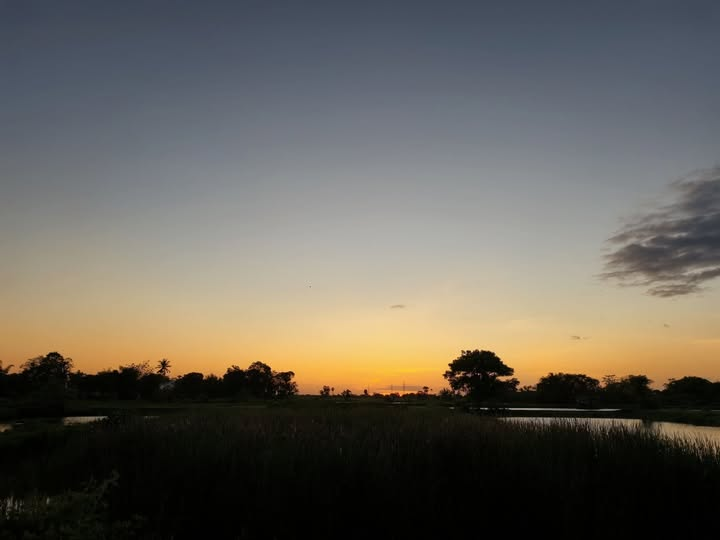
The central obligation of Balinese life is to keep these two realms in harmony. A person must tend to their physical existence, work, family, and community, while equally honouring the spiritual through offerings, prayer, and ceremony. Neglecting either is believed to invite imbalance. Sandikala holds its power because twilight is understood as the moment when the membrane between sekala and niskala grows thinnest, when the two worlds briefly overlap. As The Meru Sanur describes its own Sandikala ritual, it is “a sacred moment believed to bridge the physical world (sekala) and the spiritual realm (niskala).”
The concept behind why the timing matters
The reason Sandikala carries weight comes down to the broader cosmology beneath it: the Balinese understanding of Sekala (the seen world) and Niskala (the unseen world) as coexisting and interacting, especially at transitional moments like twilight.
That framework — not superstition in isolation — is what explains why so many everyday customs cluster specifically around this particular time of day rather than any other.
Why Twilight Is Sacred in Balinese Belief
Bali recognizes three daily transition points, or junctures, when the state of the day changes: dawn (when night meets morning), noon (the sun’s zenith), and dusk (when day turns to night). These three moments are considered times of cosmic shift, when spiritual forces are heightened, and a person is encouraged to be more aware, more present, and more devout. Of the three, dusk, Sandikala, is the most charged. This same reverence for the sacred threads through other Balinese traditions as well, from temple ceremony to Balinese dance, where movement itself becomes a form of devotion.
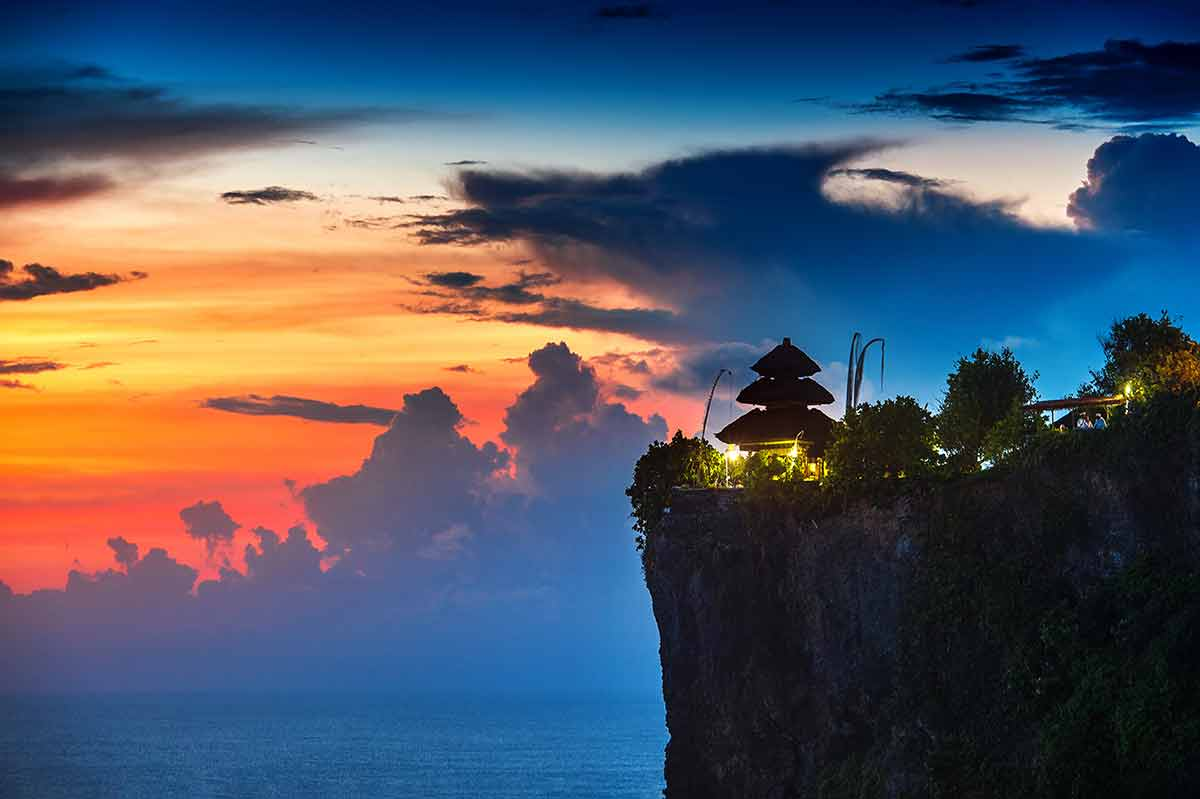
Traditional belief holds that during this twilight interval, the bhuta kala, the lower or mischievous spirits of the unseen world, become active and wander abroad. For this reason, generations of Balinese families have observed simple protective customs at Sandikala: children are traditionally called indoors, voices are lowered, and the household pauses. Rather than something to fear, the hour is approached with respect, a recognition that the world is momentarily in flux and that one should move through it mindfully. Many Balinese also regard these transition points as ideal for meditation and prayer, precisely because the heightened spiritual atmosphere is thought to deepen one’s connection to the divine.
Twilight is one of three, not a standalone moment
Balinese belief frames twilight as one of three recognized daily junctures — alongside dawn and night — when the state of the day itself changes, rather than treating it as simply the hour before dark.
Understanding it as part of that trio, rather than in isolation, is what makes sense of why so much ritual attention concentrates specifically around this time of day.
Offerings and Prayer at Dusk
Two practices anchor the spiritual life of Sandikala: the placing of offerings and the recitation of prayer. Both serve the same ultimate purpose, keeping the seen and unseen worlds in equilibrium.
Segehan: Offerings to Restore Balance
Visitors to Bali quickly notice the small woven palm-leaf trays placed everywhere, on temple shrines, doorsteps, and even pavements. The most familiar is the canang sari, a delicate offering of flowers, rice, and incense presented upward in gratitude to the higher divine powers. At ground level, however, you will often find a plainer offering called segehan: a simple arrangement, frequently just a pinch of rice on a leaf, placed on the earth to appease the bhuta kala, the lower spirits.
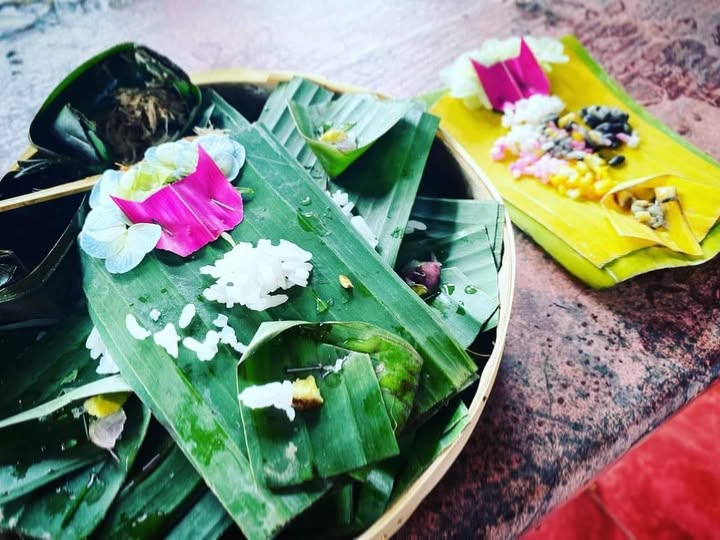
The logic is one of balance rather than worship. By acknowledging and satisfying the lower energies, the household keeps them content so they do not cause disruption or imbalance. Segehan are commonly offered at the day’s transitions, including dusk, as a gesture that maintains harmony between humans and all of creation, including the forces that cannot be seen. This embodies the wider Balinese philosophy of Tri Hita Karana, the “three causes of well-being,” which holds that happiness flows from harmony between humans and the divine, humans and one another, and humans and nature.
Puja Tri Sandhya: The Three-Junction Prayer
The other pillar of Sandikala is prayer. The Puja Tri Sandhya, or Trisandya, is a sacred mantra recited three times each day, precisely at the three sandhya junctures: dawn, noon, and dusk, traditionally at 6:00 AM, 12:00 noon, and 6:00 PM. The name itself encodes the meaning: tri means “three,” while sandhya denotes the junction or relationship of the day’s transitional moments.
Today, the Tri Sandhya has become part of the Balinese soundscape. Recorded with the priest’s bell (genta) and the shimmering tones of gender wayang music, it is broadcast through temple and village-hall loudspeakers and on local television at the three appointed times, an auditory reminder of spirituality woven into daily life, rhythmically comparable to a call to prayer. Given that Balinese Hindus make up well over 80 percent of Bali’s population, the dusk recitation is a shared, island-wide moment of devotion that coincides exactly with Sandikala.
Key Sandikala Terms at a Glance
| Term | Meaning |
|---|---|
| Sandikala / Sandhya Kala | The twilight transition between day and night (~6–7 PM) |
| Sandhi | Junction or meeting of two segments (Sanskrit root) |
| Kala | Time |
| Saru mua | The “blurred face” hour, between seen and unseen |
| Sekala | The seen, physical world (perceived by the senses) |
| Niskala | The unseen, spiritual world |
| Bhuta kala | Lower or disruptive spirits active at twilight |
| Segehan | Ground offering to appease lower spirits and restore balance |
| Canang sari | Daily offering of flowers and incense to higher powers |
| Puja Tri Sandhya | Thrice-daily prayer at dawn, noon, and dusk |
| Tri Hita Karana | The “three causes of well-being,” the philosophy of harmony |
Sandikala and the Balinese Rhythm of Time
What makes Sandikala so compelling for visitors is that it reframes something universal, the sunset, as a meaningful event rather than mere scenery. In much of the world, dusk is an afterthought, the unscheduled gap between the working day and the evening. In Bali, it is a recognized juncture, observed with offerings, prayer, and a collective pause. This same instinct, to mark passing time with ritual rather than let it slip by unnoticed, runs through Bali’s wider tradition of purification rituals.
The three daily sandhya points give the Balinese day a sacred architecture, marking its beginning, middle, and close with moments of awareness. To witness Sandikala, therefore, is to glimpse a culture that has never separated the spiritual from the everyday, where the turning of the light is also a turning inward.
The Three Daily Junctures (Sandhya)
| Juncture | Approx. time | Meaning |
|---|---|---|
| Dawn | ~6:00 AM | Night meets morning; the day begins |
| Noon | ~12:00 PM | The sun’s zenith; the day’s peak |
| Dusk (Sandikala) | ~6:00 PM | Day turns to night; the most charged transition |
Experiencing the Sandikala Ritual at The Meru Sanur
For travelers who wish to encounter this tradition rather than simply read about it, The Meru Sanur offers a Sandikala ritual as part of its guest experience, a graceful way to witness Bali’s twilight devotion from within the calm of an all-suite beachfront resort on the island’s sunrise coast.
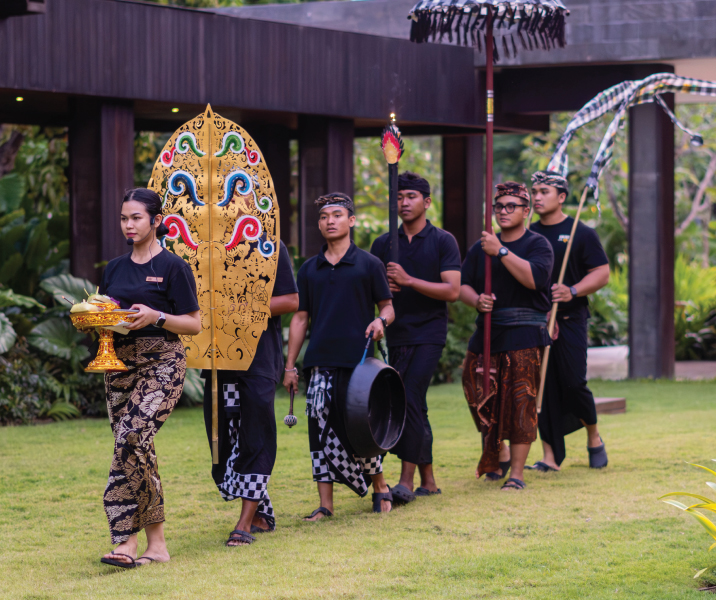
As the sun gently dips below the horizon, guests are invited to gather and take part in a ceremonial procession. Led by a young woman in traditional dress carrying a gleaming gold offering, the procession moves through the resort grounds accompanied by banjar-style attendants in black ceremonial attire and udeng headcloths, bearing sacred regalia: a richly carved and gilded ceremonial piece, a resonant gong, ceremonial parasols (tedung), and the black-and-white poleng banners that signify spiritual balance. The effect is intimate and unhurried, an invitation to pause at exactly the moment the Balinese have honored for centuries.
The experience reflects The Meru Sanur’s broader philosophy as “a haven of wellbeing,” where Balinese heritage is woven into a stay rather than staged as a performance. Set within the 42-hectare Sanur Special Economic Zone for health and wellness tourism, the resort frames the Sandikala ritual as a chance to slow down and connect with the island’s spiritual rhythm, a fitting complement to its five-senses wellness ethos and its all-suite, garden-and-sea setting.
For further information:
- Sandikala Ritual at The Meru Sanur — Experience Information Meeting point: Tirtasada Lobby, The Meru Sanur
- Days: Tuesday, Thursday, and Friday Time: 18:00 – 18:20 (at sunset)
- What it is: A guided Balinese twilight procession and cultural ritual
- Open to: Resort guests during their stay
How to Experience Sandikala Respectfully
Whether you witness Sandikala at a resort, in a village, or simply pause for it on the beach, a little awareness honors the tradition and deepens the experience:
- Dress modestly. For any ceremonial setting, modest clothing and a sarong, where appropriate, show respect.
- Observe quietly. Sandikala is a contemplative moment; keep your voice low, and your movements calm, especially during prayer or procession.
- Photograph thoughtfully. Photos are usually welcome, but avoid using flash and never obstruct a procession or position yourself in front of those praying. Ask before close-up portraits.
- Never step over offerings. The segehan and canang sari placed on the ground are sacred; walk around them.
- Be present. The deepest way to honor Sandikala is simply to pause, watch the light change, and let the moment be what it is meant to be, a bridge between the seen and the unseen.
Frequently Asked Questions
What does Sandikala mean?
Sandikala (or Sandikala) means “the time of meeting,” from the Sanskrit-rooted sandhi (junction) and kala (time). It refers to the twilight transition between day and night in Balinese Hindu belief, roughly 6:00 to 7:00 PM, regarded as a sacred moment when the seen and unseen worlds draw closest.
Why is twilight considered sacred in Bali?
Twilight is one of three daily transition points (dawn, noon, and dusk) seen as moments of cosmic shift. At dusk in particular, the boundary between the physical world (sekala) and the spiritual realm (niskala) is believed to thin, and lower spirits (bhuta kala) become active, so the hour is treated with heightened awareness, prayer, and offerings.
What is the difference between sekala and niskala?
Sekala is the seen, physical world that can be perceived through the five senses. Niskala is the unseen, spiritual world of ancestors, deities, and energies. Balinese Hinduism centers on keeping these two realms in balance, and Sandikala is the moment they are believed to meet most closely.
What offerings are made during Sandikala?
At dusk, Balinese Hindus commonly place segehan, simple ground offerings (often just rice on a leaf) intended to appease the lower spirits and restore balance. These complement the canang sari, the daily flower-and-incense offerings presented to higher divine powers. The recitation of the Puja Tri Sandhya prayer also takes place at dusk.
What is the Puja Tri Sandhya?
The Puja Tri Sandhya (Trisandya) is a sacred Balinese Hindu mantra recited three times daily, at dawn, noon, and dusk (around 6:00 AM, 12:00 noon, and 6:00 PM), corresponding to the three sandhya junctures. It is widely broadcast across Bali at these times, making the dusk recitation a shared, island-wide moment that coincides with Sandikala.
Can visitors experience the Sandikala ritual? Yes. Visitors can witness Sandikala respectfully across Bali, and some resorts offer it as a guided cultural experience. The Meru Sanur, for example, holds its Sandikala ritual for guests on Tuesdays, Thursdays, and Fridays from 18:00 to 18:20, departing from the Tirtasada Lobby as the sun sets.
Is Sandikala a religious ceremony or a cultural performance? It is rooted in genuine Balinese Hindu spiritual practice rather than being mere entertainment. When offered to guests, it is best approached as a respectful cultural and spiritual experience, an invitation to share in a tradition the Balinese have observed for centuries.
Final Thoughts
The Sandikala ritual distills something essential about Bali: a way of seeing the world in which even the fading of the light is sacred, and the close of each day is met with gratitude, awareness, and care for the balance between the seen and the unseen. To pause for Sandikala, watching the sky soften as offerings are placed and prayers rise, is to step briefly into the island’s spiritual rhythm. Experienced mindfully, whether in a village lane or amid the gardens of The Meru Sanur on Sanur’s tranquil shore, it is a moment that lingers long after the sun has set.