
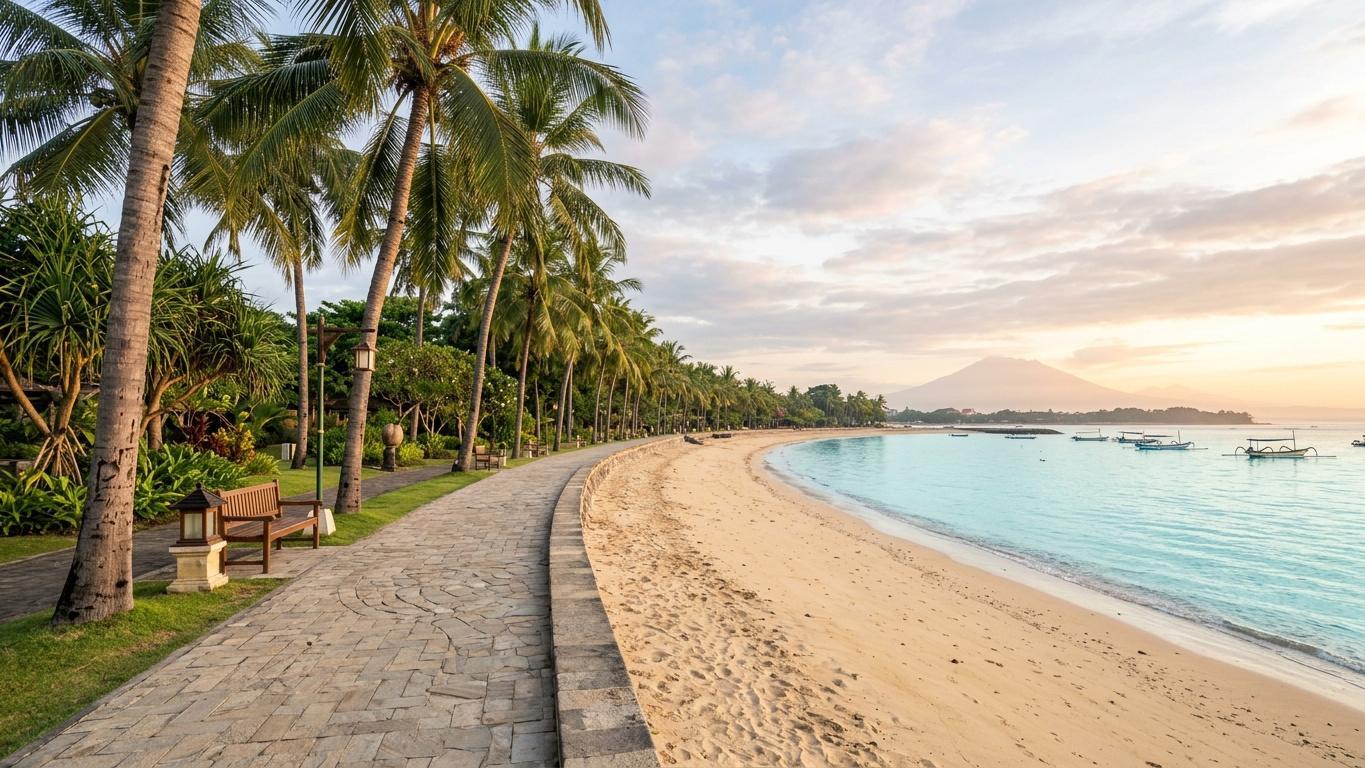
Most Bali itineraries treat walking as something to do between destinations, not a destination in itself. Sanur flips that assumption. Between a genuinely historic beachfront promenade, quiet back streets still lived in by locals, and a cluster of real historic sites within a short stroll of each other, Sanur walking tours cover more ground, literally and culturally, than most visitors expect from a single coastal town.
What a Sanur Walking Tour Actually Involves
- Preparation: Getting ready for a Sanur walking tour is minimal, mostly a matter of managing sun and comfort over a multi-hour outing rather than any special gear.
- History: The beachfront promenade holds a genuine distinction as the first paved beachfront walkway built anywhere in Bali.
- Tips: A handful of small habits, worth reviewing before setting out, make the walk go more smoothly.
- Terrain: The promenade is flat and paved for its full length, which keeps the walk accessible without requiring any particular fitness level.
- Timing: Setting out earlier in the day avoids both the heat and the busier stretches of the path.
Why Sanur Is Bali’s Most Walkable Coastal Town
A few distinct qualities combine to make Sanur genuinely walkable in a way most Bali beach towns simply aren’t.
A Historic, Compact Layout
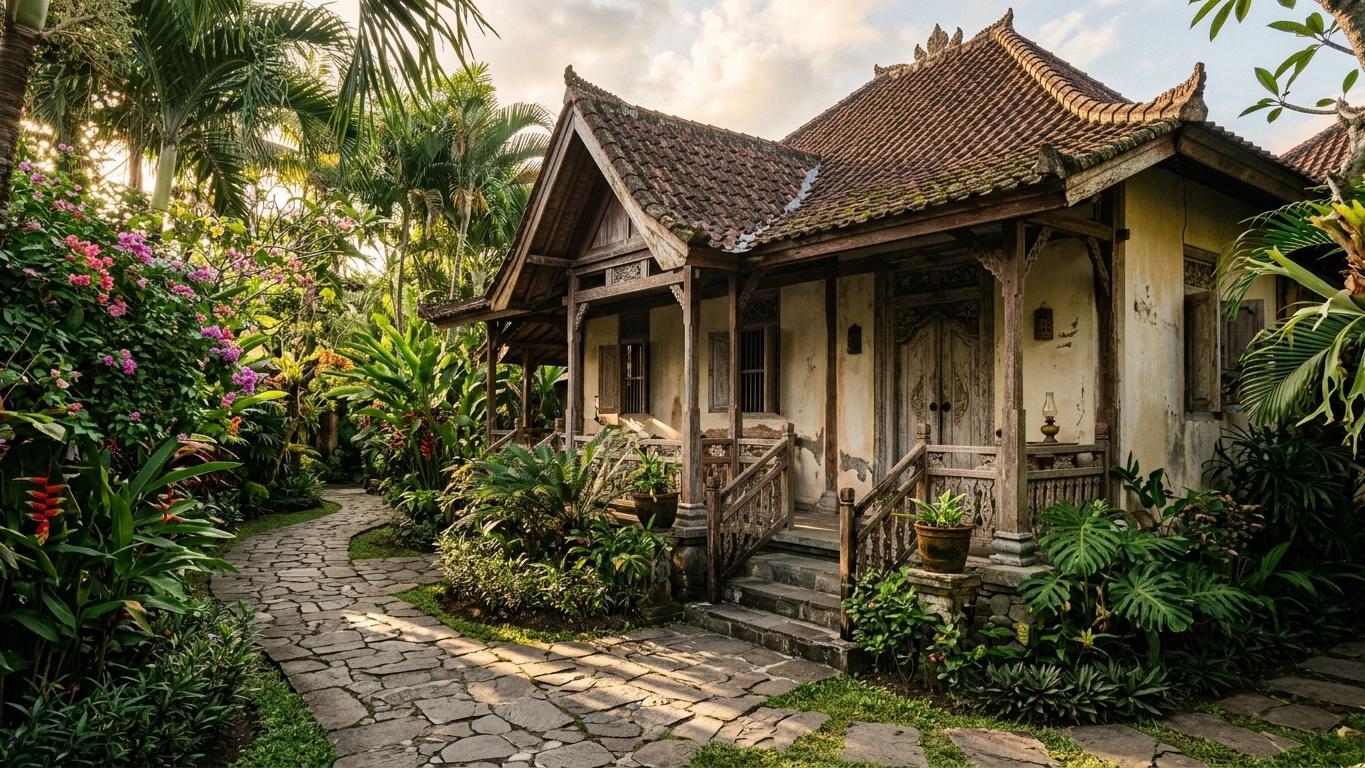
Sanur’s beachfront promenade holds a genuine distinction: it was the first paved beachfront walkway built anywhere in Bali, running past resorts, beachfront cafes, working fishing boats, and a scattering of elegant old villas built decades ago by the foreign expats who first fell for the town. That history gives Sanur walking tours a sense of place most newer beach developments simply can’t replicate.
The town’s own scale helps too. Sanur is compact enough that a visitor can genuinely cover its main promenade, several historic sites, and a stretch of local back streets on foot in a single day, without needing a taxi or scooter to string the highlights together. That compactness is genuinely unusual for a Bali beach town, most of the island’s coastal areas sprawl along a single road with attractions spread far enough apart that walking between them isn’t realistic, while Sanur’s own layout keeps its best stops within a genuinely comfortable walking radius of each other.
Sanur’s promenade set the template other beach towns copied
Sanur’s beachfront promenade wasn’t just an amenity added later — it holds the genuine distinction of being the first paved beachfront walkway built anywhere in Bali, which is part of why the town’s layout feels more established and walkable than newer beach areas.
That history is worth knowing before you walk it: you’re tracing the original version of a format that’s since been copied up and down the island’s coast.
Flat, Calm, and Accessible
Flat terrain and a mostly car-free promenade also make Sanur walking tours accessible to a wider range of visitors than a lot of Bali’s other walkable areas, families with young children and older travelers included, without steep hills or uneven jungle paths to navigate.
Sanur’s own calmer, less nightlife-driven reputation carries through to how the town actually feels underfoot too, unhurried rather than packed tight with scooters weaving between pedestrians, a genuinely different experience from walking through Seminyak or Kuta’s busier shopping strips. That combination of history, scale, and genuine walkability is a rare mix on an island where most towns prioritize one at the expense of the others.
The Beachfront Promenade Walk
The core of most Sanur walking tours starts here: a promenade running more than 4 kilometers along the shore, curving past resort frontages, small beachfront cafes, and wooden fishing boats pulled up for repair between outings. It’s the single most walked stretch in town, and for good reason, with a few specific stops worth building a route around.
Karang Beach
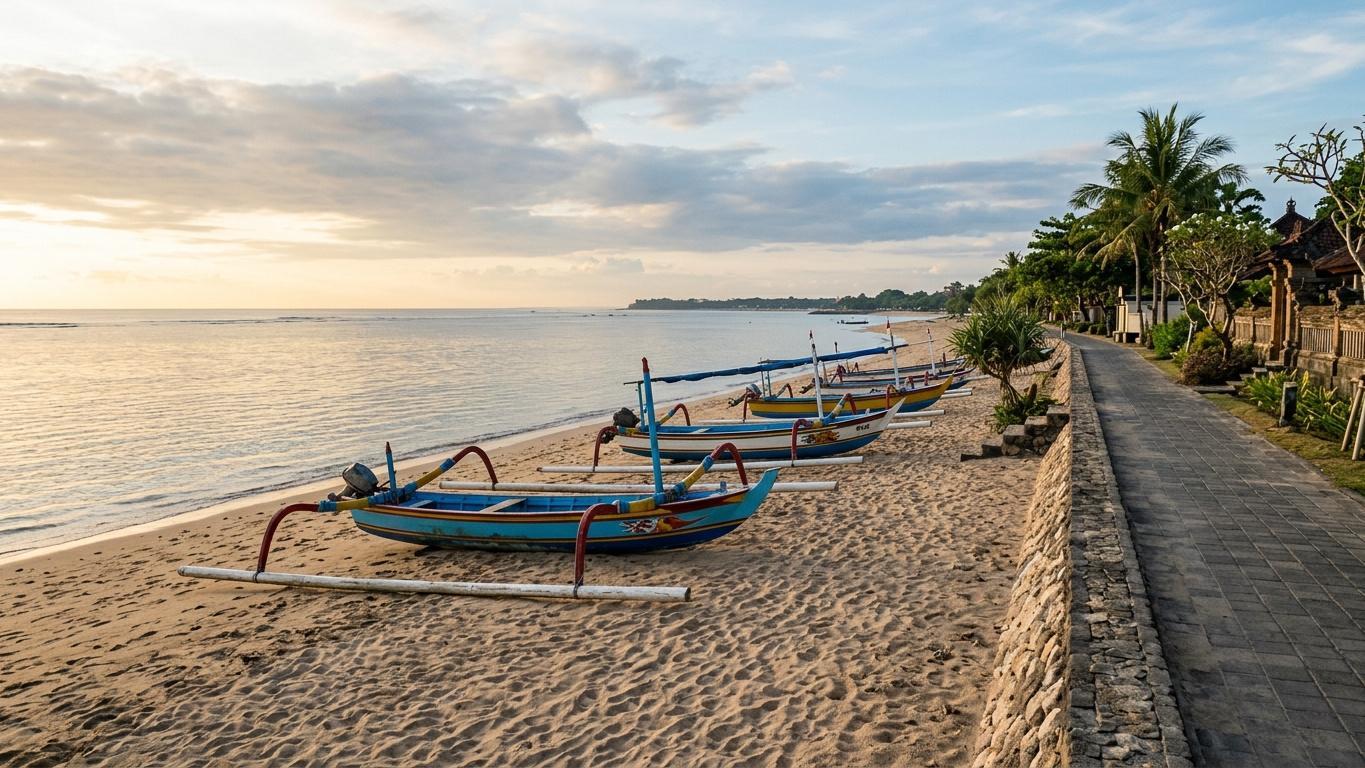
Karang Beach, roughly midway along the promenade, brings a livelier cluster of local warungs and a steady flow of fishing boats coming and going, a natural stop for a coffee or a coconut break partway through a longer walk.
Historic Villas and Small Temples
The old villas scattered along parts of the promenade, several dating back to the early-to-mid 20th century, are worth slowing down for specifically. They’re a visible reminder that Sanur drew foreign residents and artists well before Bali’s tourism industry existed in any recognizable form, a detail that gives Sanur walking tours a genuine historical thread rather than just scenic beachfront views.
Small temples appear at intervals along the promenade too, active places of daily worship rather than sites maintained purely for visitors, offerings and incense freshly placed most mornings.
Sindhu Beach
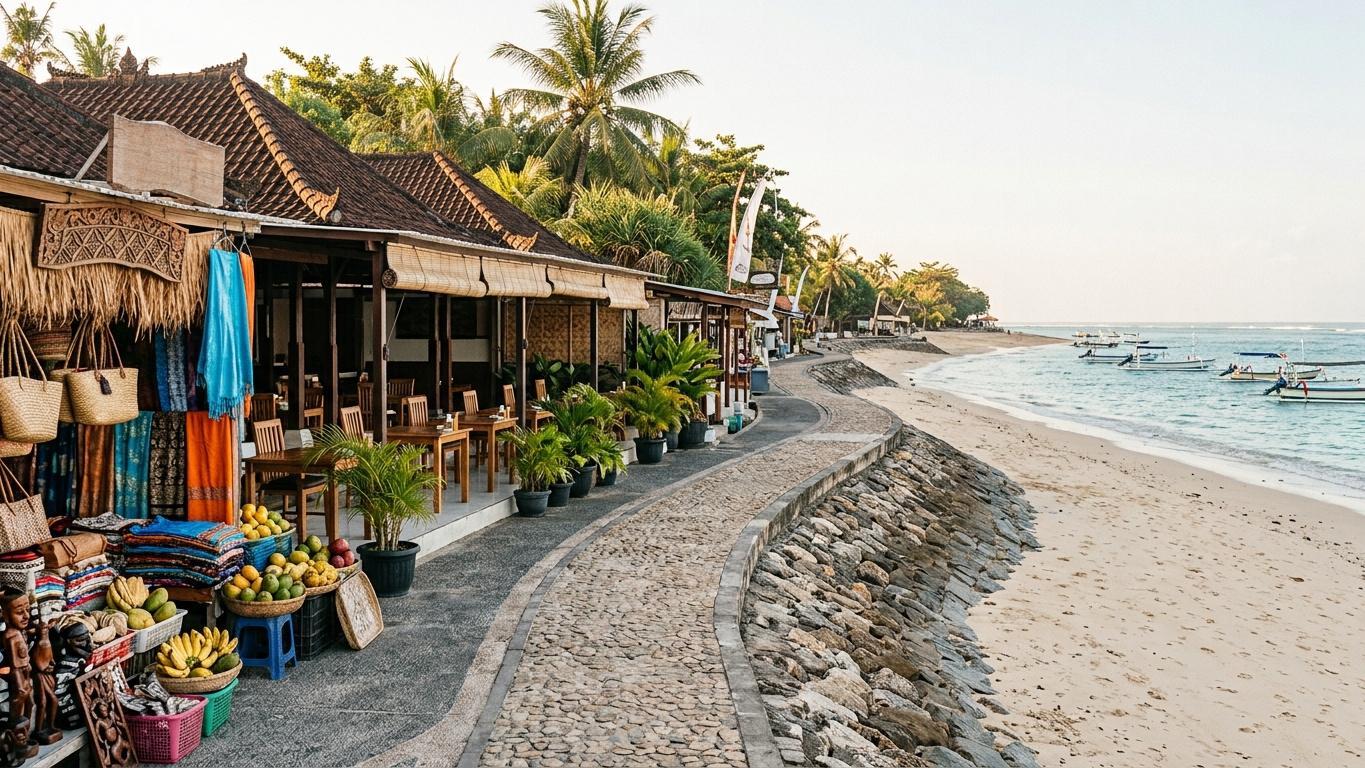
Sindhu Beach, roughly at the promenade’s midpoint, brings a livelier stretch of activity, a small morning market running alongside the beachfront and a noticeably higher concentration of cafes and rental stands than the quieter northern and southern ends of the walk.
The Narrower Southern Stretch
Further along, the promenade narrows slightly as it passes closer to hotel and resort frontages, still fully walkable but worth a touch more attention around pedestrian beach access points where guests cross toward the water at regular intervals.
A Village Walk Through Sanur’s Back Streets
Stepping just one or two streets back from the beachfront reveals a genuinely different side of Sanur walking tours, working shopfronts, small family compounds, and local warungs that see far fewer visitors than the promenade itself. It’s the difference between seeing Sanur and actually walking through it.
Sindhu Market
Sindhu Market, a short walk inland from the beach, runs a lively morning market alongside a well-known night market later in the day, both worth timing a walking route around if local food and everyday Balinese shopping appeals alongside the scenery.
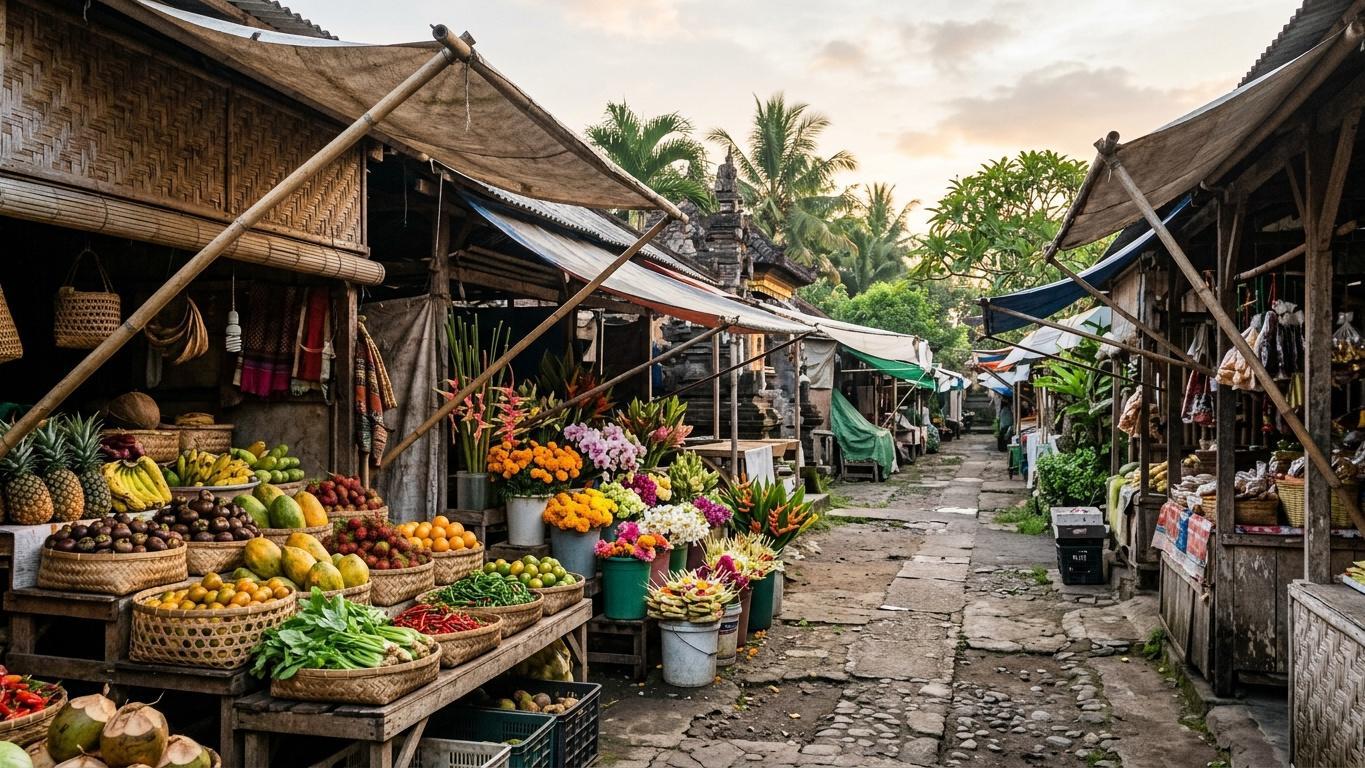
The morning market leans toward fresh produce, flowers for daily offerings, and household goods, a genuinely functional local market rather than one built around visitor souvenirs. The night market shifts entirely toward food, rows of stalls grilling satay, frying banana fritters, and simmering soups, a strong stop for dinner after a full day of walking.
Both markets sit close enough to the beachfront that folding either into a walking route adds only a short detour, rather than requiring a separate trip planned around the town’s back streets specifically. Bargaining is generally expected at the morning market but less so at the food-focused night stalls, where prices tend to be fixed and clearly posted.
Family Compounds and Local Life
Family compounds along the back streets, marked by their own small family temples set just inside the entrance, are worth observing respectfully from the street rather than entering uninvited, a genuine glimpse into how Balinese domestic and religious life stays woven together even in a town that sees significant tourism.
Art Studios and Craft Workshops
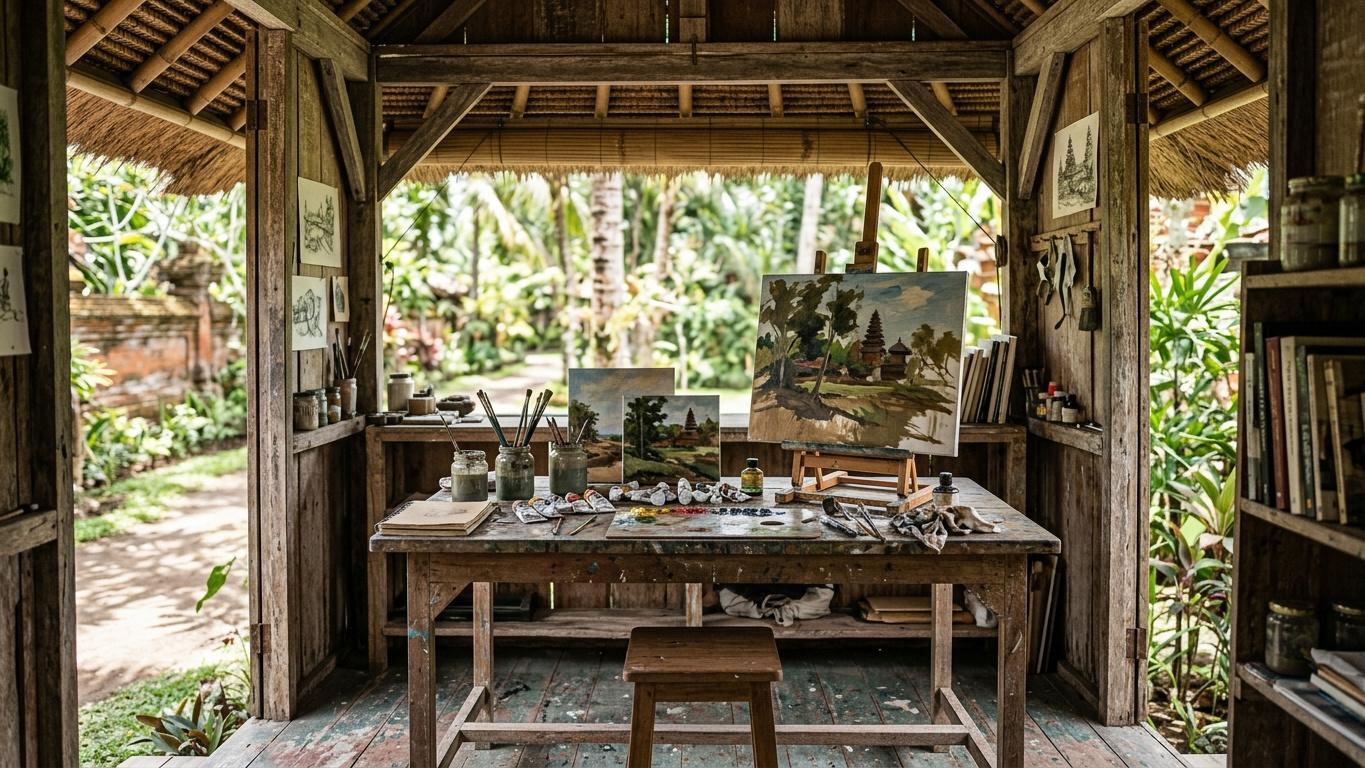
Small art studios and craft workshops also turn up along some of the quieter back streets, less polished and less signposted than a formal gallery, but often willing to let a curious passerby watch a piece actually being made, a small unplanned highlight that doesn’t show up on any standard map at all.
Jalan Danau Tamblingan
Jalan Danau Tamblingan, Sanur’s main inland shopping street, runs roughly parallel to the beachfront and offers a genuinely different walking experience, shops, galleries, and restaurants rather than open coastline, a useful contrast for a second day of walking after covering the promenade itself.
Walking to Blanjong Temple and the Le Mayeur Museum
Combining both stops into a single route turns a simple beachfront stroll into one of the more culturally substantial Sanur walking tours available, entirely on foot and well within a single morning.
Blanjong Temple
Blanjong Temple, home to the Belanjong Pillar, a genuine 10th-century royal inscription, sits down a short alley off Jalan Danau Poso, an easy detour for anyone already exploring Sanur’s back streets on foot. It’s one of the oldest dated written records anywhere in Bali, a striking find at the end of what looks like an unremarkable residential lane.
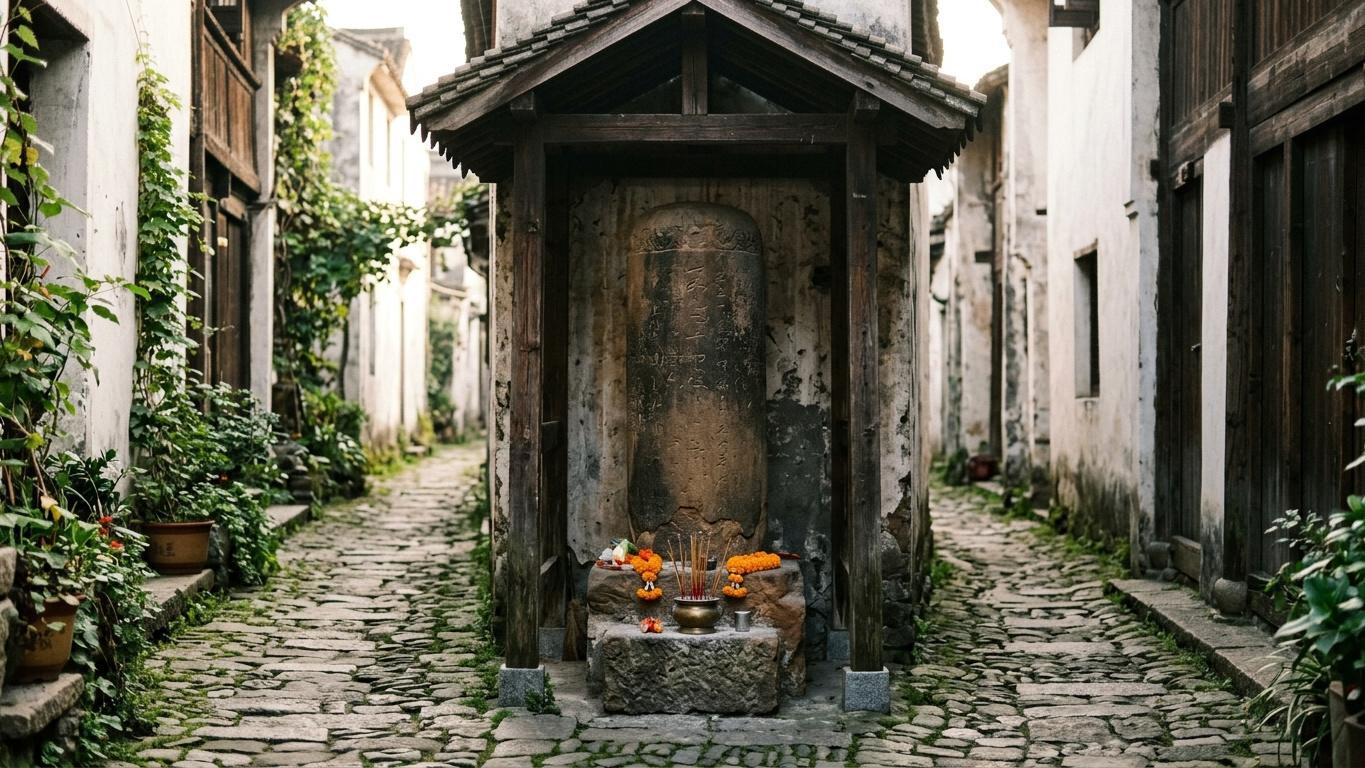
The Belanjong Pillar’s inscription, dated to 914 CE, records King Sri Kesari Warmadewa’s own military campaign, written in a bilingual mix of Sanskrit and Old Balinese script, one of the earliest pieces of written evidence for organized rule anywhere on the island. Standing in front of it after a purely scenic beachfront walk is a genuinely striking contrast most visitors don’t expect.
Le Mayeur Museum
The Le Mayeur Museum, the former home and studio of a Belgian painter who settled in Sanur in 1932, sits directly beside the beachfront itself, making it one of the easiest historic stops to fold into a promenade walk without a real detour at all. Its collection of Impressionist-style paintings depicts Sanur’s own coastline as it looked nearly a century ago.
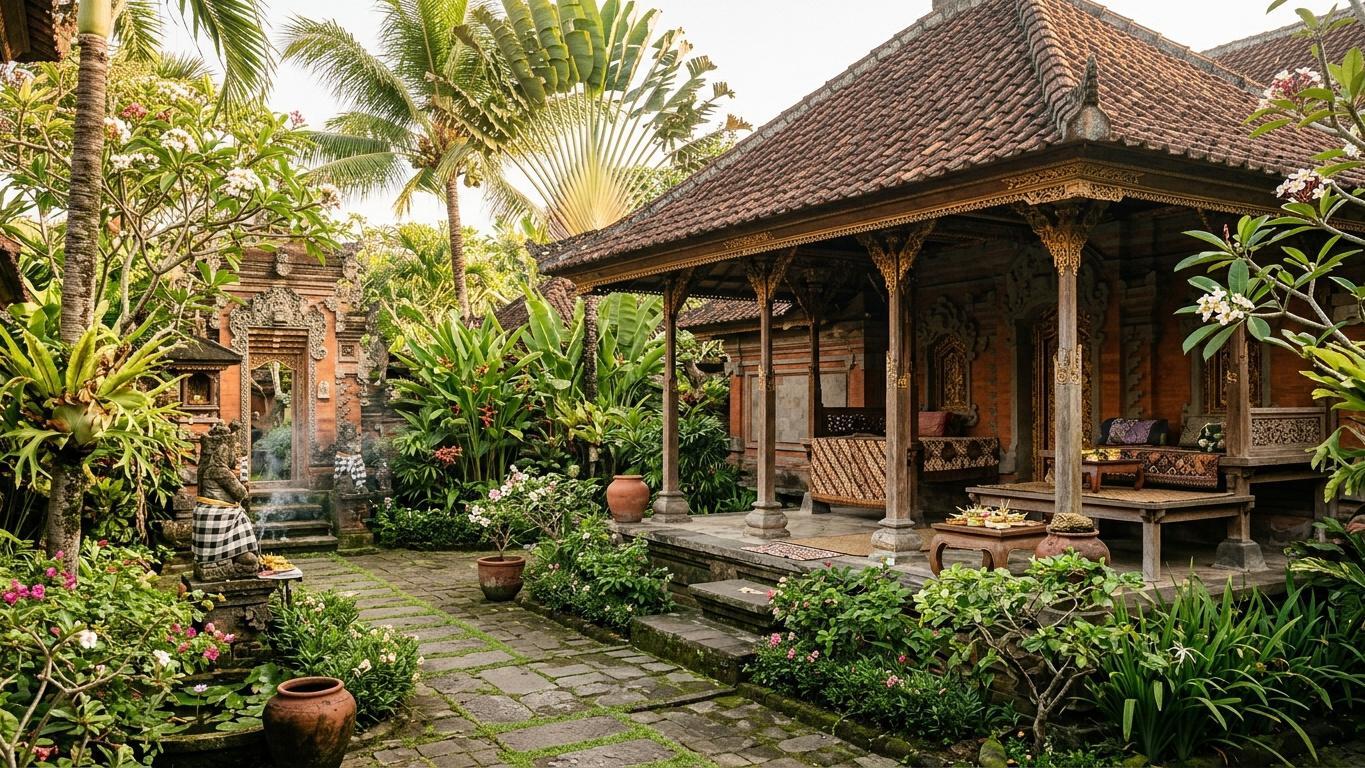
The museum adds a different kind of depth to the walk, less about ancient history and more about how Sanur itself looked and felt through a 20th-century painter’s eyes, useful context for understanding just how much, and how little, the coastline’s basic character has actually changed since.
South to Mertasari Beach and the Mangrove Fringe
Following the promenade south eventually leads to a genuinely different, quieter side of Sanur worth treating as its own dedicated outing.
Mertasari Beach
Mertasari Beach, a noticeably quieter, more local stretch of shoreline, makes a genuinely rewarding endpoint for a longer walk, particularly at sunset when the crowds further north have thinned out. It draws a noticeably more local crowd than the central promenade, families out for an evening, food vendors setting up as the light fades, and none of the resort-facing polish of the busier stretches further north. Kite flying is a common sight here on breezy afternoons, a genuinely local pastime rather than a staged photo opportunity.
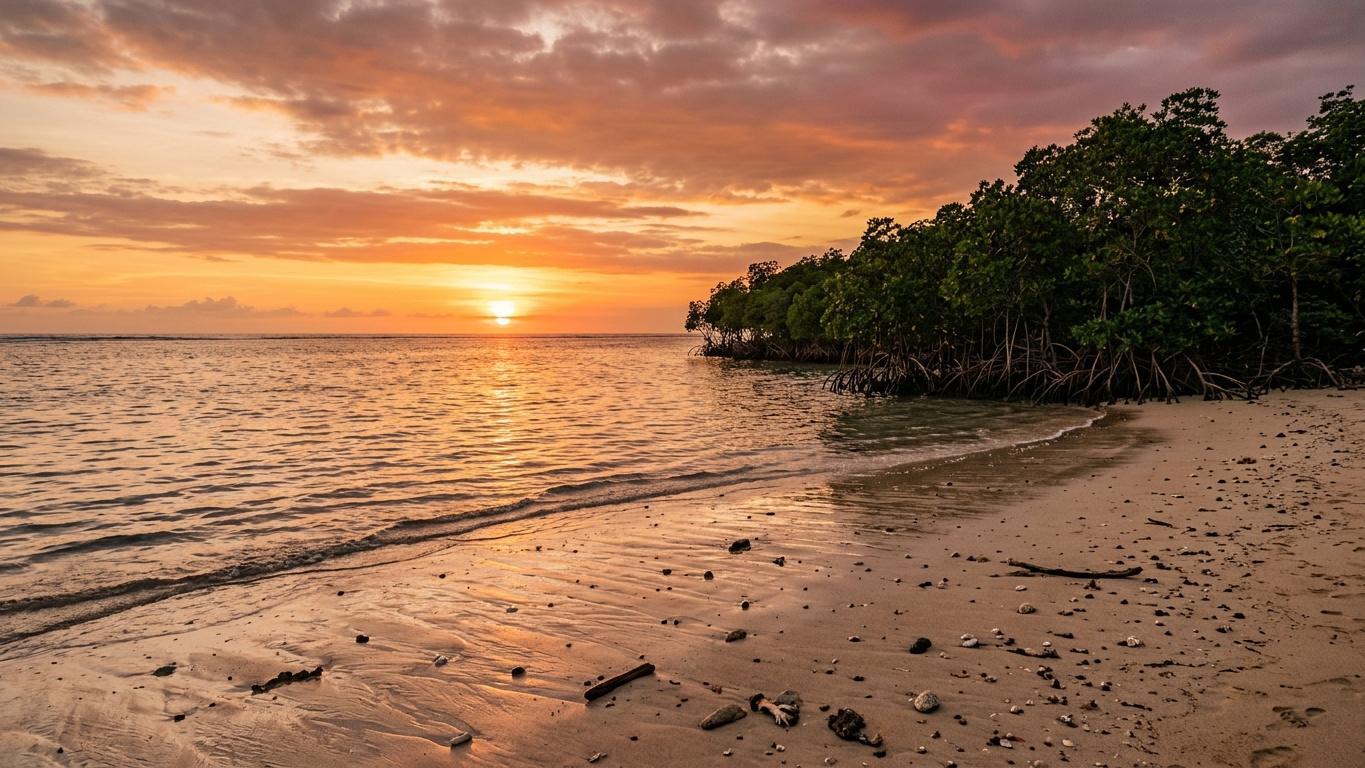
The walk from central Sanur down to Mertasari covers a real distance, roughly 3 to 4 kilometers depending on the exact starting point, worth planning for as its own dedicated outing rather than an afterthought tacked onto a shorter promenade stroll. Bringing a headlamp or phone light is worth considering for the return leg if timing the walk for sunset specifically, since the southern stretch is noticeably less lit than the central promenade.
The Mangrove Fringe
The southern edge of Sanur also runs alongside a fringe of mangrove trees, a smaller taste of the mangrove ecosystem that spreads much further west across the Tahura Ngurah Rai forest, a roughly 20 to 25-minute drive from central Sanur for visitors wanting the full 2-kilometer boardwalk experience rather than just the coastal fringe.
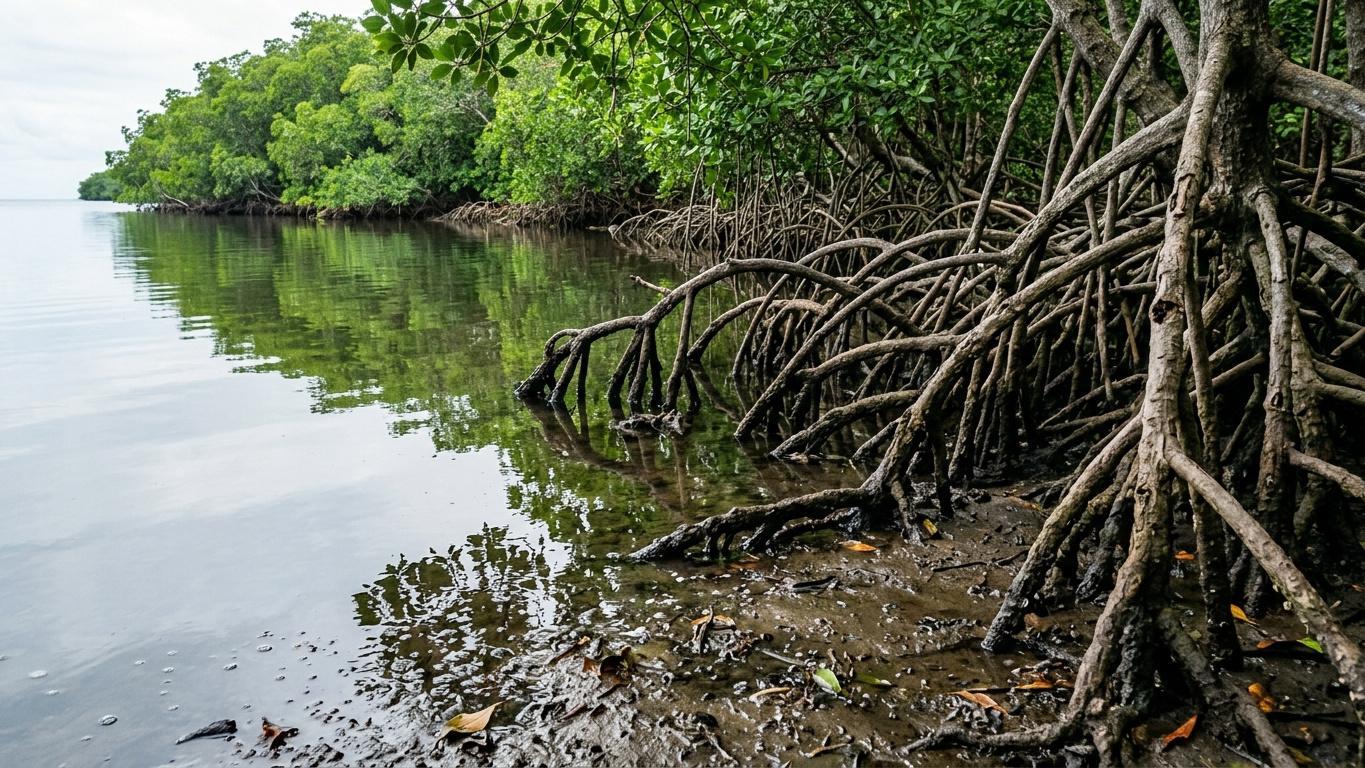
Because that full mangrove forest sits beyond comfortable walking distance, it’s worth treating as a separate half-day trip rather than an extension of a Sanur walking tour itself, best reached by taxi or a resort-arranged driver.
Self-Guided vs Guided Walking Tours in Sanur
Both approaches work well in Sanur specifically, the choice comes down to spending preference and how much historical context matters to the trip.
Self-Guided Walking
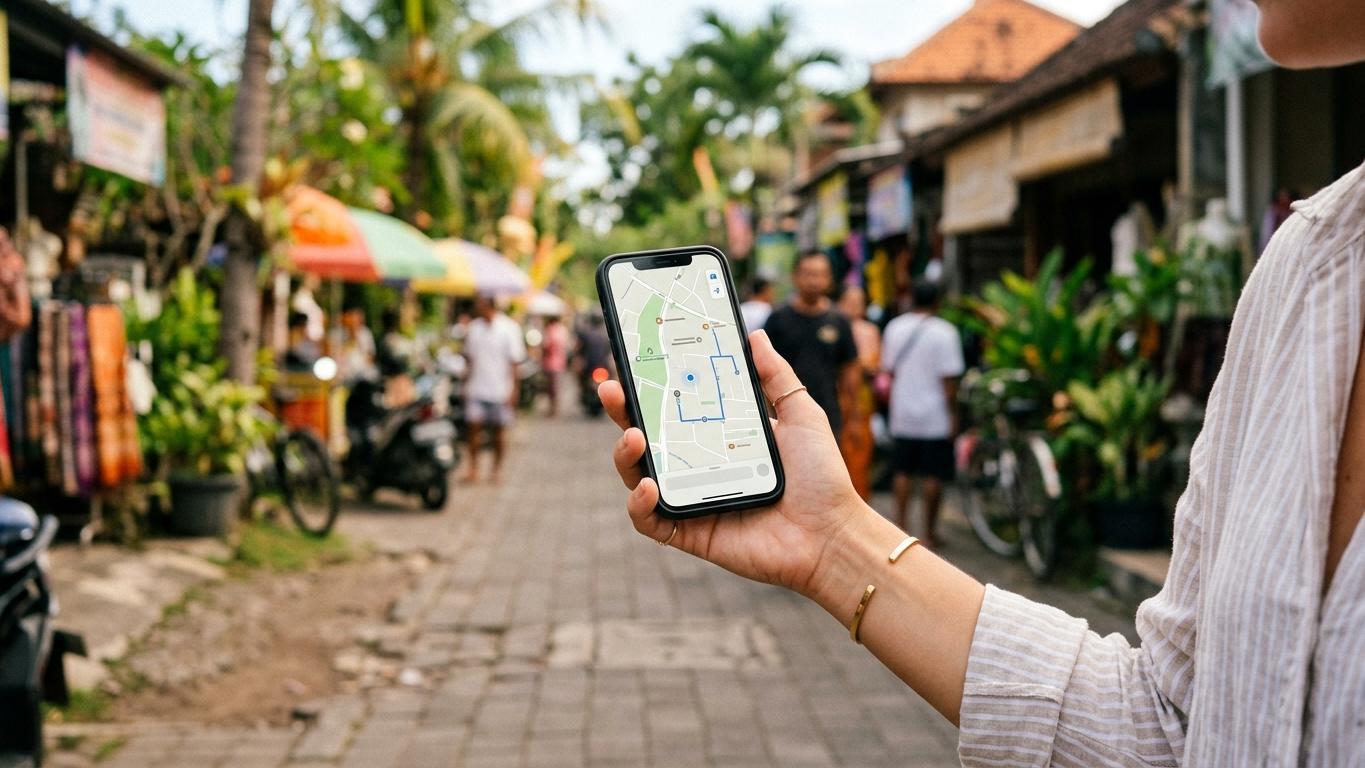
Self-guided Sanur walking tours work well given how clearly the promenade itself functions as a natural spine to navigate by, hard to get lost with the ocean consistently on one side. A phone map and a rough sense of north versus south is genuinely enough preparation for most visitors. A self-guided route costs nothing beyond time and comfortable shoes, and reading a bit of background on Blanjong Temple and Sanur’s own colonial-era history beforehand can close much of the context gap for visitors who’d rather walk independently.
Guided and Free Walking Tours
Guided options add real value specifically around Sanur’s history, a knowledgeable local guide can explain the Belanjong Pillar’s inscription, point out which villas carry genuine historical significance, and add context a self-guided walk would otherwise miss entirely. Several local operators run half-day guided walking tours covering the promenade, back streets, and historic sites together.
Free walking tour groups also operate in Sanur on occasion, typically tip-based rather than fixed-price, following a set route with a volunteer or local guide. They’re worth checking for on a given set of visit dates, though availability and scheduling tend to be less consistent than a paid guided option booked well in advance.
A Hybrid Approach
A hybrid approach works well for a lot of visitors, a self-guided morning covering the promenade at a personal pace, followed by a guided afternoon specifically for the historic back-street sites where local context genuinely adds the most value.
Sanur Walking Tours for Different Kinds of Visitors
The right route genuinely depends on who’s walking it, worth matching to the traveler type rather than defaulting to one standard loop.
Families and History-Focused Visitors
Families with young children generally do best sticking to the central promenade stretch near Karang Beach and Sindhu Beach, flat, shaded, and close enough to cafes and restrooms that a tired child doesn’t turn into a real problem partway through the walk.
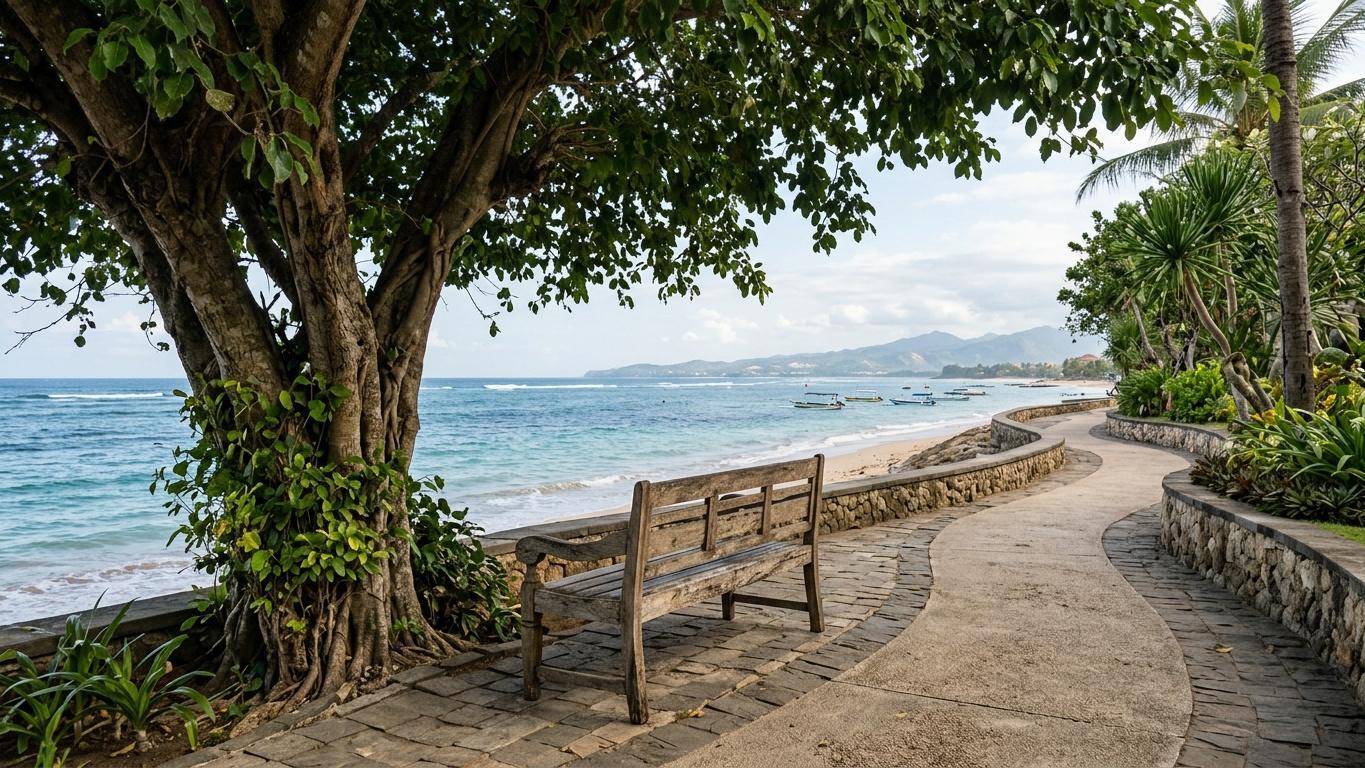
History-focused visitors get the most out of a route built specifically around Blanjong Temple and the Le Mayeur Museum, ideally with a guide who can add real context beyond what’s posted on-site, turning a short walk into a genuinely educational half-day outing.
Photographers and Couples
Photographers tend to favor the golden-hour stretch near Mertasari Beach and the fishing boats around Karang Beach specifically, both offering a mix of natural light and genuine local activity that’s harder to find along the busier central promenade.
Couples and honeymooners tend to gravitate toward the quieter southern stretch of Sanur walking tours specifically, the walk down toward Mertasari at sunset in particular, a genuinely romantic option that requires no booking or advance planning beyond simply setting out at the right hour of the day.
Solo Travelers and Multi-Day Stays
Solo travelers generally find Sanur among the more comfortable Bali towns to walk through independently, the promenade’s constant activity and clear orientation along the coastline make it easy to navigate confidently without any local language skills or extensive advance planning of any kind.
Visitors staying multiple days in Sanur can reasonably spread the full range of walking options, promenade, back streets, historic sites, and the Mertasari extension, across separate mornings rather than attempting to compress everything into a single exhausting outing.
Fitness-Focused Visitors
Fitness-focused visitors wanting a longer daily distance can combine the full promenade with a Mertasari extension and a return loop through the back streets, easily covering 8 to 10 kilometers in a single well-paced outing without ever repeating the same stretch of ground twice over.
Best Time of Day for a Sanur Walking Tour
Timing shapes the experience here more than most visitors expect, worth planning around both the hour and the season.
Morning vs Late Afternoon
Early morning, roughly 6:00 to 9:00 AM, is genuinely the best window for Sanur walking tours, cooler temperatures, softer light for photos along the promenade, and a noticeably quieter path before the day’s foot traffic builds up.
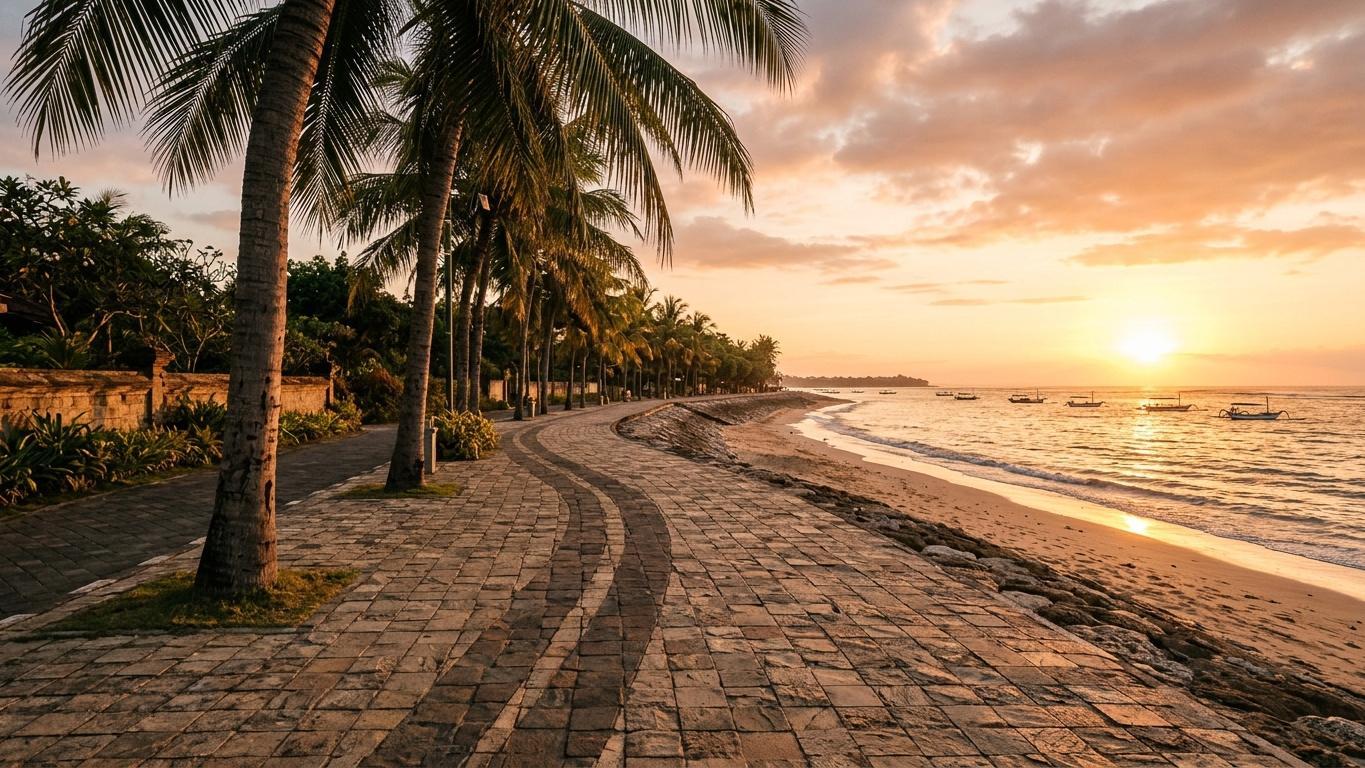
Late afternoon into sunset, from around 4:30 PM onward, offers a strong second window, particularly for a walk ending at Mertasari Beach, where the crowds thin out and the light turns genuinely dramatic over the water.
What to Avoid
Midday walking is worth limiting to shaded stretches only, direct sun and heat both peak hard between roughly 11:00 AM and 3:00 PM, and several sections of the promenade offer noticeably less tree cover than others.
Weekday mornings tend to be the quietest overall window for Sanur walking tours, weekend mornings draw a noticeably larger mix of local families, joggers, and cyclists sharing the same promenade, still entirely walkable but worth budgeting a little extra time for if the goal is an uninterrupted, genuinely unhurried pace throughout.
Wet season, running roughly November through March, doesn’t rule out walking tours entirely, Bali’s rain tends to arrive in short, predictable afternoon bursts rather than settling in for a full day, making a morning walk a genuinely reliable option even well outside the dry season.
What to Bring on a Sanur Walking Tour
Preparation for a Sanur walking tour is genuinely minimal, mostly a matter of managing sun and comfort over a multi-hour outing rather than anything specialized.
- A refillable water bottle, since not every stretch of the promenade has a shop or cafe nearby.
- Reef-safe sunscreen, reapplied roughly every two hours on a longer walk given Bali’s consistently high UV exposure.
- Comfortable, broken-in walking shoes rather than sandals, particularly for the back-street sections with uneven pavement.
- Small cash for markets, warungs, and temple donation boxes along the route.
- A light rain layer during the wet season, Bali’s afternoon showers can arrive quickly even on an otherwise clear morning.
Comfort over gear is the real preparation
Because the walk is flat and paved rather than technical, the packing list is shorter than travelers often expect — the real preparation is managing sun exposure and comfort across a multi-hour outing, not carrying specialized equipment.
That makes it an easy add-on to a Sanur stay: no special planning window required, just the right basics for a long stretch outdoors.
Tips for Walking in Sanur
A handful of small habits make a Sanur walking tour go more smoothly, worth reviewing before setting out for the day.
- Dress modestly when visiting Blanjong Temple or any active place of worship along the route, shoulders and knees covered.
- Keep to the shaded side of the street during the middle of the day where the promenade doesn’t offer direct tree cover.
- Time a visit to Sindhu Market around its morning or evening peak hours rather than the quieter midday lull.
- Carry a printed or downloaded offline map as backup, cell signal is generally reliable but not guaranteed everywhere.
- Combine a morning promenade walk with an afternoon back-street route rather than attempting both in one long stretch.
Read more: Cycling in Sanur Bali 2026: Best Beachfront Bike Routes
A few habits reviewed beforehand beat improvising mid-walk
The habits that make a Sanur walking tour go smoothly are small and easy to forget if you don’t think about them before setting out, which is exactly why reviewing them in advance pays off.
None of them require extra planning time — they’re the kind of thing worth reading once before the day, then simply doing.
Where to Stay for a Sanur Walking Tour
Basing a stay directly on Sanur’s beachfront puts the entire promenade, and most of the town’s walkable historic sites, within easy reach on foot.
The Meru Sanur
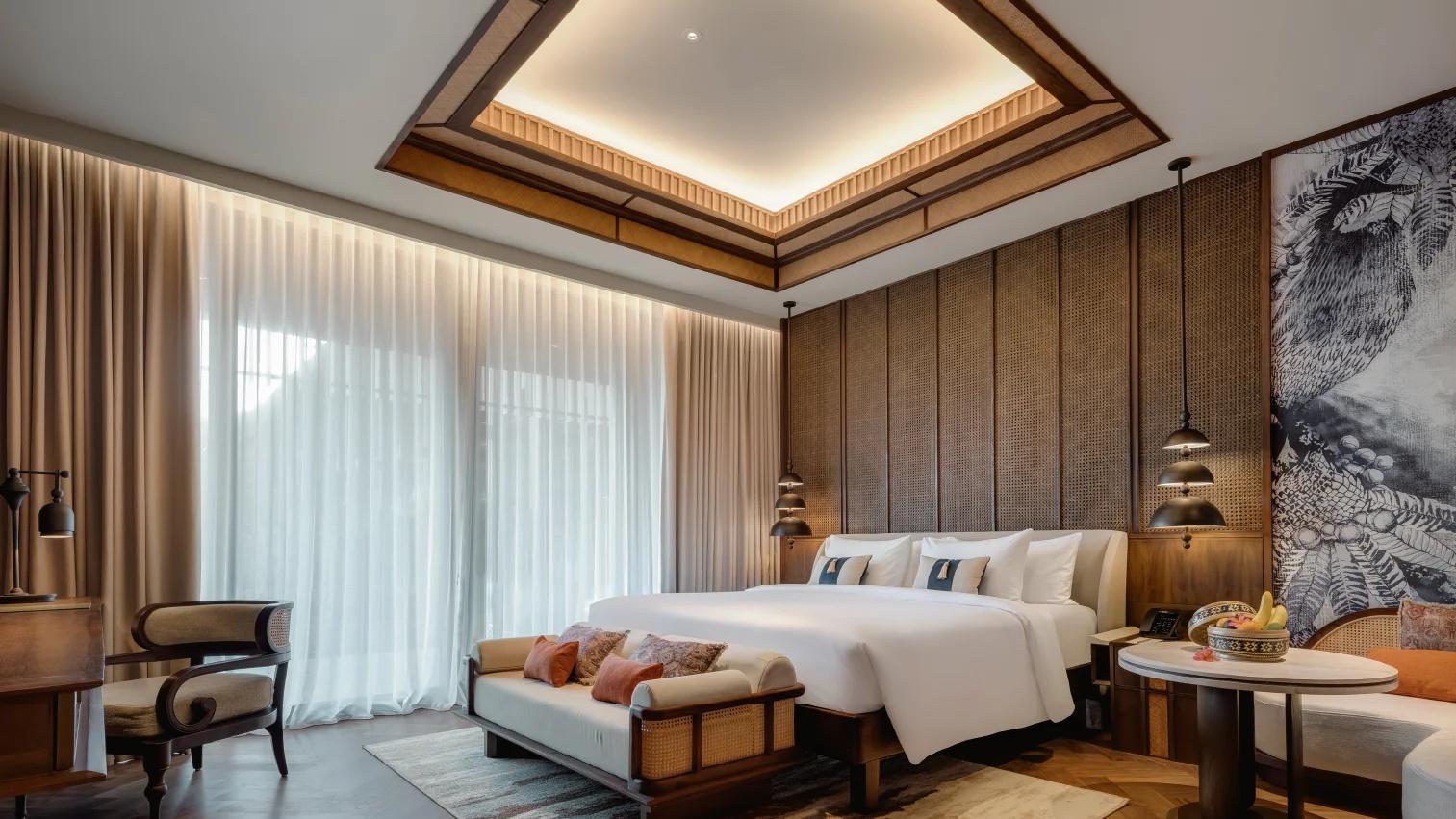
The Meru Sanur sits directly on Sanur’s beachfront, putting the full promenade within a short walk in either direction, genuinely convenient for anyone planning to build several days of Sanur walking tours around a single base rather than relocating partway through the trip.
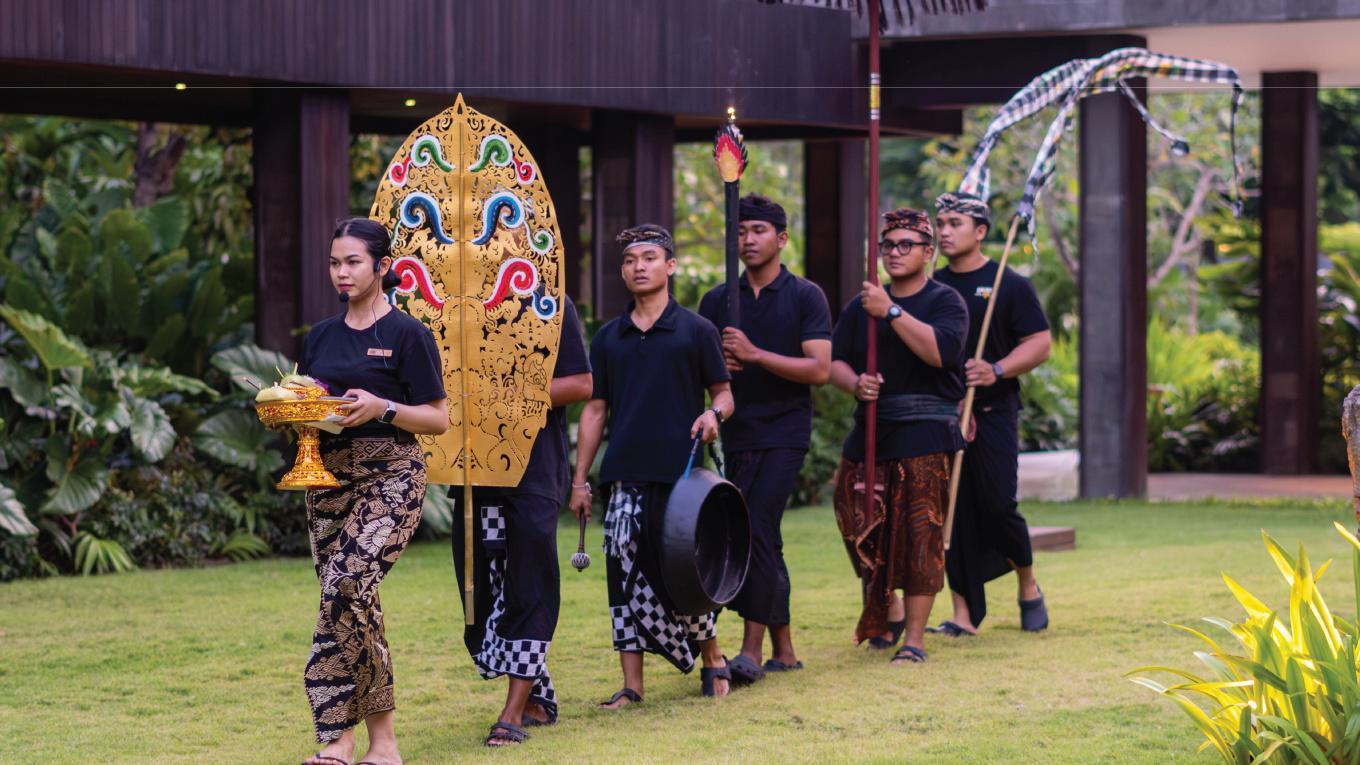
The Sandi Kala Ritual, the resort’s short evening ceremony held Tuesday, Thursday, and Friday from 18:00 to 18:20, pairs naturally with a sunset walk back from Mertasari Beach, timed right as the day’s light shifts and the ceremony itself begins.
Benang Jiwa, the resort’s weekly mindfulness workshop series, offers a genuinely relaxed indoor complement to a day spent walking, Sunday’s Akar Wangi soap bar making or Tuesday’s Lilin Jiwa candle making both work well as a lower-impact activity to pair with a walking-heavy itinerary.
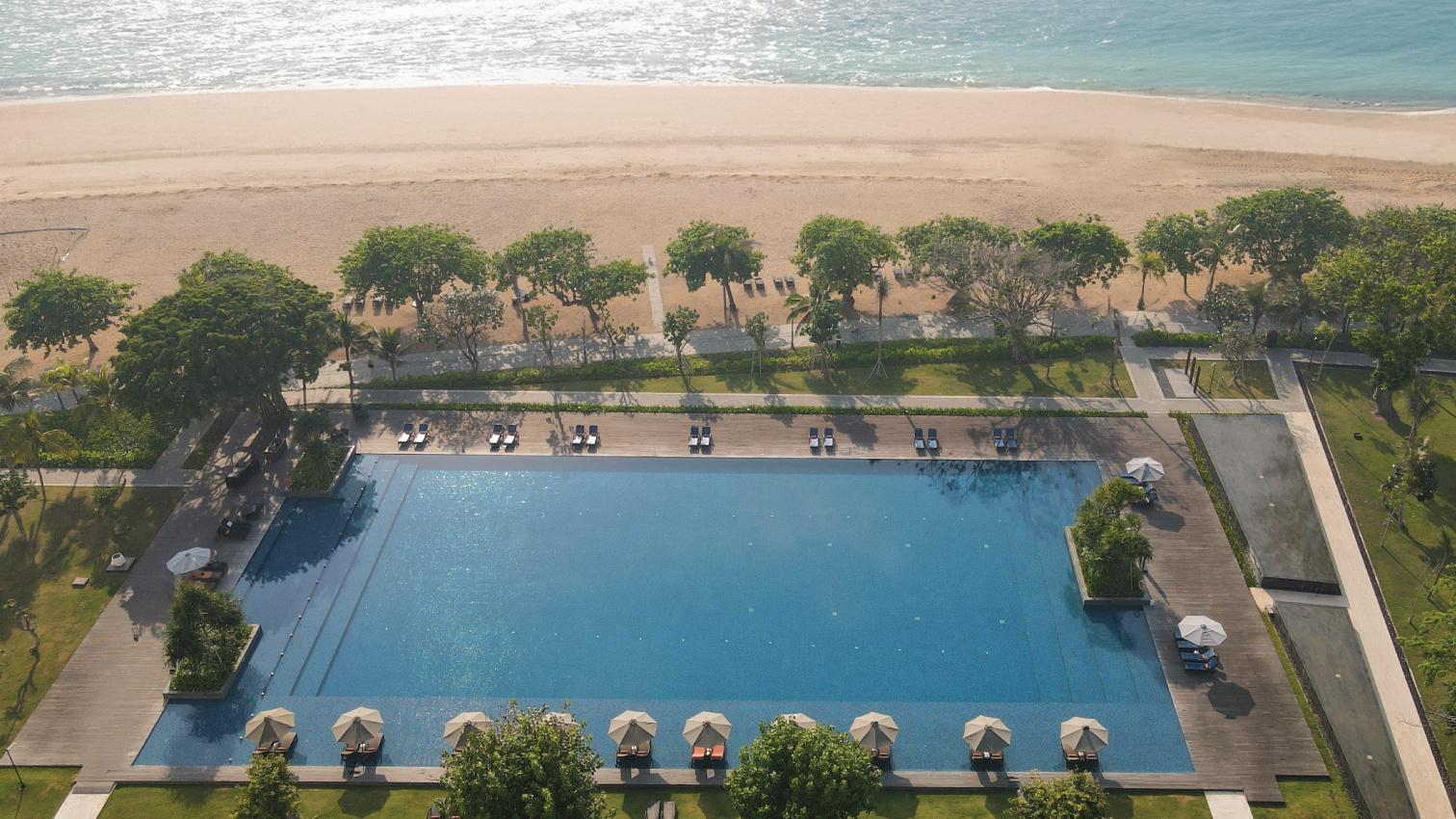
For a break partway through a longer walking day, the Meru Pool, exclusive to guests and facing directly over Sanur Beach, gives an easy way to cool off without needing to leave the property’s own beachfront.
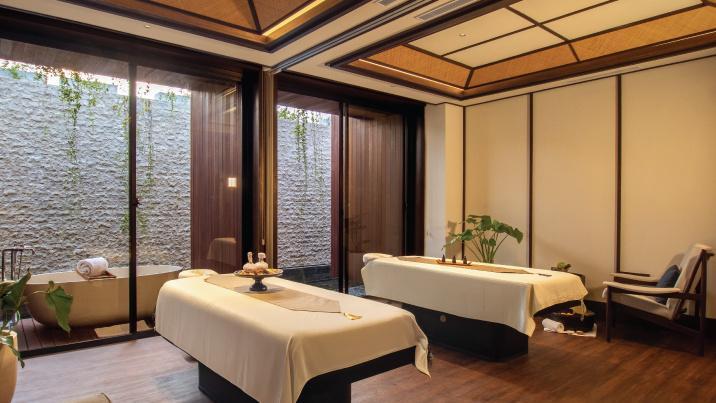
Crystal Quartz Massage‘s Seven Sacred Stones Massage, a 90-minute Balinese hot stone treatment with sacred sound bowl vibrations, works well as recovery for anyone who’s covered real distance across a multi-day walking itinerary rather than a single short stroll.
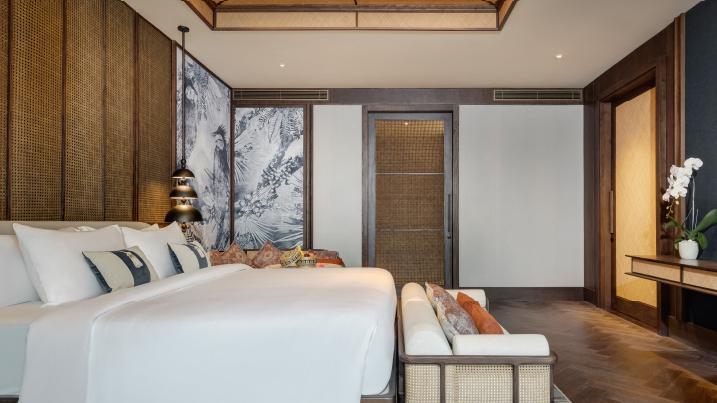
The resort’s genuinely all-suite layout, 184 suites with no standard rooms, means even a short walking-focused stay comes with real space to dry out a rain layer, sort through the day’s photos, and generally rest properly between outings rather than living out of a cramped room.

Arunika Restaurant, set amid the pool within the main gardens, makes a solid lunch stop between a morning promenade walk and an afternoon back-street route, its all-day dining running from 12:00 to 23:00.
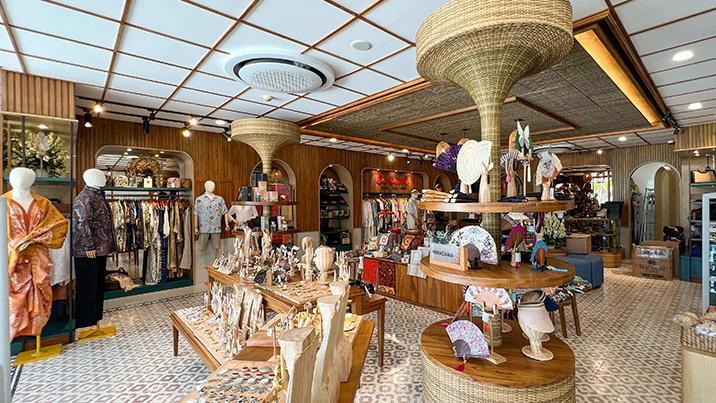
The resort’s own Sarinah store, stocked with traditional and contemporary Indonesian textiles and crafts, makes a convenient stop for a genuine souvenir after a day spent walking Sanur’s markets and back streets without needing a separate shopping trip.
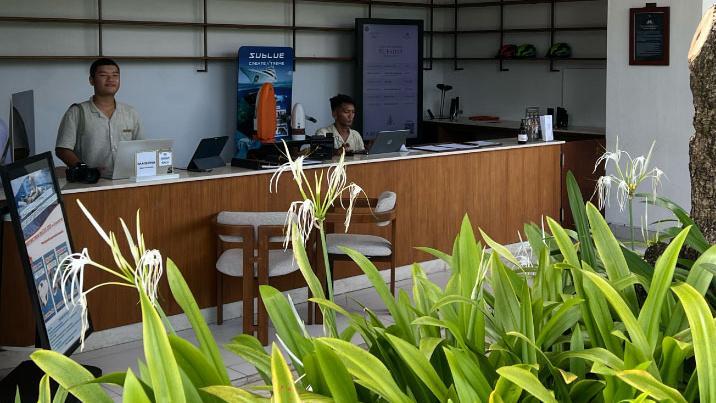
The Activity Desk, open 7:00 to 20:00, can also help arrange a guided walking tour or point guests toward a reputable local operator, useful for anyone who’d rather have the resort handle the booking directly rather than researching options independently.
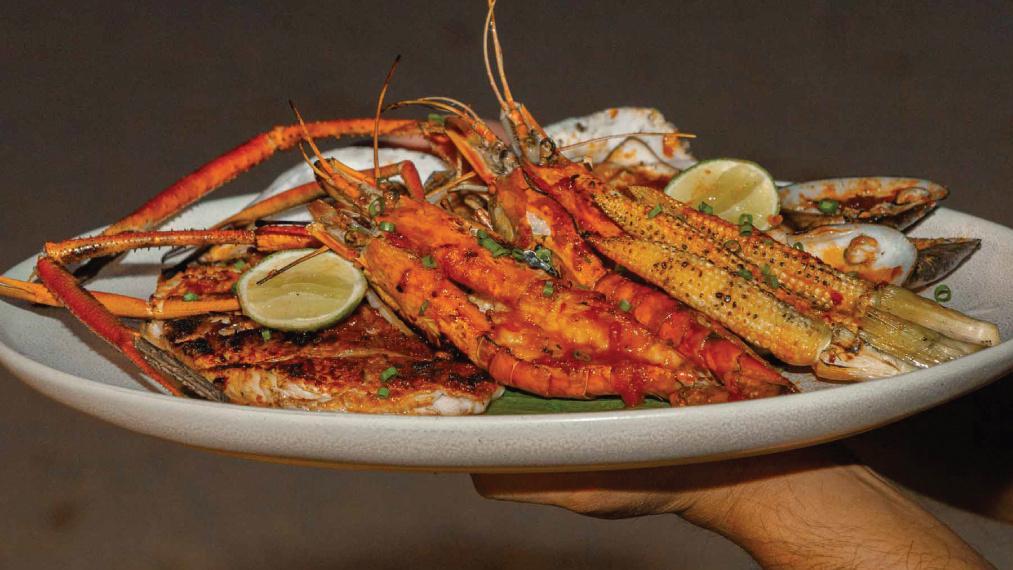
Bali Beach Bar & Grill, right on the beachfront, makes a natural stop for a post-walk lunch or dinner without leaving the property at all, particularly convenient after a longer walk south toward Mertasari Beach.
Detailed Information:
- Address: Jalan Hang Tuah, Sanur Kaja, Denpasar Selatan, Kota Denpasar, Bali 80227, Indonesia
- Phone Number: +62 361 2012000
- Reference Price: From roughly $210 USD per night, varying by suite category and season
Read more: Honeymoon Resorts in Sanur Bali 2026: Romantic Getaway Guide
Conclusion
Between a genuinely historic promenade, lived-in back streets, and easy detours to Blanjong Temple and the Le Mayeur Museum, Sanur walking tours cover a surprising amount of ground and history for a town most visitors picture purely as a quiet beach.
Book a stay at The Meru Sanur to keep the entire promenade within walking distance, with a beachfront pool and an evening ritual ready for whenever the day’s walking wraps up.
*Prices are for reference only and may change without notice. Please contact us directly for current rates.
Read more: Sanur in January 2027: Comprehensive Travel Guide
Frequently Asked Questions
Is Sanur a good place for walking tours?
Yes. Sanur’s flat, largely car-free promenade, compact scale, and cluster of historic sites within walking distance make it one of Bali’s most walkable coastal towns, well suited to both self-guided and guided walking tours.
How long is the Sanur beachfront promenade?
The main promenade runs more than 4 kilometers along the shore, curving past resorts, cafes, fishing boats, and a scattering of historic villas.
Are there guided walking tours available in Sanur?
Yes, several local operators run half-day guided walking tours covering the promenade, back streets, and historic sites like Blanjong Temple and the Le Mayeur Museum together.
What is the best time of day for Sanur walking tours?
Early morning, roughly 6:00 to 9:00 AM, and late afternoon into sunset from around 4:30 PM both offer cooler temperatures and better light than the middle of the day.
Can I walk to the mangrove forest from Sanur?
Not comfortably. Sanur’s own southern edge has a small mangrove fringe near Mertasari Beach, but the larger Tahura Ngurah Rai mangrove forest sits roughly 20 to 25 minutes away by car, best treated as a separate trip rather than an extension of a walking tour.
Is it safe to walk around Sanur at night?
Generally yes, particularly along the well-lit central promenade near Karang Beach and Sindhu Beach. The quieter northern and southern stretches, and the back streets away from the beachfront, are worth walking with a bit more general awareness after dark, same as anywhere else in the world.
How much do guided Sanur walking tours typically cost?
Paid guided walking tours generally run a moderate half-day rate covering a local guide and a set walking route, while free walking tour groups, where available, typically operate on a tip-based system rather than a fixed price point.