Venturing into the high-altitude slopes of eastern Bali reveals a spiritual world at once grand and deeply humbling. Choosing to explore the island’s most sacred sanctuary requires careful planning, as the destination’s scale matches its surroundings. This comprehensive guide outlines the vital historical context and practical strategies to ensure your journey to the summit is seamless and profoundly rewarding.
Visiting Besakih Temple, Bali’s Mother Temple
- History: To understand the Besakih Temple’s significance, it helps to explore its deep historical and spiritual roots as Bali’s Mother Temple.
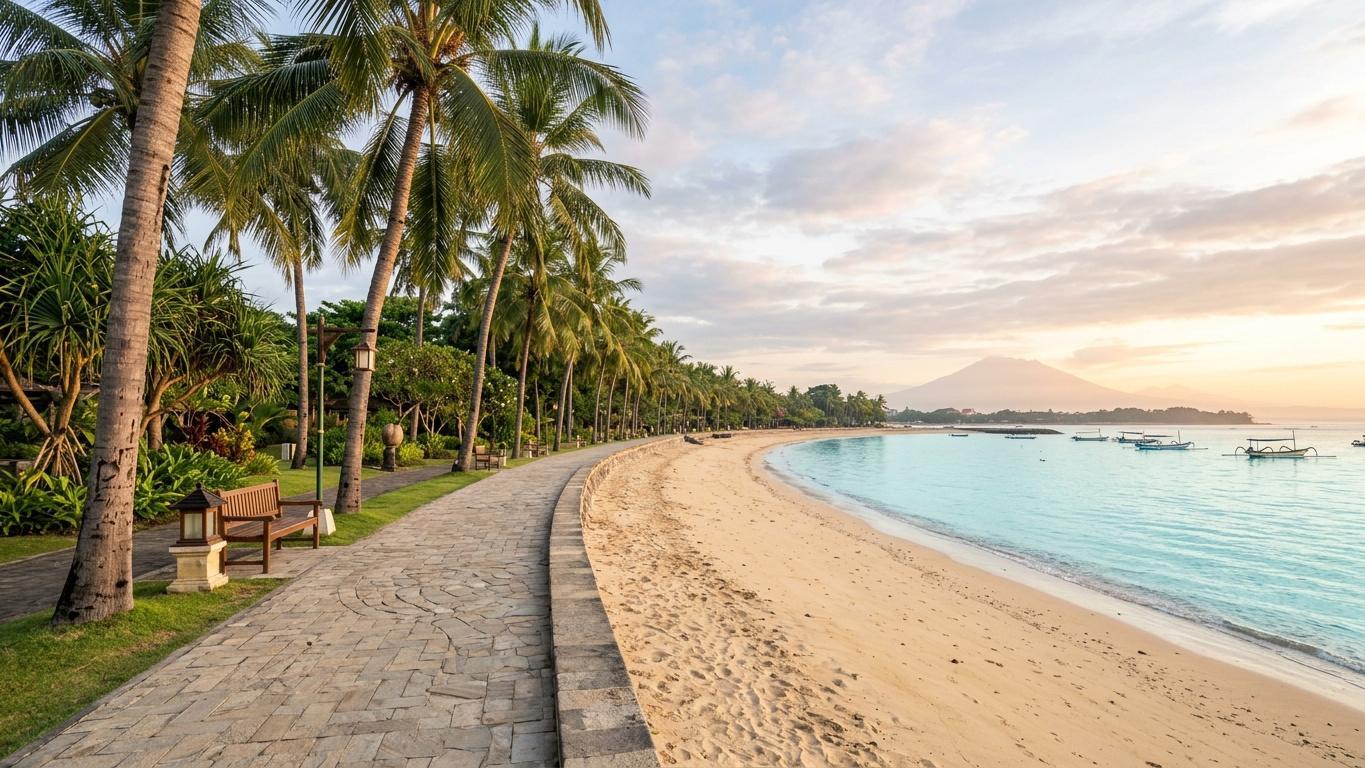
- After Your Visit: A day trip to Mount Agung’s slopes to witness Besakih Temple pairs well with returning to a restorative coastal setting afterward.
- Getting There: Besakih Temple is located on the volcanic slopes of Mount Agung, in the Karangasem Regency of eastern Bali.
- Setting: The temple complex sits on Mount Agung’s slopes, Bali’s highest and most sacred volcano.
- Timing: Because the temple is a genuine journey from Sanur, the visit is best planned as a dedicated day rather than a quick stop.
Practical Visitor Information for 2026
Organising an excursion to this high-altitude destination requires attention to logistical details. Below is the essential practical information to help you plan a smooth and comfortable day trip from the coast.
Location and Directions from Sanur
The majestic Besakih Temple is located on the volcanic slopes of Mount Agung, situated in the Karangasem Regency of eastern Bali. This location is approximately 55 kilometres northeast of the coastal resort village of Sanur. Travelling to the temple complex involves a scenic and unhurried drive that transitions from the coastal lowlands to the cool, misty highlands, taking approximately ninety minutes to two hours depending on the traffic conditions.
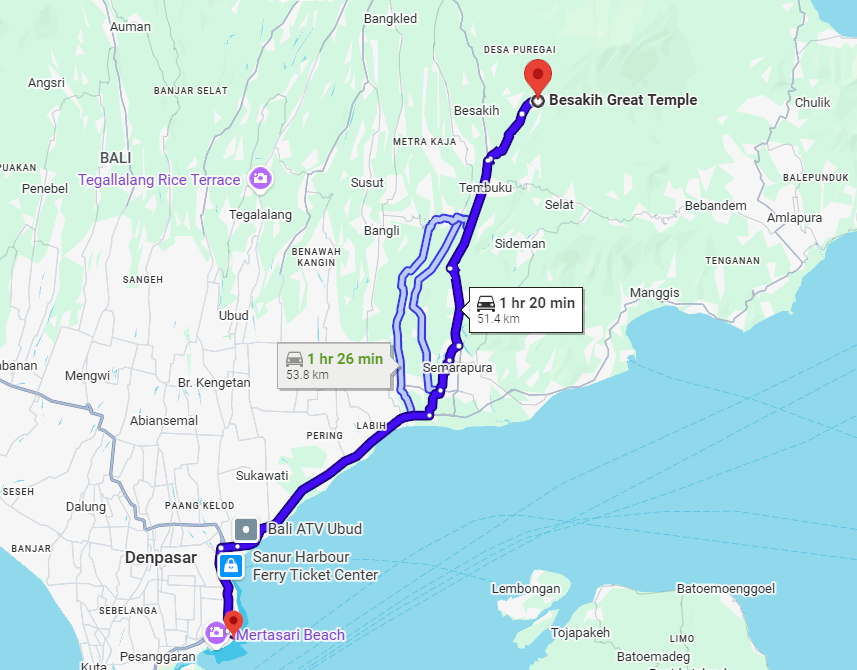
The most efficient route from Sanur utilises the primary eastern bypass road (Jalan Bypass Ngurah Rai), connecting to the Ida Bagus Mantra bypass before heading inland through the lush regency of Klungkung. As you ascend the mountain, the roads become increasingly winding and narrow, requiring a high degree of driving focus.
For this reason, we strongly recommend hiring a private air-conditioned car with a professional local driver. This choice allows you to relax and enjoy the changing landscapes, from terraced rice fields to dense tropical forests, without the stress of navigating the challenging mountain terrain.
It’s a real journey, not a quick side trip
Besakih Temple sits on the volcanic slopes of Mount Agung in the Karangasem Regency of eastern Bali — a genuine journey from Sanur rather than a quick detour, which should factor into how the rest of that day is planned.
Building the travel time into the schedule up front, rather than treating it as incidental, avoids the trip feeling rushed on either end.
Entrance Tickets and Opening Hours
To ensure a structured and respectful environment, the local authorities maintain a standardised ticket office at the main entrance area. The fees collected directly support the physical preservation of the ancient shrines and the local village community.
Visitor Entrance Fees and Opening Hours
| Category | Ticket Price (IDR) | Approximate Price (USD) |
| International Adult | IDR 90,000 | $5.80 |
| International Child | IDR 45,000 | $2.90 |
| Domestic Visitor | IDR 50,000 | $3.20 |
| Camera Fee | IDR 50,000 | $3.20 |
Opening Hours: Daily: 8.00 AM to 6.00 PM
Note: The temple grounds remain open 24 hours daily for local devotees during major religious ceremonies and full moon festivals.
The Meaning and History Behind the Mother Temple
To truly understand the significance of the Besakih Temple, one must explore its deep historical and spiritual roots. Widely recognised as the Mother Temple of Bali, this sprawling complex is the largest, holiest, and most important Hindu temple on the island. It is a massive assembly of 23 separate but related temples, built on a series of parallel ridges that ascend the slopes of Mount Agung, Bali’s tallest and most sacred active volcano.
The temple’s history dates back over a thousand years, with its origins believed to lie in the prehistoric megalithic stepped pyramids of the island’s earliest inhabitants. In the 8th century, the revered Indian sage Markandeya established the first formal Hindu shrine here after a spiritual journey across Java and Bali. Over the centuries, the site became the central state temple of the Gelgel and Klungkung dynasties, representing the spiritual axis of the Balinese universe.
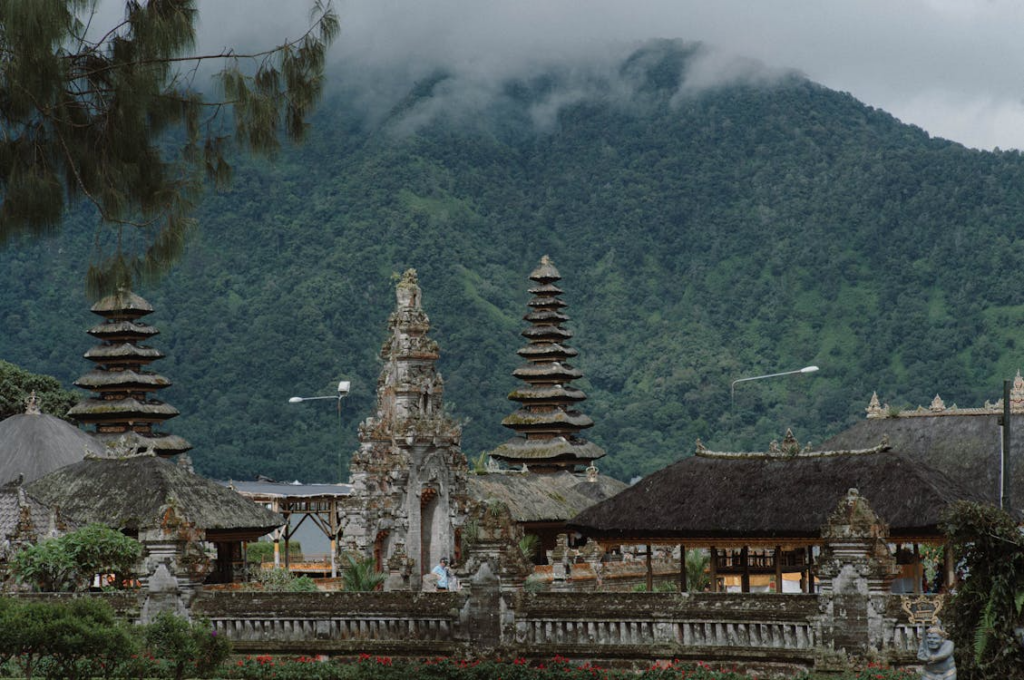
The sacred reputation of the Besakih Temple was permanently solidified in 1963 during a catastrophic eruption of Mount Agung. While devastating lava flows destroyed nearby villages and claimed thousands of lives, it is believed the lava miraculously split and flowed around the temple complex, leaving the primary shrines entirely untouched. For the Balinese people, this event was a clear demonstration of divine protection, securing the temple’s status as a living sanctuary of uncompromised spiritual power and resilience.
Understanding the roots changes what you see on-site
Besakih’s significance isn’t obvious from the architecture alone — grasping its deep historical and spiritual roots as Bali’s Mother Temple is what turns a visit from sightseeing into genuine understanding of what the site represents to Balinese Hindus.
Reading up on that history before the trip, rather than relying only on an on-site guide, makes the visit noticeably more meaningful.
Unique Architecture and What to Expect Inside
The physical layout of the complex is a masterclass in Balinese spatial philosophy and religious symbolism, designed to guide the human spirit from the earthly realm toward the divine.
The Grand Pura Penataran Agung
The absolute centre of the entire complex is Pura Penataran Agung, the largest and most important temple on the main ridge. It features a grand monumental staircase adorned with stone carvings of figures from the Ramayana and Mahabharata epics, leading up to a series of multi-tiered courtyards. This temple represents the middle world (Madya Mandala), where humanity interacts with the divine.
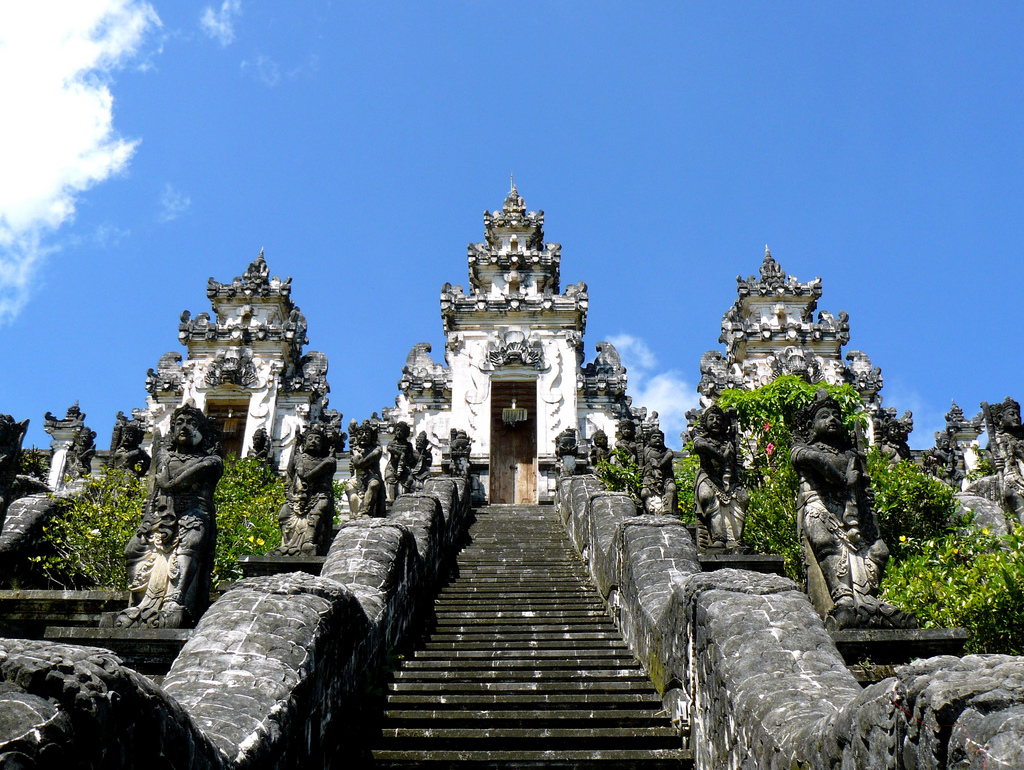
The interior of Pura Penataran Agung houses the three primary shrines dedicated to the Hindu trinity, Shiva, Vishnu, and Brahma. The stone carvings here are remarkably intricate, softened by centuries of weather and the constant smoke of incense. Observing the local priests in their white robes conducting ceremonies in these courtyards offers an educational glimpse of how Balinese Hinduism has remained consistent since the early centuries.
The Multi-Tiered Shrines and Sweeping Mountain Views
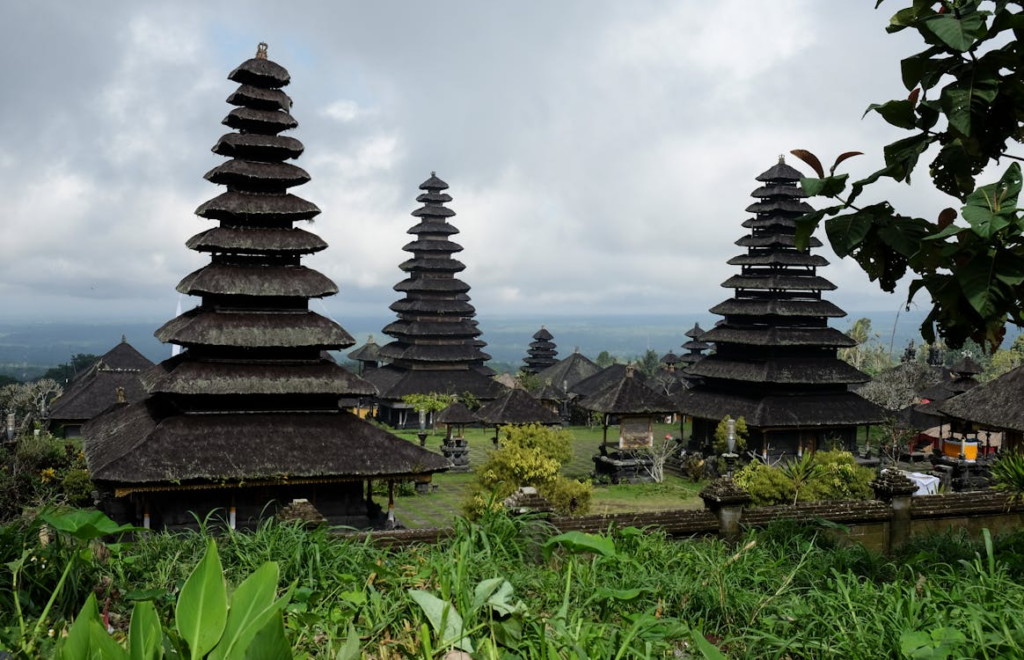
As you ascend the parallel ridges, you will encounter dozens of meru towers, multi-tiered thatched-roof shrines dedicated to various deities and ancestral spirits. The number of tiers on each tower is always odd, ranging from three to eleven, representing the different layers of heaven in Hindu cosmology. These towers are constructed using black palm-fibre thatch (ijuk) and local ironwood, blending seamlessly with the natural landscape.
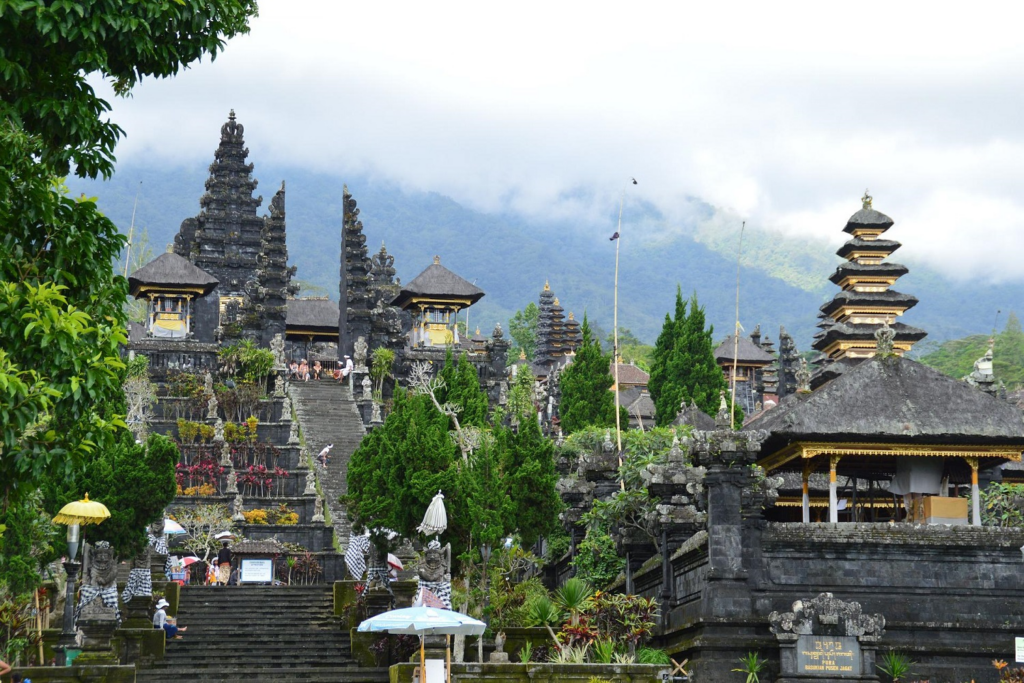
The view from the upper terraces of the Besakih Temple is nothing short of spectacular. On a clear morning, the majestic, green slopes of Mount Agung rise dramatically directly behind the shrines, while the distant coastline of eastern Bali stretches out below. This combination of sacred architecture and raw volcanic nature creates a deeply moving atmosphere, allowing visitors to appreciate the scale of the island’s spiritual universe.
The Iconic Candi Bentar Split Gateway
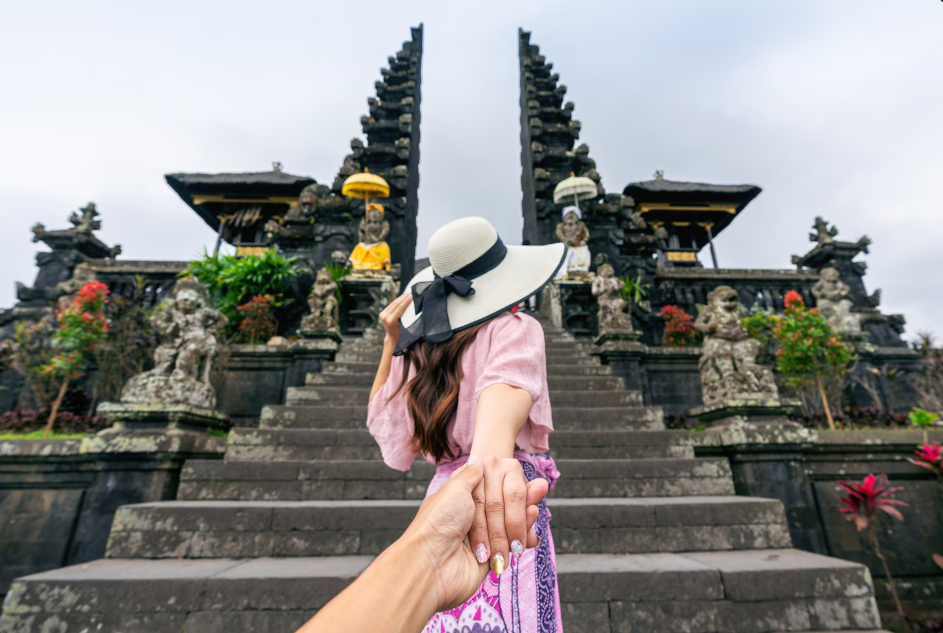
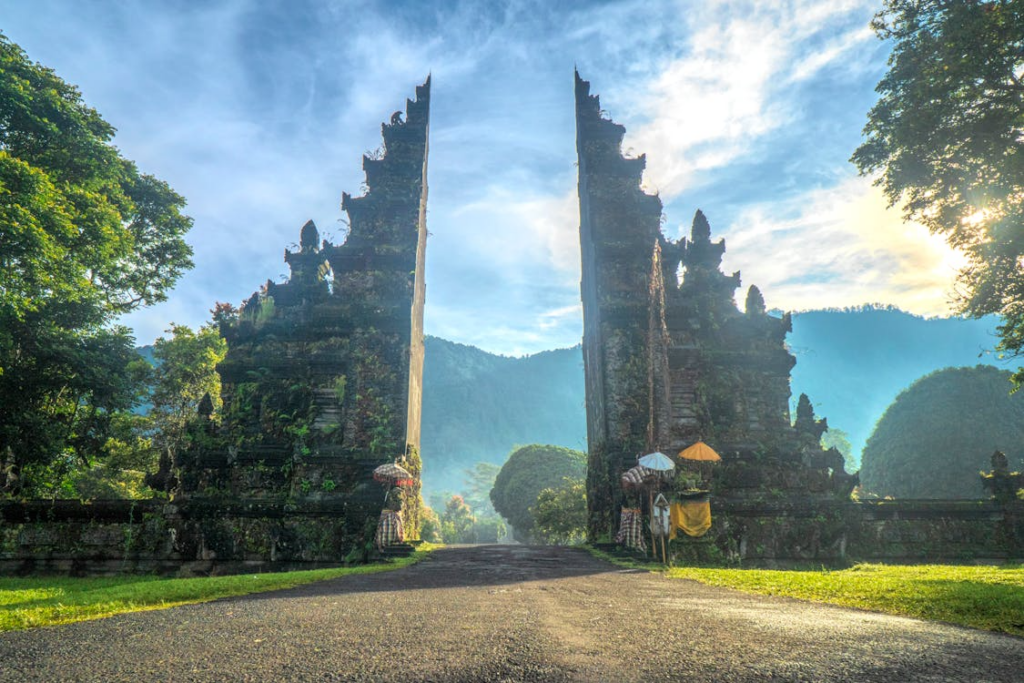
The entrance to every temple within the complex is marked by a Candi Bentar, a traditional split gateway that resembles a mountain sliced perfectly in half. In Balinese architecture, this gateway symbolises the physical split of the cosmic mountain, allowing humanity to enter the sacred space. It represents the transition from the external, material world into the internal, spiritual realm.
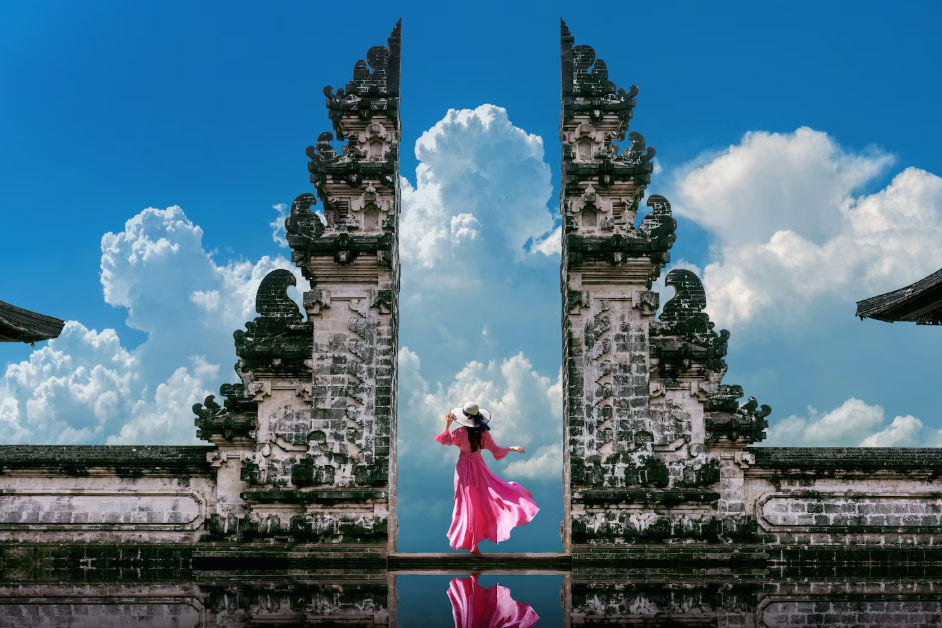
Passing through the Candi Bentar is a symbolic act of purification. It is believed to squeeze away the ego and negative energies of those who enter, preparing the mind for prayer and reflection. The stone carvings on these gateways are highly detailed, featuring protective mythological guardians (Dvarapala) who stand watch at the entrance. It is one of the most photographed features of the temple, offering a visual representation of Balinese spatial logic.
Essential Tips for a Sacred Experience
To ensure your visit to the Besakih Temple is respectful, comfortable, and memorable, we have compiled five essential tips for navigating this immense spiritual site.
1. Dress Modestly in Traditional Attire
Respecting the local religious customs is the most important part of visiting any sacred site in Bali. To enter the grounds of the Besakih Temple, both men and women must wear a traditional sarong that covers the knees, along with a temple sash tied around the waist. Shoulders must also be fully covered, and casual beachwear is strictly inappropriate.
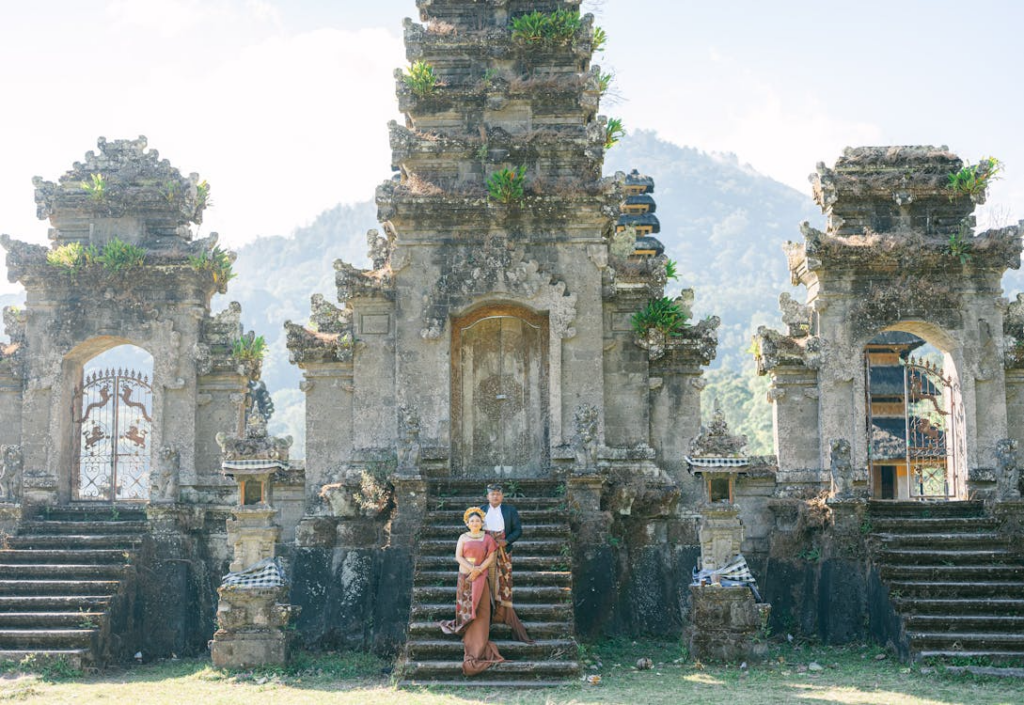
While sarongs are available for rent near the entrance, we highly recommend purchasing your own high-quality sarong at a local market early in your trip. Wearing white or light-colored clothing is also appreciated by the local devotees, as it symbolises purity and respect for the deities. By dressing appropriately, you show respect for the island’s living traditions and ensure you are welcomed into the sacred spaces.
2. Engage a Local Guide for Deeper Cultural Insight
The Besakih Temple is a highly complex historical and religious site with many subtle layers of meaning. To fully understand the significance of the various shrines and the rituals, engaging a local, licensed guide is highly recommended. These guides are usually members of the local village community and possess a deep, multi-generational knowledge of the temple’s history.
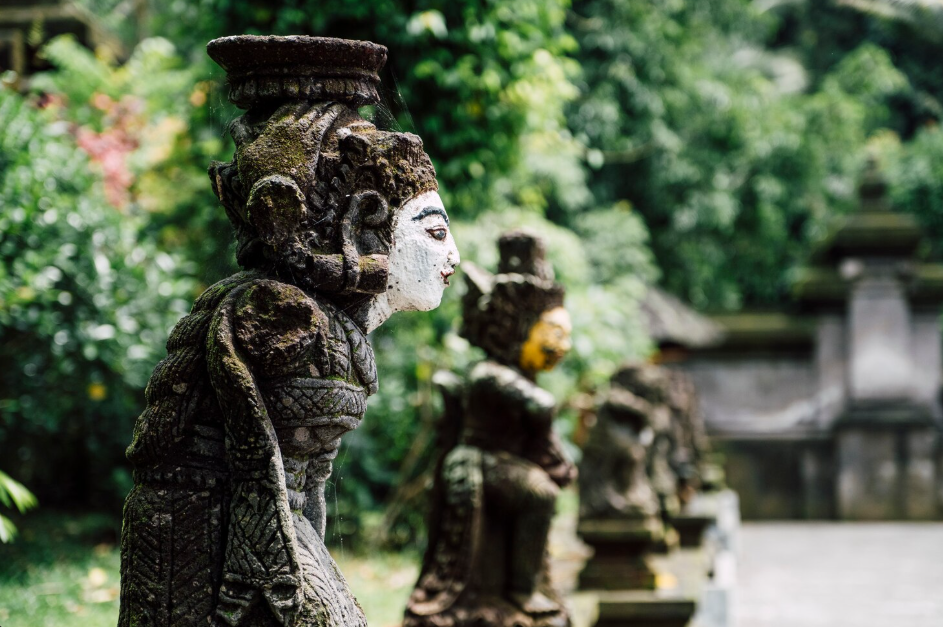
A professional guide can explain the detailed stories behind the stone carvings and help you navigate the expansive grounds without getting lost. They also help protect you from unregulated vendors and ensure you adhere to temple etiquette. Engaging a guide transforms a simple sightseeing walk into an educational experience, offering a deeper connection to the local culture.
3. Arrive Early to Embrace the Morning Serenity
The Besakih Temple is a popular destination for both international travellers and local pilgrim groups. To experience the site at its most peaceful and atmospheric, we strongly recommend arriving early in the morning, around 8.00 AM. During these early hours, the air is thin, cool, and crisp, and the morning mist often clings to Mount Agung’s slopes, creating a deeply mystical setting.
Arriving early also allows you to explore the extensive terraces before the heat of the midday sun sets in and the large tour buses arrive. The quiet of the morning provides the perfect environment for slow, mindful walking and personal reflection. It is a time when you can hear the birds in the surrounding forests and the distant, soothing chant of the priests, allowing you to experience the temple as a true sanctuary.
4. Be Mindful of Temple Etiquette and Ritual Spaces
While visitors are welcome to explore the public areas of the Besakih Temple, certain zones are strictly reserved for active prayer and local devotees. The inner courtyards of the individual temples are considered highly sacred, and non-worshippers are generally not permitted to enter. You can still appreciate the architecture and watch the ceremonies from the outer gates.
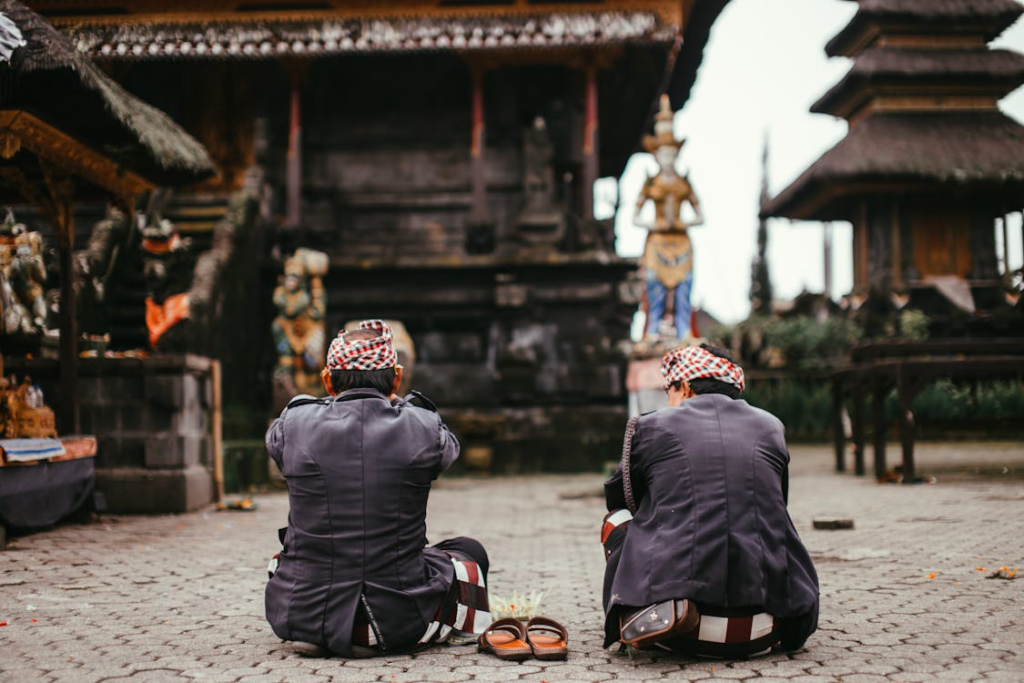
Always be mindful of where you walk, and be careful not to step on the small palm-leaf offerings (canang sari) placed on the ground. Never stand directly in front of someone who is praying, and avoid taking close-up photographs of priests or devotees without their permission. By maintaining a quiet, respectful presence, you ensure that the spiritual work can continue without interruption.
5. Choose Reliable Transportation and Plan Your Route
The journey to the mountain highlands is beautiful but physically demanding, requiring a reliable vehicle and a skilled driver. The narrow, winding roads of the Karangasem Regency can be challenging to navigate, particularly during the wet season when heavy tropical showers can reduce visibility. Planning your route in advance and choosing a professional transport provider is essential for a safe trip.

We recommend booking a private air-conditioned car with a driver through your resort’s concierge desk. This ensures you travel in comfort and safety, allowing you to enjoy the amazing scenery of terraced rice fields and volcanic valleys. A professional driver also understands the local traffic patterns and can recommend the best times to depart and return, ensuring a seamless, worry-free excursion.
A Coastal Sanctuary After Your Mountain Excursion
A day trip to the rugged slopes of Mount Agung to witness the grandeur of Besakih Temple is a deeply rewarding experience, yet it is also physically demanding. Returning to the coastal plains of Sanur is the perfect way to conclude your spiritual pilgrimage, transitioning from the high-altitude volcanic energy to the soothing sea breeze.
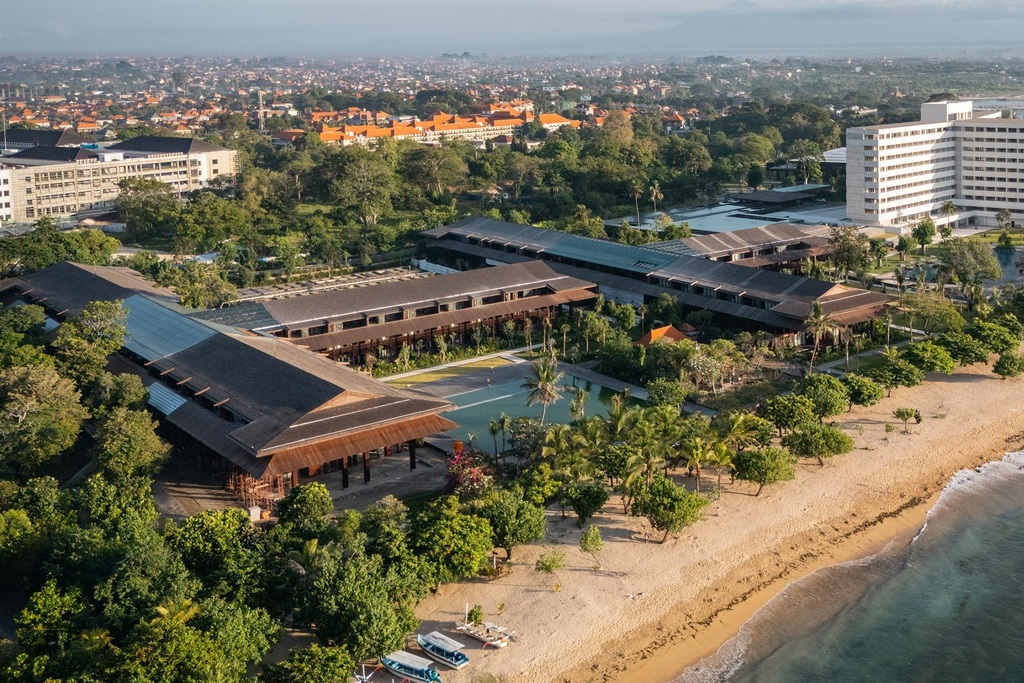
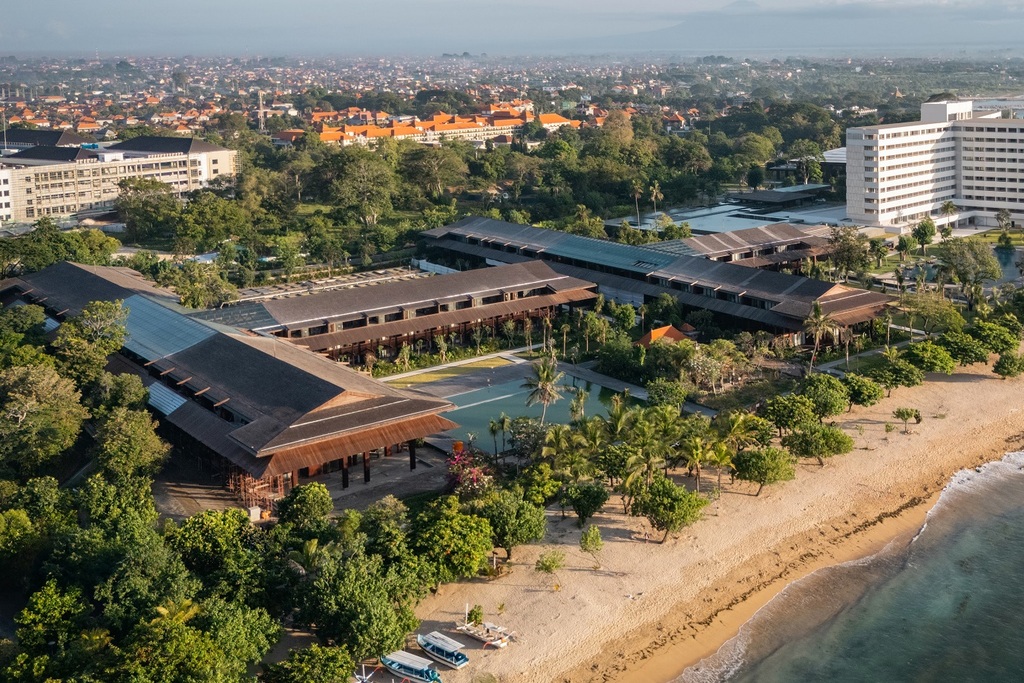
The Meru Sanur stands as a refined, wellness-led beachfront sanctuary, located within the peaceful enclave of the Special Economic Zone. Here, the soothing acoustics of flowing water and the natural, soft lighting of tropical modernism immediately soothe the nervous system, providing a perfect environment to reflect on your cultural discoveries.
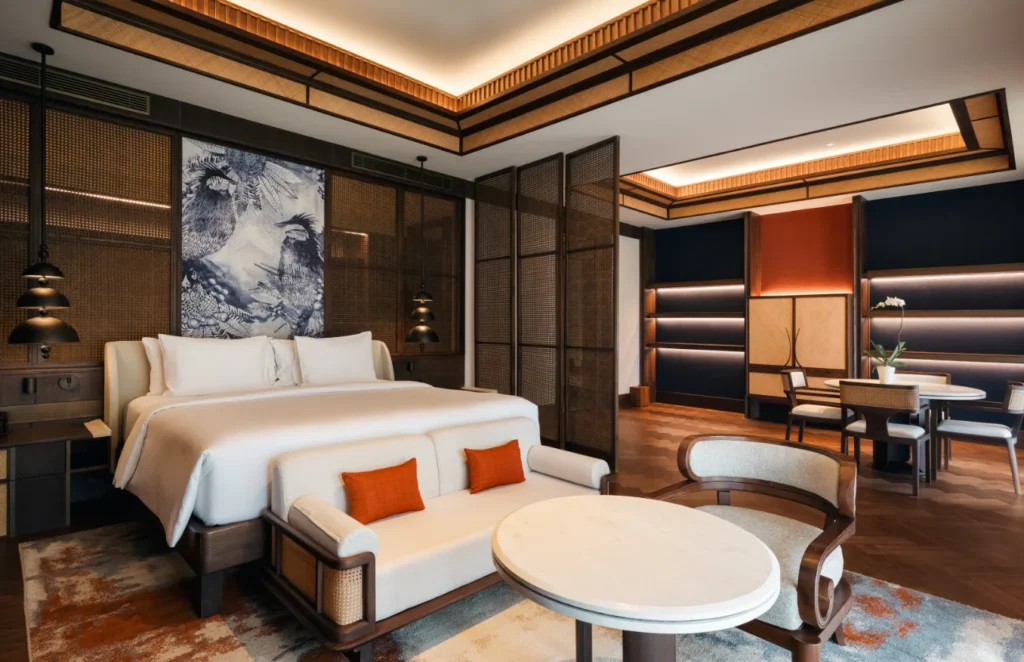
The unhurried luxury of the resort is beautifully reflected in its spacious suite collection, which serves as a private haven for restoration. For guests seeking a sophisticated residential feel, the Premier Tropical Suite offers 125 square meters of comfort, complete with refined furnishings, a spacious balcony overlooking the tranquil gardens, and a walk-in closet for added convenience during longer stays.
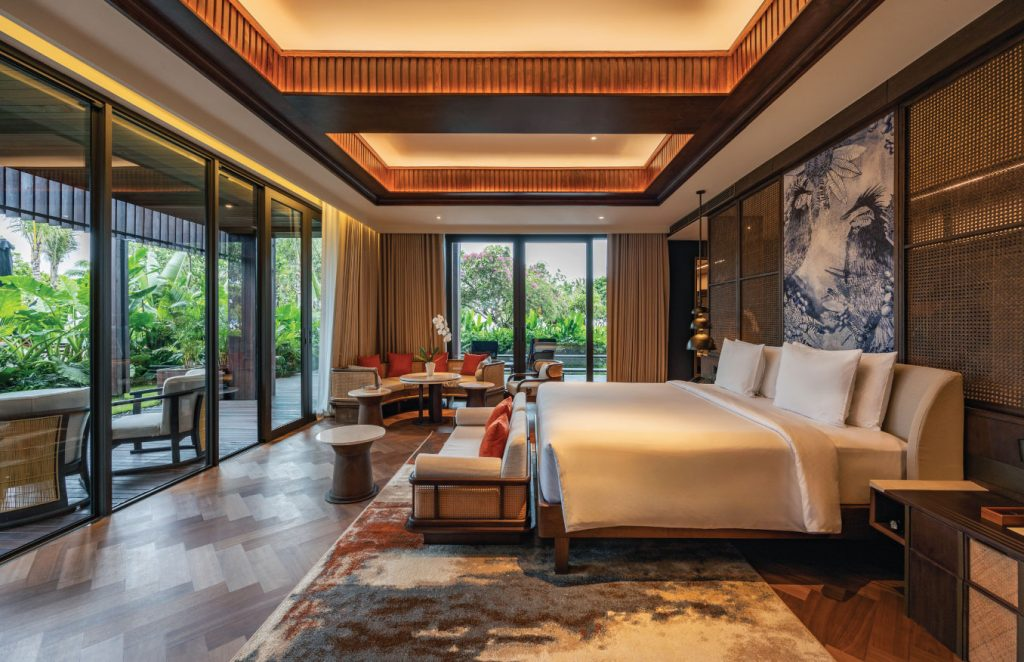
For those who require the absolute highest standard of privacy and space, the Presidential Suite spans a magnificent 209 square meters. This suite features an expansive living room, a luxury dining room, and a private reading room, creating a dignified atmosphere of calm for up to two guests.
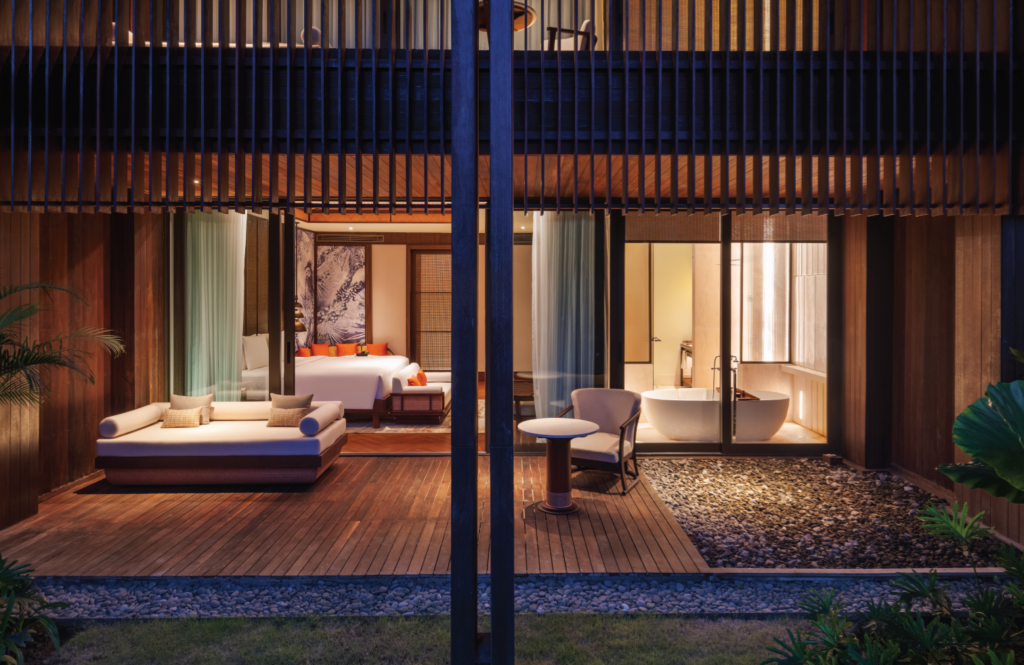
To make your cultural journey through Bali as seamless as possible, we recommend booking our Sanur Beach All-Inclusive package. Designed for those who value time and complete peace of mind, this premium package requires a minimum five-night stay.

It allows you to bypass the daily planning of travel and fully immerse yourself in a curated, stress-free holiday where every detail is managed with grace. It is the ultimate worry-free getaway for families and couples who want to focus entirely on their physical and spiritual realignment.
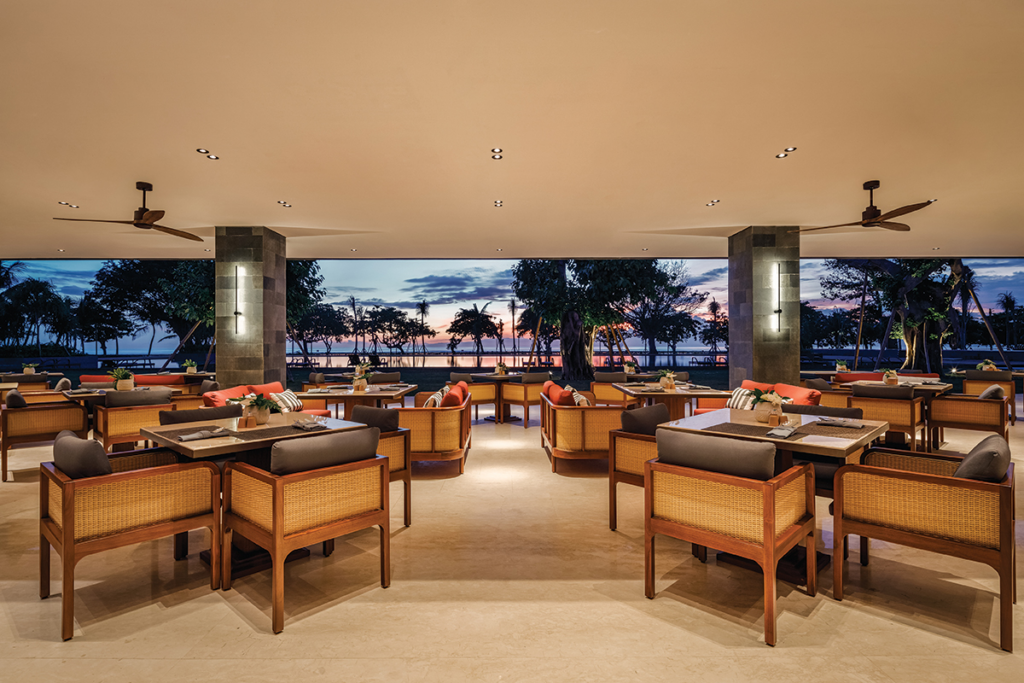
The package begins with a warm welcome, including a signature drink upon arrival and a complimentary bottle of wine waiting in your suite. Guests enjoy daily breakfast at Arunika Restaurant, where our culinary team prepares fresh, organic dishes that support your physical vitality.
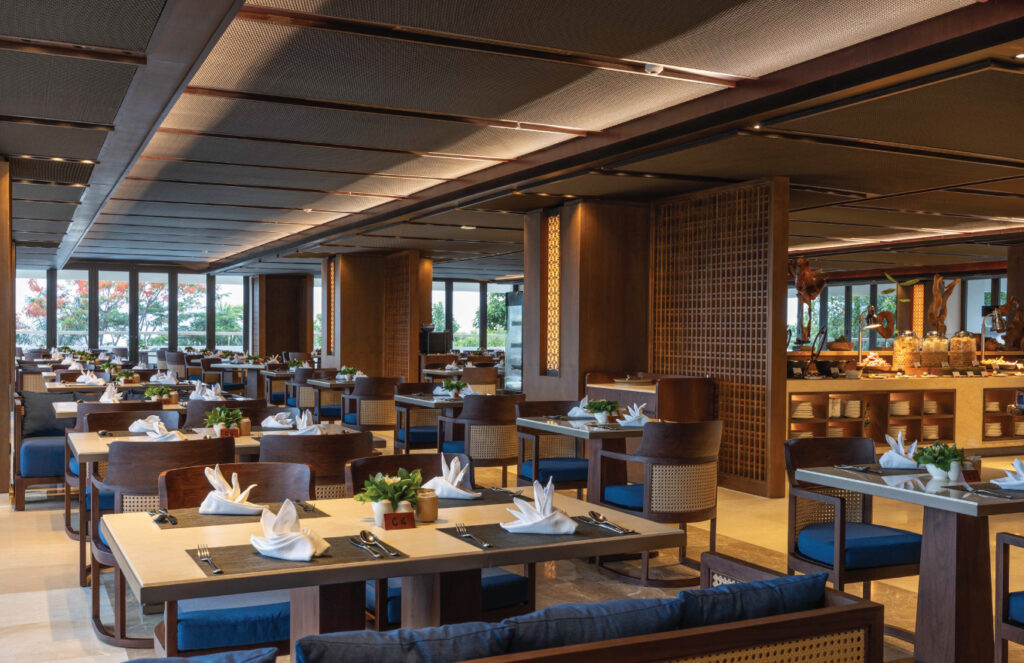
The stay is further enriched by a daily two-course lunch or dinner for two at either Roso Restaurant or Arunika, allowing you to sample authentic local and international flavours.
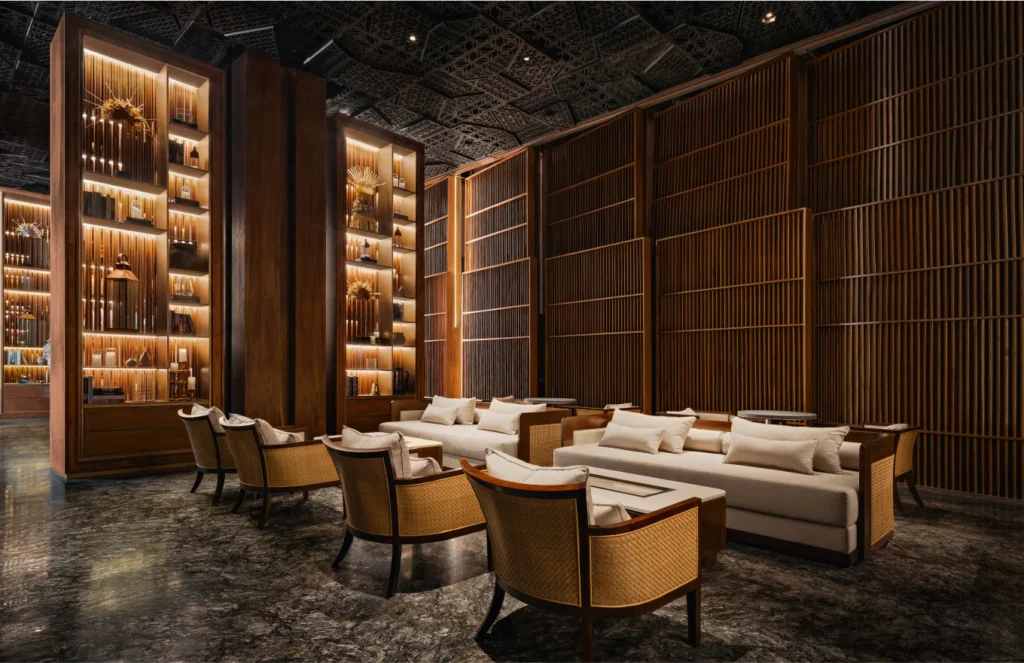
To support your evening unwinding, the package includes a daily free-flow of heritage cocktails, house wines, craft beer, and canapes at the Sutasoma Lounge, accompanied by our dedicated Resort Ambassador service available daily from 7.00 AM to 11.00 PM.
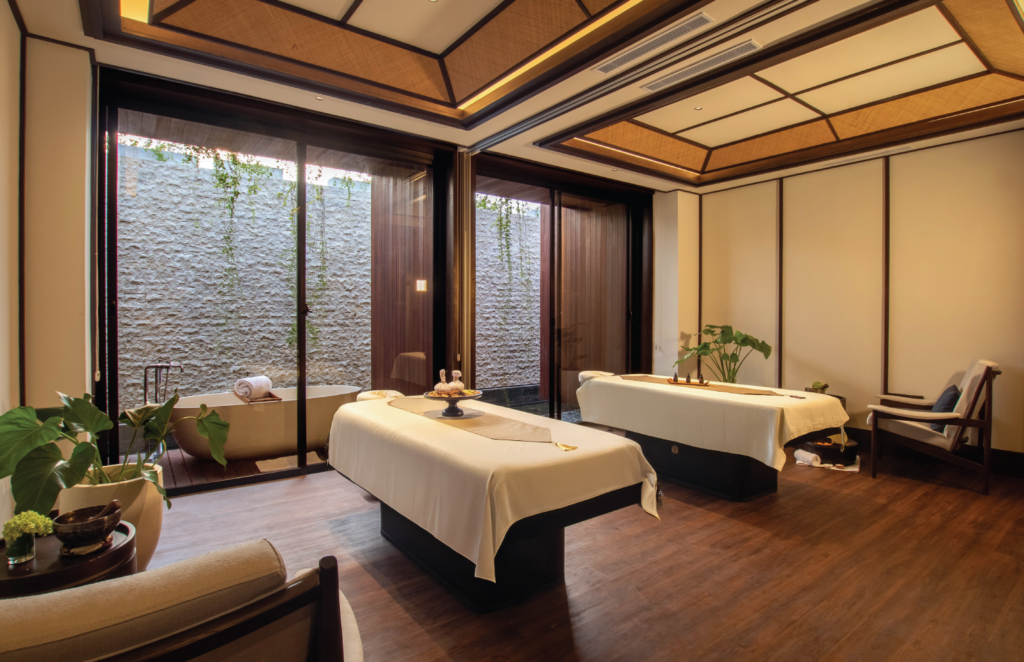
Wellness is deeply woven into the package, offering a one-time 45-minute therapeutic massage for two at the Taru Pramana Spa & Wellness centre. Guests also enjoy unlimited access to our daily scheduled wellness activities, including Sunrise Yoga and Nature Walks to help ground your body after climbing the temple stairs.
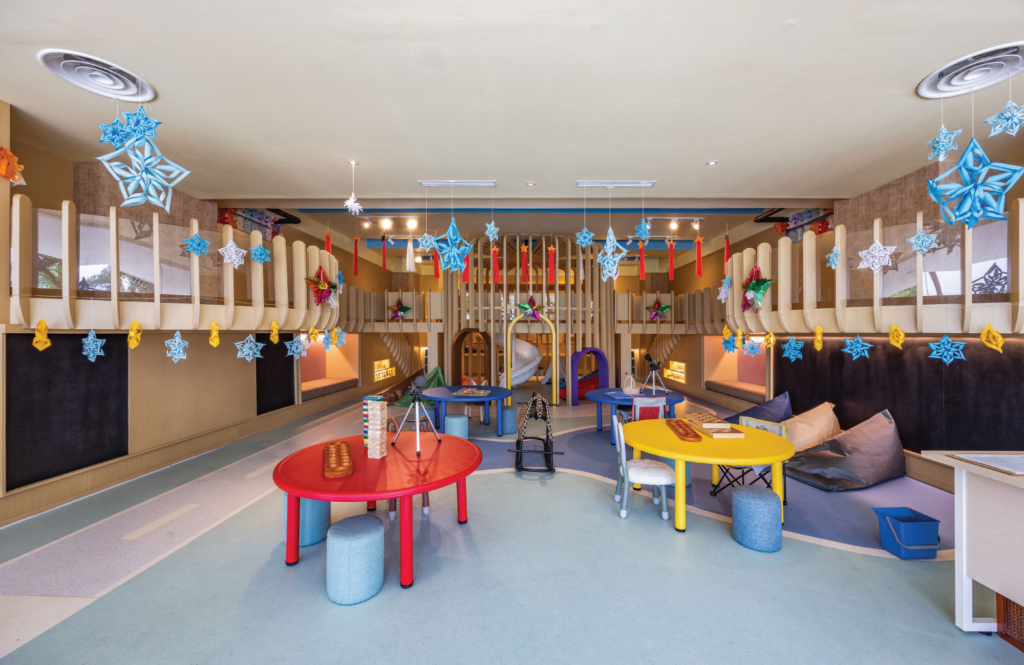
For those travelling with children, the package provides daily 3-hour access to the Niskala Kids Club, a creative sanctuary inspired by the unseen world of Bali, where young adventurers can learn about local crafts and play in a secure environment.
By choosing this all-inclusive stay at The Meru Sanur, you ensure that an environment of absolute exclusivity and tranquillity balances your excursion to the majestic Besakih Temple. Settle into our intimate, wellness-focused haven and begin your journey to complete restoration.
The kids club is themed, not just childcare
For families, the real value in this package is the daily 3-hour access to the Niskala Kids Club — it’s built around Bali’s unseen-world folklore rather than being a generic daycare, which keeps the day’s cultural thread going even while parents get their own recovery time.
That timing works both ways: booking the post-Besakih massage while the kids are occupied at the club, rather than waiting until after bedtime, is a simple way to make sure both halves of the family actually get to rest.
Conclusion
Sanur ancient town is not only a tourist destination but also a journey to discover unique cultural and historical values. The Besakih Temple stands as the ultimate spiritual monument of this heritage, offering a profound look into the island’s living faith and majestic architecture.
We hope this 2026 guide provides the practical context and essential tips required to plan your visit with complete confidence. By combining the intellectual discovery of the Mother Temple with the restorative luxury of The Meru Sanur, you ensure your Bali holiday is a balanced and meaningful experience.
*Prices are for reference only and may change without notice. Please contact us directly for current rates.
FAQs
What makes Besakih known as the Mother Temple of Bali?
The Besakih Temple is known as the Mother Temple because it is the largest, holiest, and most important Hindu temple on the island. It serves as the central state temple for the entire Balinese Hindu community, housing 23 separate but related temples on the sacred slopes of Mount Agung.
Where exactly is Besakih Temple located?
The temple is located on the volcanic slopes of Mount Agung, in the Besakih village of the Karangasem Regency, eastern Bali. It sits at approximately 1,000 meters above sea level, offering a cool, often misty mountain climate.
How much is the entrance ticket for international tourists?
For the 2026 travel season, the entrance ticket for international adults is IDR 90,000 (approximately $5.80 USD), while international children’s tickets are IDR 45,000 (approximately $2.90 USD). This fee includes basic insurance and access to the complex’s public areas.
How many steps do visitors need to climb at the temple complex?
While the exact number of steps varies across the different ridges, ascending to the main courtyard of Pura Penataran Agung requires climbing a grand central staircase of approximately 150 steps. We recommend a slow, mindful pace to ensure safety and comfort.
How far is the temple from the coastal resorts in Sanur?
The temple complex is located approximately 55 kilometres northeast of Sanur. Depending on traffic and road conditions, the drive typically takes between ninety minutes and two hours each way, making it a highly rewarding full-day cultural excursion.