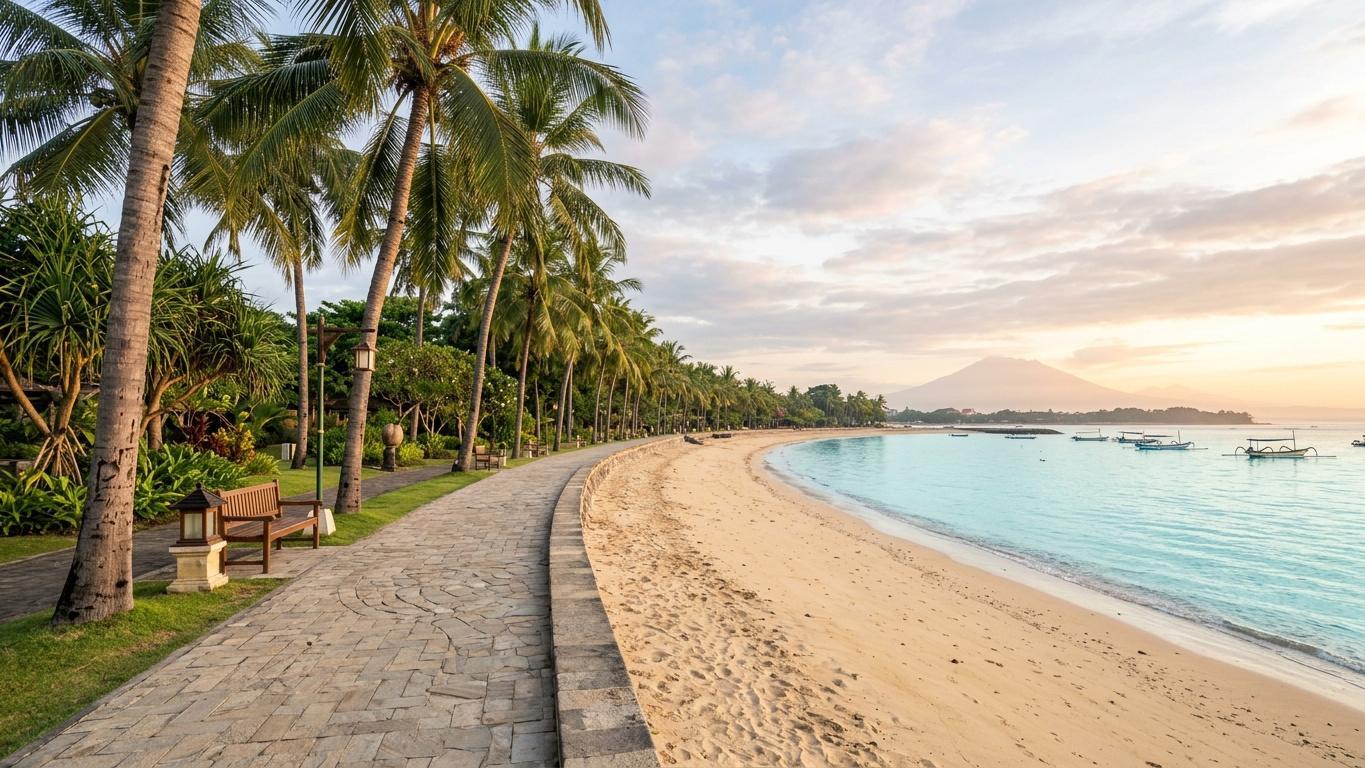
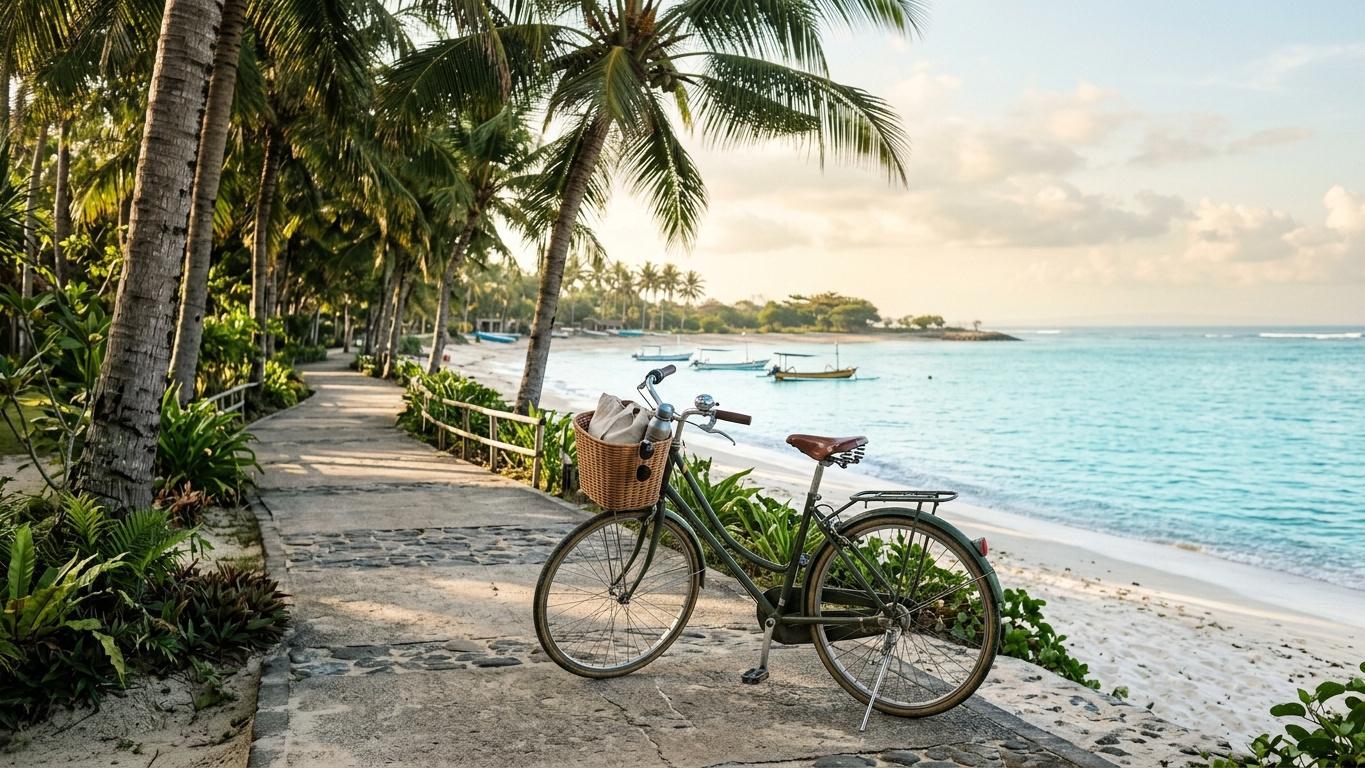
What if the safest stretch of pavement on the whole island also happened to be one of its prettiest? That’s essentially the pitch for cycling in Sanur Bali, a flat, car-free coastal path running past fishing boats, small temples, and beachfront warungs, with none of the scooter traffic that makes riding in most other Bali towns genuinely stressful.
Renting a Bike and Riding Sanur’s Promenade
- Bike Rental: Renting a bike in Sanur rarely requires planning ahead, with rentals widely available and inexpensive.
- Best Time: Early morning, roughly 6:00 to 9:00 AM, is genuinely the best window for cycling, thanks to cooler temperatures and softer light.
- Tips: Most of what makes a ride go smoothly comes down to small habits rather than special preparation.
- Terrain: The flat, well-maintained promenade requires little technical cycling skill, making it approachable for most fitness levels.
- Cost: Rental prices are low enough that spontaneous same-day cycling is realistic rather than something that needs budgeting for.
Why Sanur Is One of Bali’s Best Cycling Destinations
A few distinct factors combine to make cycling in Sanur Bali stand out from riding almost anywhere else on the island, a mix that’s genuinely rare to find together in one place.
A Genuinely Car-Free Path
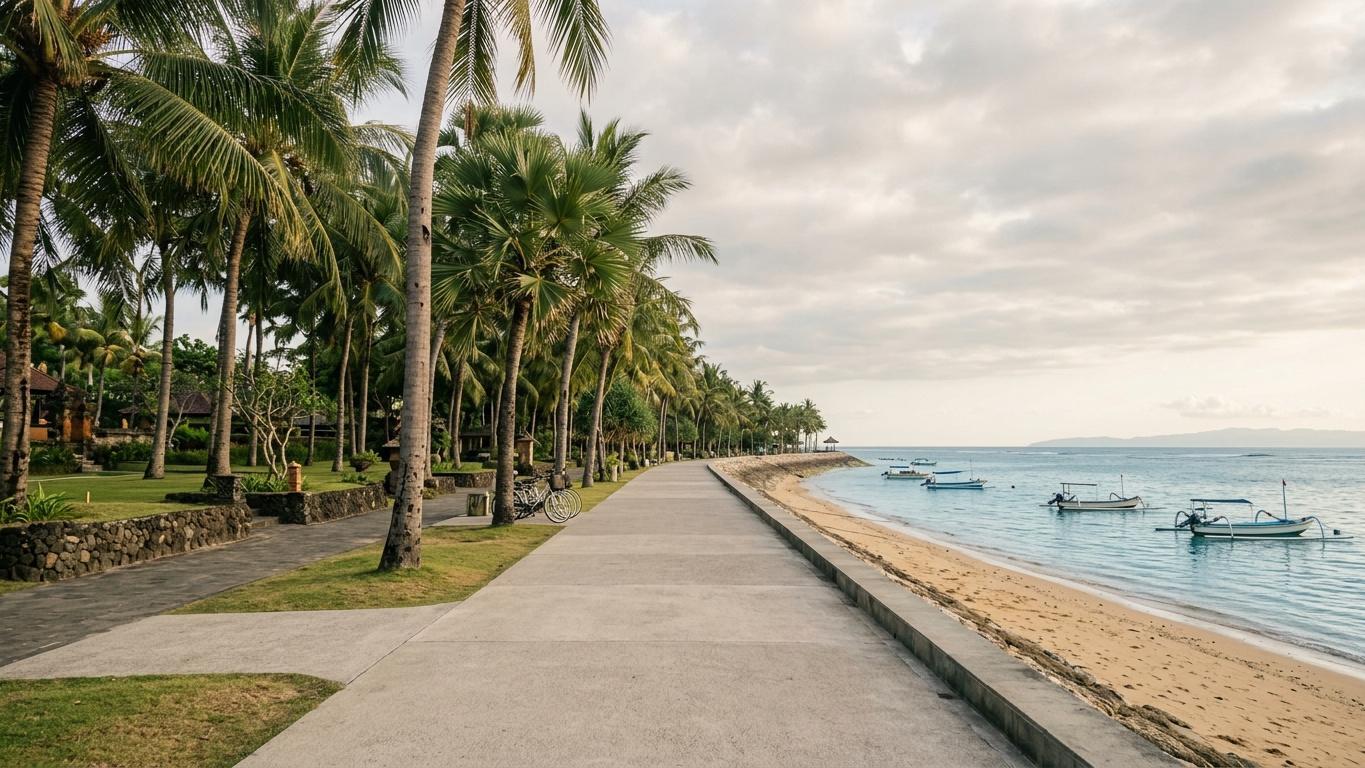
The core of what makes cycling in Sanur Bali work so well is simple: motorbikes and cars aren’t allowed on the main beachfront path. That single rule removes the biggest safety concern cyclists face almost everywhere else on the island, where shared roads and unpredictable scooter traffic make casual riding genuinely risky.
Flat Terrain and Consistent Shade
The terrain helps too. Sanur’s coastline is flat from end to end, no hill climbs, no sudden gradient changes, making the route accessible to riders of nearly any fitness level, families with young children fully included. Add in Sanur’s calm, reef-protected water and a paved surface in decent condition, and it’s easy to see why cycling in Sanur Bali has become such a popular half-day activity for visitors staying anywhere along this stretch of coast.
Shade is more consistent here than on a lot of Bali’s other coastal paths too, palm trees and beachfront trees line long sections of the route, genuinely useful once the sun climbs past mid-morning.
An Unhurried, Family-Friendly Pace
Sanur’s broader reputation as a calmer, family-and-couples-oriented town also carries through to how cycling in Sanur Bali actually feels day to day, unhurried rather than competitive, with plenty of riders simply out for a slow, scenic loop rather than treating the path as a training route.
That mix of safety, flat terrain, and genuine scenery is a rare combination on an island where most beach towns prioritize one at the expense of the others, and it’s the single biggest reason cycling in Sanur Bali keeps coming up as a recommendation even for visitors who wouldn’t normally consider biking on a tropical holiday.
The Sanur Beachfront Cycling Path
The main dedicated path runs a flat, roughly 5-kilometer stretch along the shore, with the wider beachfront promenade continuing further north and south beyond the marked cycling lane itself. It’s the backbone of cycling in Sanur Bali, and most visitors ride at least a portion of it during their stay. Because the path is genuinely car-free, it suits riders who’d never consider biking in Seminyak or Canggu’s more chaotic road conditions, a real point of difference worth knowing before writing off cycling as an option for a Bali trip entirely. A few specific stops along the way are worth planning a ride around.
Karang Beach
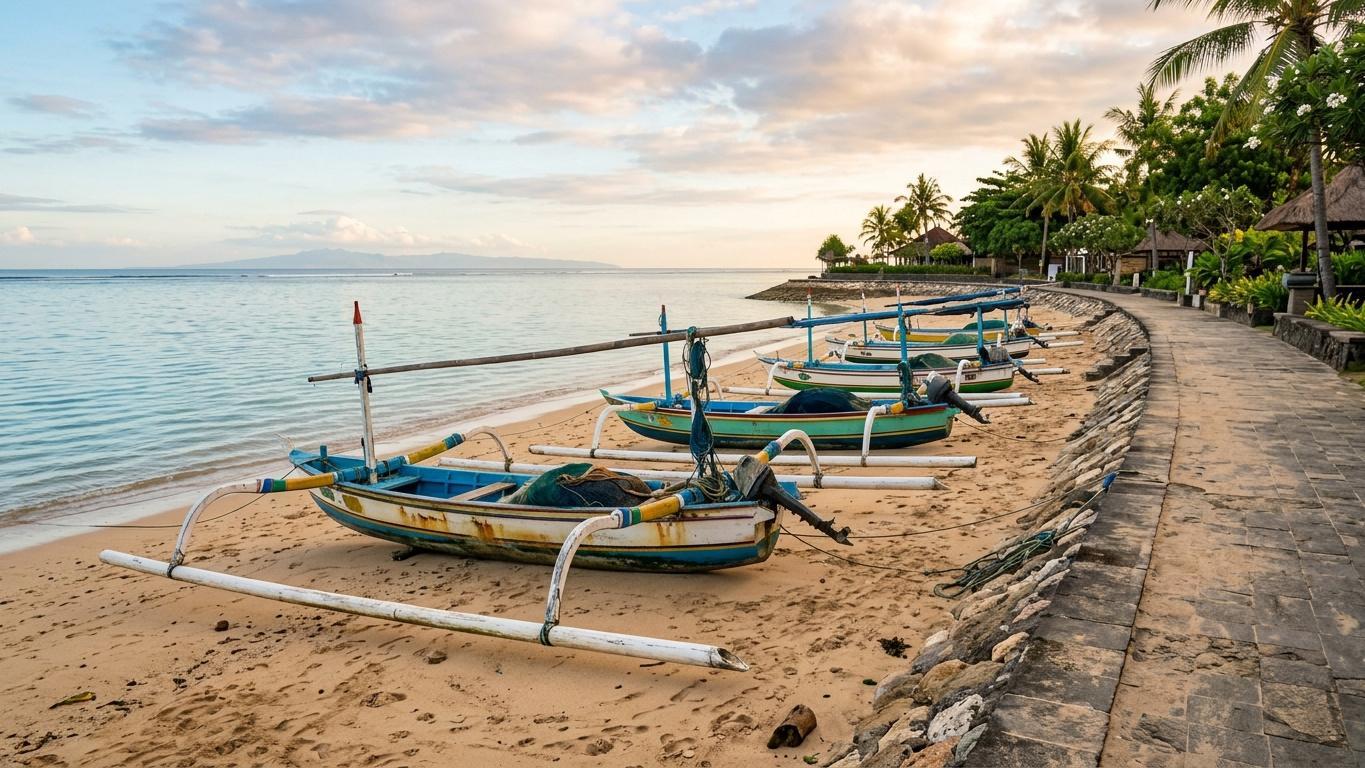
Karang Beach, roughly midway along the path, is one of the route’s most photographed stops, traditional Balinese fishing boats pulled up on the sand alongside a run of local warungs serving simple, genuinely local food rather than tourist-oriented menus. It’s a natural rest stop for cyclists wanting a coffee or a coconut break partway through the ride.
Small Temples Along the Path
Small temples appear along the path at intervals too, easy to miss if riding at speed but worth a slow pass or a brief stop, offerings and incense still actively placed each morning by locals rather than kept purely for visitors to photograph.
Sindhu Beach
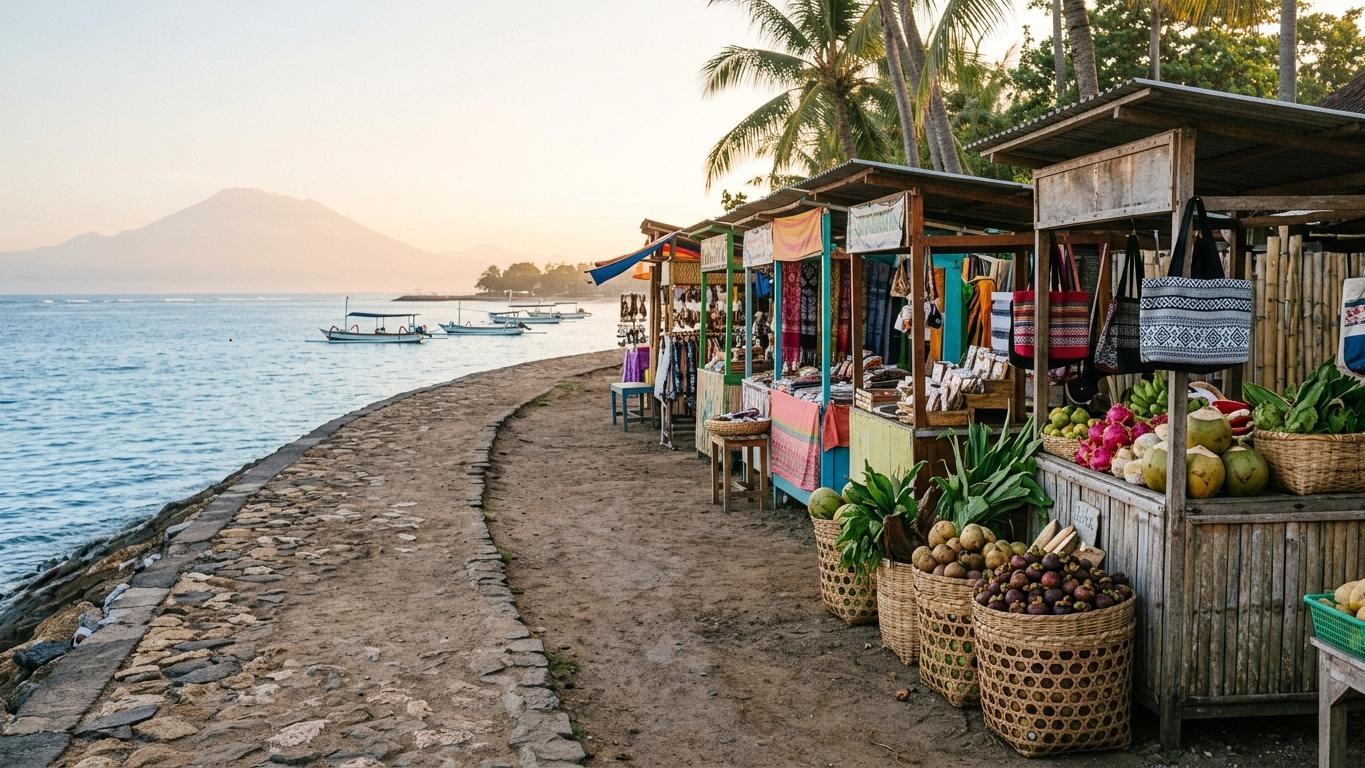
Sindhu Beach, roughly at the path’s midpoint, brings a livelier stretch with a small morning market running alongside the beachfront, worth timing a ride around if a bit of local shopping or fresh produce browsing appeals alongside the exercise itself.
The Quieter Southern Stretch
Further south, the path narrows slightly as it passes closer to hotel and resort frontages, still fully rideable but worth a touch more caution around pedestrian beach access points where guests cross toward the water.
Cycling to Blanjong Temple and the Le Mayeur Museum
Combining either stop with a ride along the main path turns a simple beachfront cruise into a half-day outing with real cultural substance, without ever leaving Sanur’s own compact, cyclable radius.
Blanjong Temple
Blanjong Temple, home to a genuine 10th-century royal inscription pillar, sits a short ride from the main path’s northern stretch, roughly a 2-kilometer detour for cyclists willing to pause the beachfront ride for a bit of real history. It’s one of the oldest dated written records in Bali, a striking thing to encounter on what otherwise feels like a purely scenic bike ride.
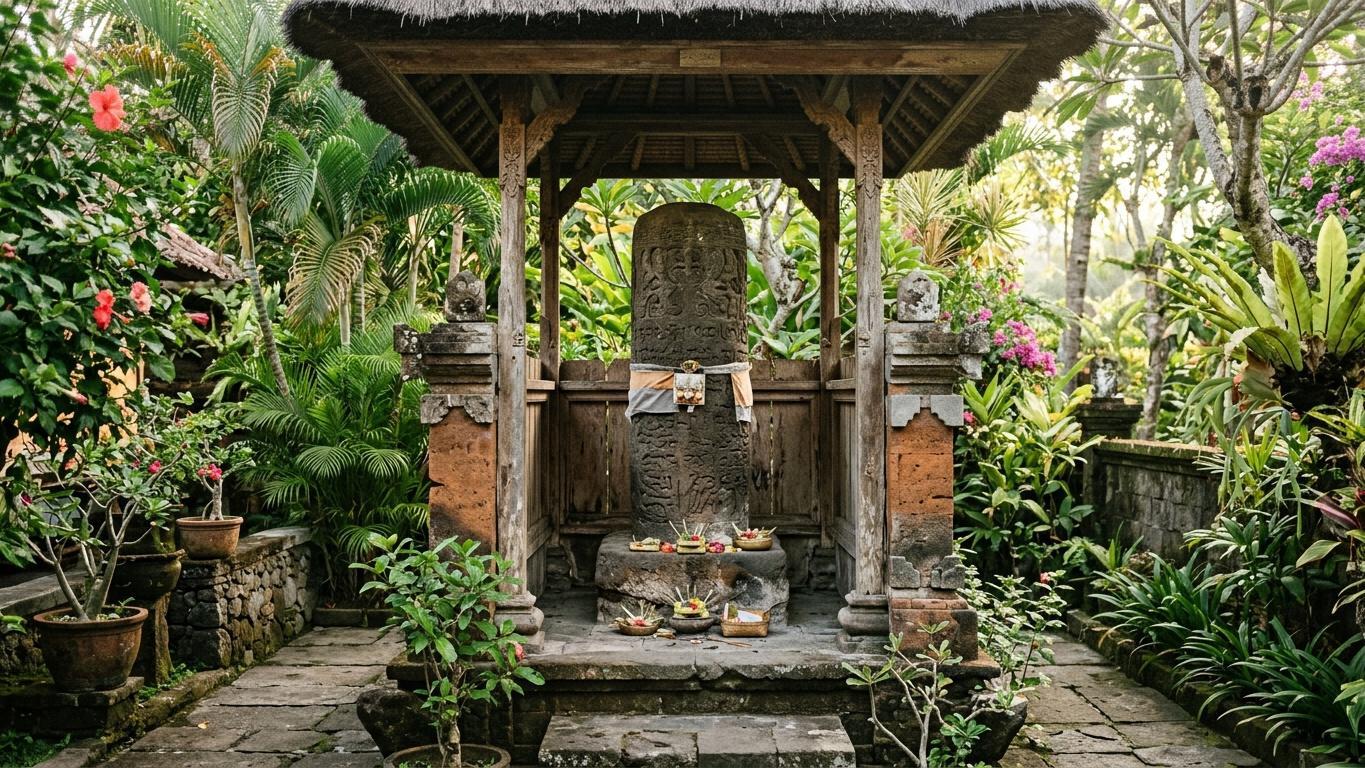
Blanjong Temple’s own significance runs deeper than its age alone. The inscription found on site, dated to 914 CE, records King Sri Kesari Warmadewa’s own military campaign, one of the earliest pieces of written evidence for organized rule anywhere on the island. Riding up to a genuinely ancient artifact after a purely scenic stretch of beachfront cycling is a distinctive contrast most visitors don’t expect from a simple bike ride.
Le Mayeur Museum
The Le Mayeur Museum, the former home and studio of a Belgian painter who settled in Sanur, sits closer to the path itself, roughly a 3-kilometer ride from the southern end, making it an easy add-on rather than a dedicated separate trip. Its collection of Impressionist-style paintings depicting Sanur life in the early 20th century gives cyclists a genuinely interesting sense of how little the coastline’s basic character has changed.
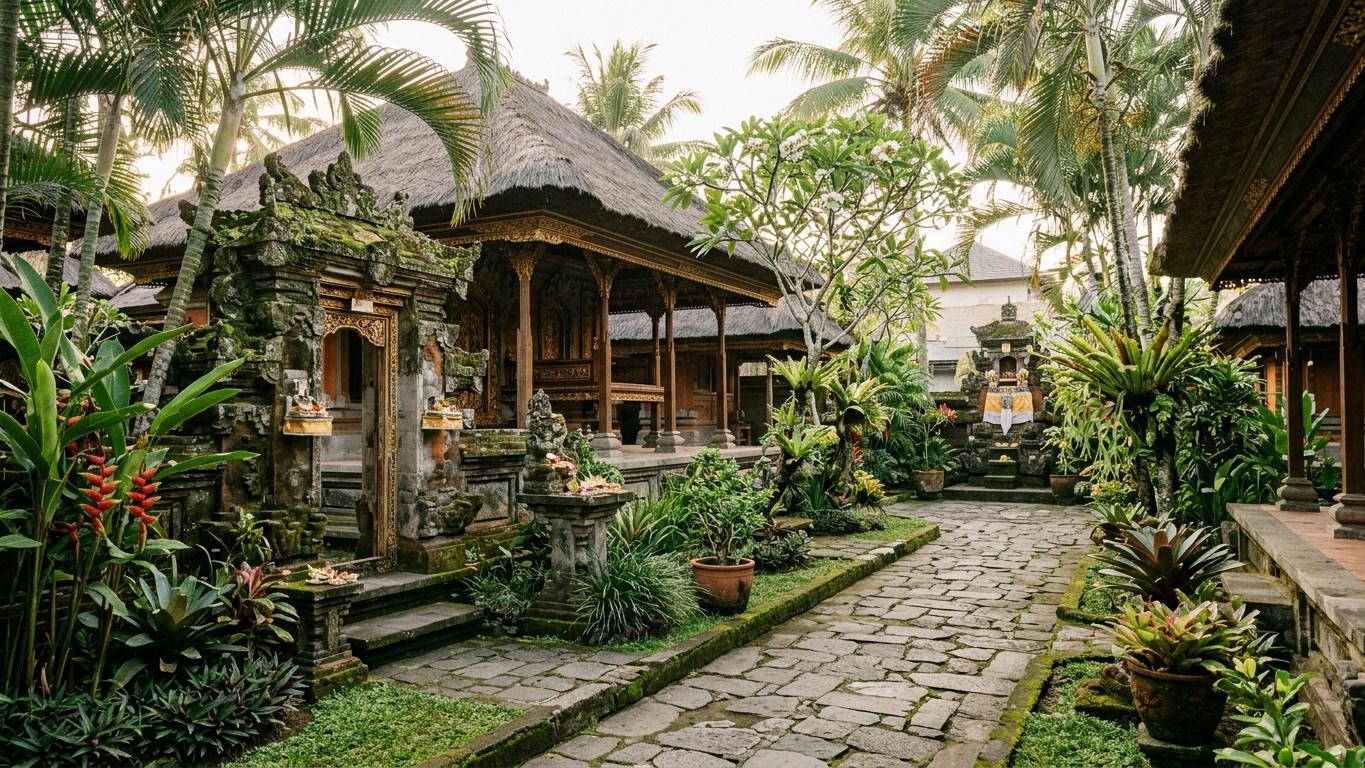
The museum adds a different kind of texture to the ride, less about ancient history and more about how Sanur itself looked and felt through a 20th-century painter’s eyes, useful context for understanding how much, and how little, the coastline has changed since. Both stops charge a modest entrance fee, small enough that neither meaningfully disrupts a day built primarily around cycling in Sanur Bali rather than museum-hopping.
Locking a rental bike securely outside either site is straightforward, both draw a steady but manageable flow of visitors rather than the crowds seen at some of Bali’s more heavily trafficked temples further inland. Both sites also sit close enough to each other, and to the main beachfront path, that a single loop can realistically cover the temple, the museum, and a return ride along the water without needing to backtrack significantly or plan a second, entirely separate outing on another day of the trip.
Beyond the Promenade: Segara Village Beach and Serangan Island
Riders wanting more distance or a quieter detour than the main path offers have two natural extensions worth knowing about.
Segara Village Beach
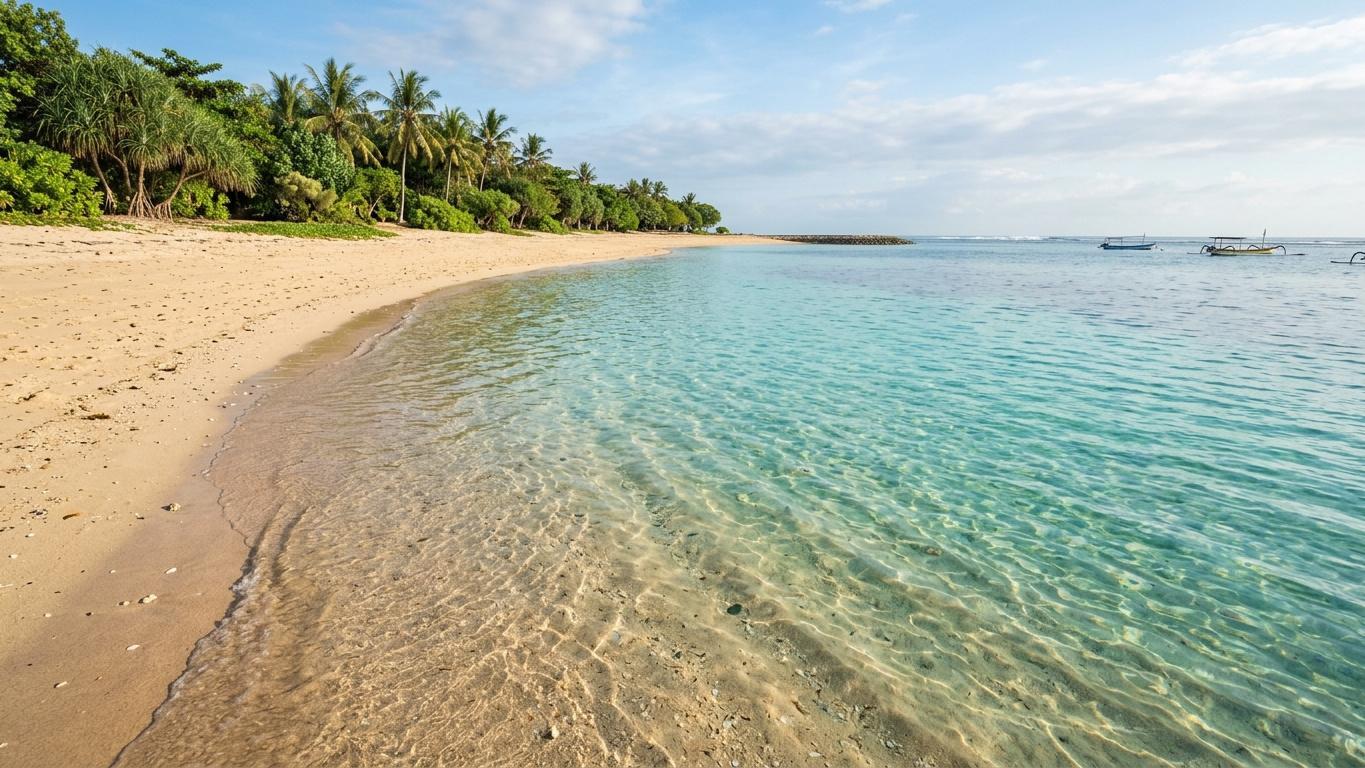
Segara Village Beach, toward the path’s quieter northern stretch, offers a genuinely tranquil swimming spot for cyclists wanting to break up a ride with time in the water rather than just riding straight through, well worth the short detour. It draws noticeably fewer visitors than the more central stretch of Sanur’s beachfront.
Serangan Island
For cyclists wanting to extend the ride further, Serangan Island, connected to the mainland and reachable by bike, makes a genuinely worthwhile extension for anyone who wants more distance than the core Sanur path alone offers, particularly appealing as an early evening ride when the light softens.
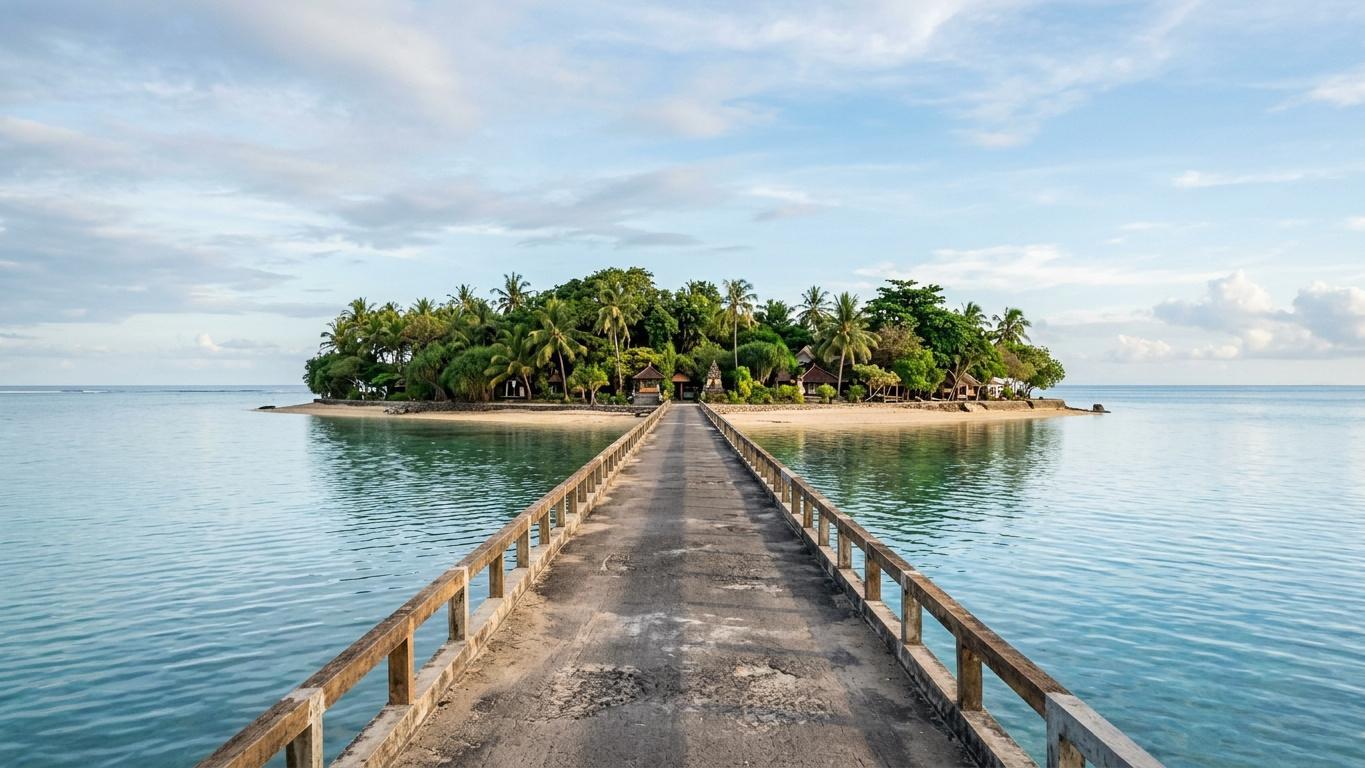
Serangan itself carries its own quieter, more local character than Sanur’s own busier central stretch, a working fishing community alongside a growing turtle conservation presence, giving cyclists who make the extension a genuinely different scene entirely from the beachfront warungs and resort frontages back along the main path. The causeway connecting Serangan to the mainland is flat and rideable, though traffic picks up noticeably compared to Sanur’s dedicated car-free path, worth riding with a bit more attentiveness than the core stretch requires from start to finish.
For Serious Cyclists: The Sanur to Ubud Route
Riders looking for real distance rather than a flat coastal cruise can take the inland route toward Ubud, roughly 25 kilometers through rice paddies and small villages, with Mount Agung visible in the distance on a clear day. It’s a genuinely different experience from beachfront cycling in Sanur Bali, rolling terrain and rural scenery rather than a flat shoreline path, and it’s worth understanding a few practical details before committing to the full distance.
What to Expect on the Ride
This route suits confident, fitter riders specifically, sharing the road with local traffic for parts of the way rather than staying on a dedicated car-free path the whole distance, and it’s worth allowing a full morning or afternoon rather than treating it as a quick add-on to a beachfront ride.
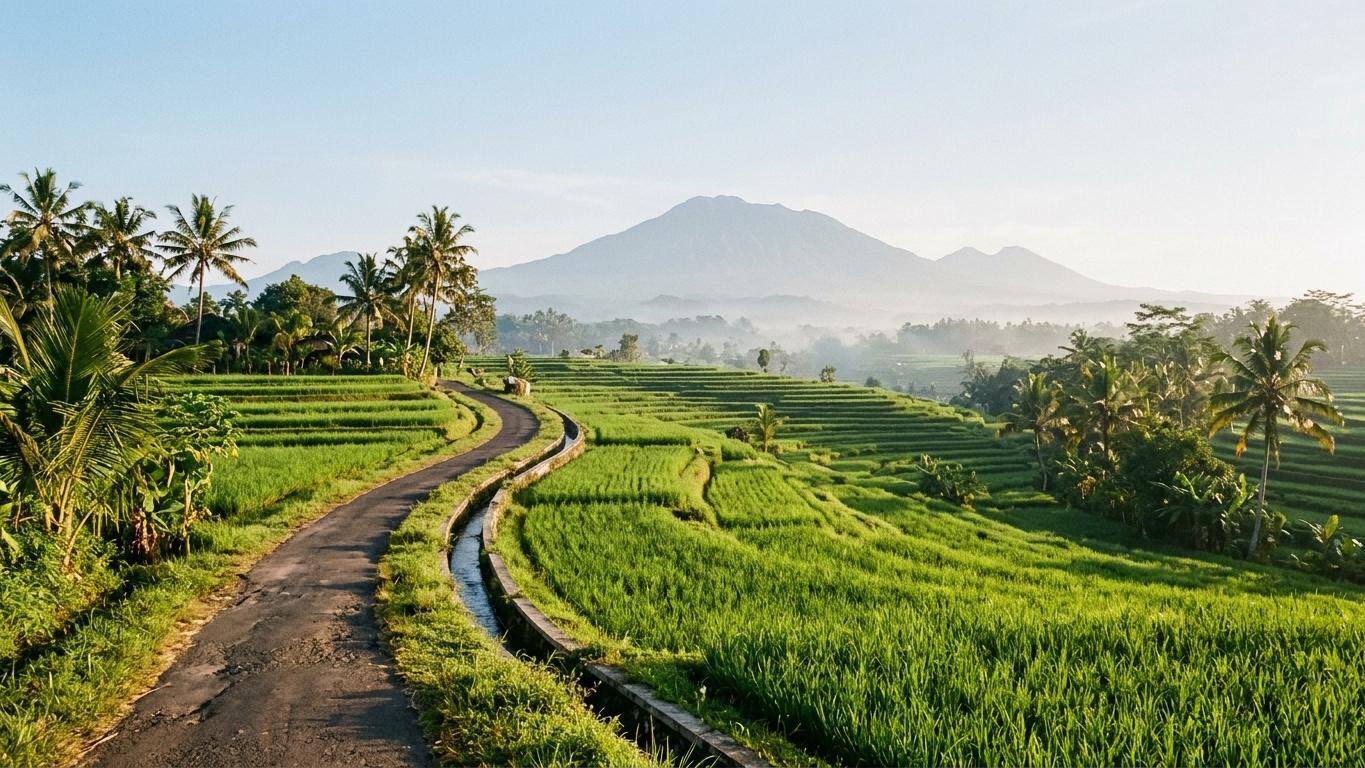
The route passes through several small villages along the way, genuine working communities rather than tourist stops, giving riders a much closer look at everyday rural Balinese life than a car window ever manages. Rest stops are less formal than along Sanur’s own beachfront path, a village warung or a roadside stall rather than a dedicated cafe built for cyclists specifically.
Rice paddy scenery dominates a large stretch of the middle portion of the ride, terraced fields catching different light depending on the hour, genuinely one of the more photographed inland cycling backdrops in this part of Bali. Farmers working the fields are usually visible along the route during the earlier morning hours specifically, adding a real sense of a working, lived-in landscape rather than a purely staged scenic backdrop.
Road Surface and Navigation
Road surface quality varies noticeably more on this route than on Sanur’s own paved beachfront path, some stretches are smooth, well-maintained asphalt while others turn rougher and narrower as the road climbs gently toward Ubud’s own elevation, worth checking a rental bike’s tires and gearing specifically before committing to the full distance. A hybrid or mountain-style bike handles the mixed surfaces noticeably better than the simple cruisers rented along Sanur’s beachfront path itself.
Cell signal stays reliable across nearly the entire route, useful for navigation apps, though it’s still worth downloading an offline map of the Sanur-to-Ubud corridor beforehand as a backup for anyone riding without a local data plan.
Guided Rides and Support
A support vehicle or a guided tour group is worth considering for this specific route if riding solo feels risky, several local operators run half-day and full-day guided rides between Sanur and Ubud with a van following behind for anyone who needs to stop partway through.
A guided group also tends to know which side roads and shortcuts avoid the busiest stretches of shared traffic, genuinely valuable local knowledge that isn’t obvious from a map alone, and most guides carry basic repair tools for a flat tire or a dropped chain partway through a longer ride.
Making Time for Ubud Itself
Couples or small groups planning the full Sanur-to-Ubud ride as a single day trip should also set aside real time for Ubud itself once they arrive, rather than treating the town purely as a turnaround point, its own market, rice terraces, and art galleries are worth a genuine stop before the return leg or an overnight stay before riding back.
Where to Rent a Bike in Sanur
Renting a bike in Sanur rarely requires planning ahead. Independent stands line the boardwalk end to end, most running a simple cash-only, walk-up setup with a mix of vintage city bikes and modern cruisers, and a handful of services will deliver a bike directly to a hotel for anyone who’d rather not carry one back from a stand. A quick check of tires and brakes before setting off is worth the extra minute, since quality varies noticeably from one stand to the next.
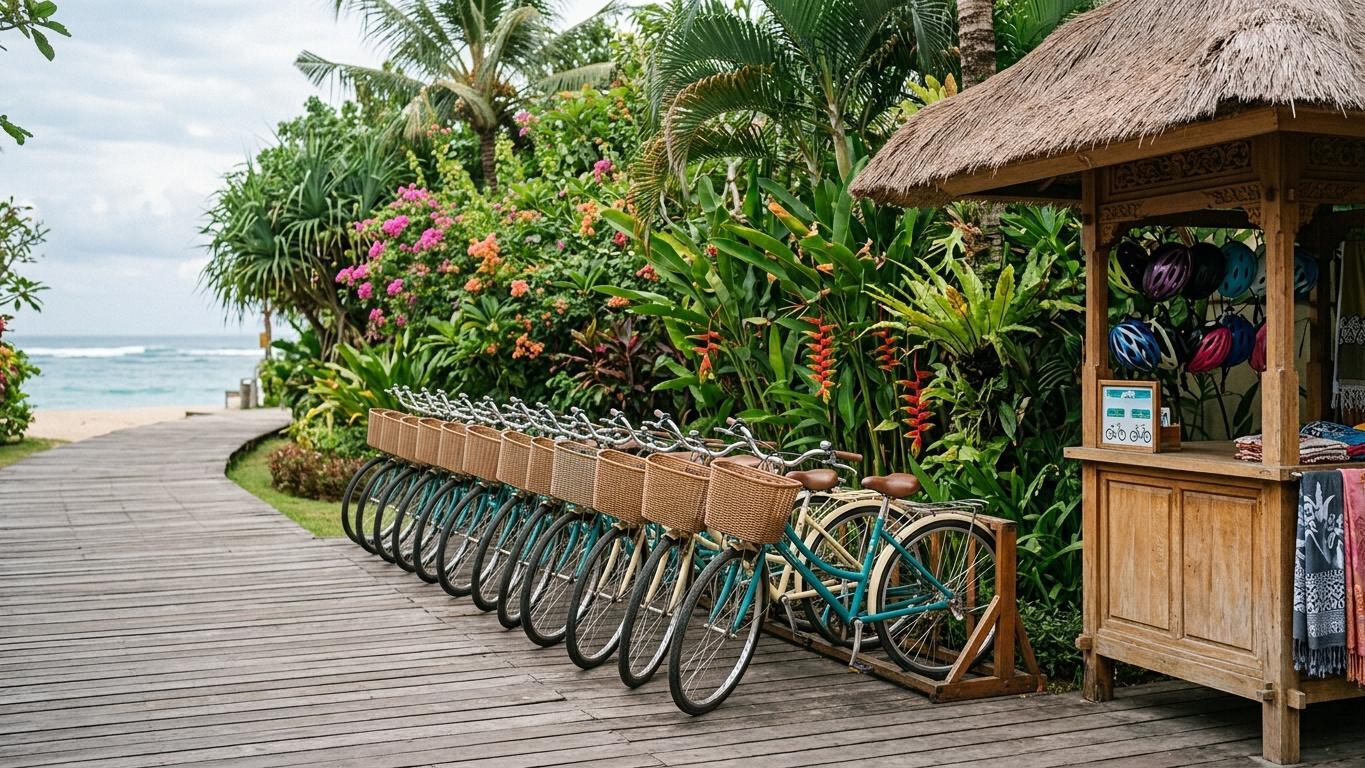
- Rental stands are common along the entire length of the boardwalk itself, mostly cash-only, walk-up service with a range of vintage city bikes and modern cruisers.
- Hourly rentals typically run around IDR 25,000, with full-day rentals starting around IDR 50,000, roughly $1.50 to $3 USD.
- Some rental services deliver bikes directly to a hotel or resort, a convenient option for visitors who’d rather not carry a bike back from a rental stand.
- Check tire pressure and brakes before setting off; rental bike quality varies noticeably between stands along the path.
- A basic lock is worth requesting if stopping for food or a museum visit partway through the ride.
*Prices are for reference only and may change without notice. Please contact us directly for current rates.
No advance planning needed — rentals are everywhere
Unlike activities that require booking ahead, bike rental in Sanur is close to walk-up: availability is widespread enough that same-day rental is the norm rather than the exception.
That makes cycling one of the easiest spontaneous additions to a Sanur day — decide in the morning, and you’re riding within minutes.
Best Time of Day to Cycle in Sanur
Early morning, roughly 6:00 to 9:00 AM, is genuinely the best window for cycling in Sanur Bali, cooler temperatures, softer light for photos, and the path itself noticeably quieter than it gets by mid-morning once the day’s heat builds up.
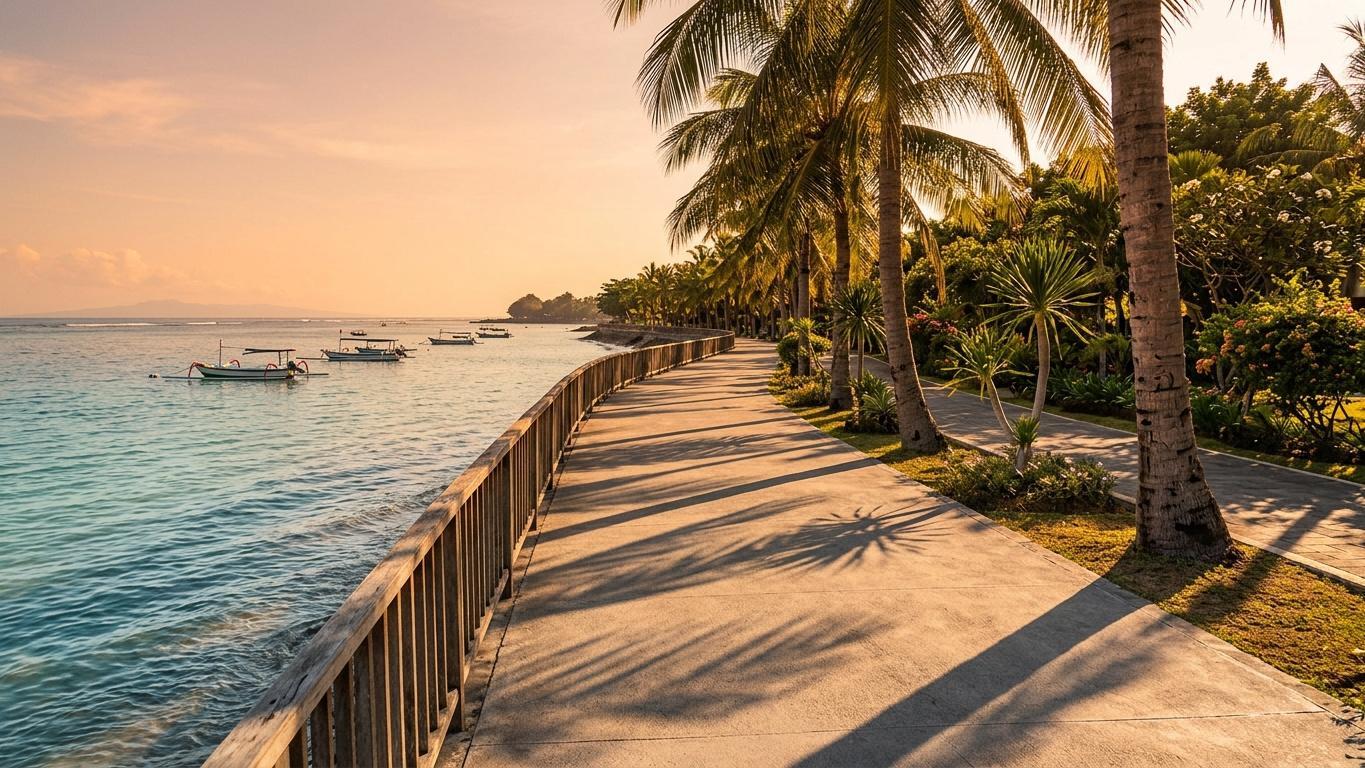
Late afternoon, from around 4:00 PM until sunset, offers a second strong window, cooler again as the heat breaks and the light turns warm and golden along the water, particularly rewarding for the stretch near Karang Beach’s fishing boats.
Midday, roughly 11:00 AM to 3:00 PM, is worth avoiding for anything beyond a short ride. The path offers real shade in places, but direct sun and heat both peak hard during these hours, and the flat, open stretches near Sindhu Beach and the southern promenade offer noticeably less tree cover than the sections further north.
Weekday mornings specifically tend to be the quietest window overall, weekend mornings draw a noticeably larger mix of local families and joggers sharing the same path, still entirely rideable but worth budgeting a little extra time for if aiming to move at a brisk, uninterrupted pace.
The early window isn’t just about heat
The 6:00 to 9:00 AM window matters for more than temperature: the softer morning light and the promenade being at its least crowded both make the ride noticeably more pleasant than a midday attempt.
Riders who push the start later trade all three advantages — cooler air, better light, and open path — for the convenience of sleeping in, which is rarely a good trade on a short trip.
Tips for Cycling in Sanur
Most of what makes a ride here go smoothly comes down to small habits rather than any special preparation, worth keeping in mind before setting out.
- Bring water; shaded rest stops exist but aren’t constant along the full path length.
- Wear sun protection even on an overcast day; Bali’s UV index stays high year-round regardless of visible cloud cover.
- Ride at a relaxed pace through the busier midsection near Sindhu Market, where pedestrian traffic picks up considerably.
- Confirm with a rental stand whether the bike includes a basket or rear rack if planning to carry beach gear or shopping.
- Combine an early ride with breakfast at one of the beachfront warungs near Karang Beach for a genuinely local start to the day.
- Keep an eye out for pedestrians crossing the path near hotel beach access points, especially in the busier central stretch.
- Check the tide before a sunrise ride; a very low tide can expose more sand and fishing activity along the shoreline right beside the path.
- Carry small cash rather than cards, most rental stands, warungs, and small vendors along the path operate cash-only.
Small habits do more than extra gear
The things that make a Sanur ride go smoothly are mostly habits, not equipment — how you plan the route and pace yourself matters more than what you’re riding.
Because the promenade is flat and well-maintained, there’s little technical skill required; the difference between a good ride and an average one comes down to timing and small preparation, not fitness.
Cycling in Sanur Bali With Kids
The car-free path makes cycling in Sanur Bali one of the more genuinely family-friendly activities on the island, a rare stretch where young children can ride without a parent needing to watch for scooters or cars at every turn. Several rental stands stock child-sized bikes and trailer attachments specifically for this reason.
Why It Works for Families
The flat terrain matters just as much for families as the lack of traffic does, no hill climbs to tire out smaller riders partway through, and frequent shaded rest stops and beach access points to break up a ride whenever a child needs a pause.
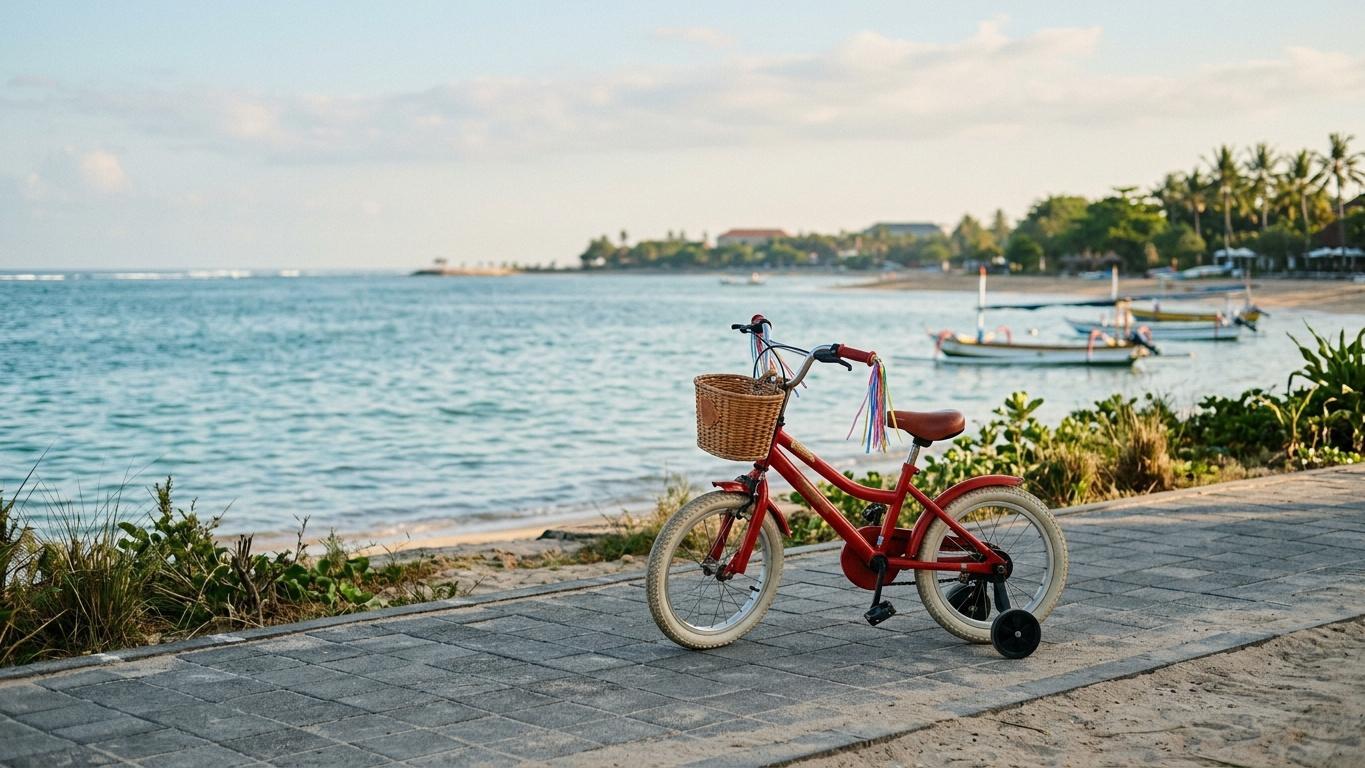
Morning rides work particularly well for families specifically, cooler temperatures and a quieter path before the day’s heat and foot traffic both build up, leaving plenty of the day left afterward for swimming or resting back at the hotel.
Older Kids vs Very Young Children
Older children and teenagers who can handle a longer distance independently might enjoy extending the ride out toward Blanjong Temple or the Le Mayeur Museum, turning a simple loop into a small scavenger-hunt-style outing built around finding specific historical stops along the way and learning a bit of real local history in the process.
Parents cycling with very young children should still keep to the path’s central, busier stretch rather than the quieter northern or southern sections, more shade, more amenities, and closer proximity to help if anything goes wrong partway through a ride. A trailer attachment or a rear child seat is also worth reserving a day ahead during busier holiday weeks, since the limited stock at rental stands can run out by mid-morning.
What to Pack for a Sanur Cycling Trip
Packing for a ride here is straightforward, the main considerations are heat, sun, and the occasional splash of sand or spray near the beach access points.
- A refillable water bottle, since shaded rest stops exist but bottled water isn’t sold continuously along the entire path.
- Reef-safe sunscreen, reapplied roughly every two hours on a longer ride given Bali’s consistently high UV exposure.
- A light, breathable long-sleeve layer for riders prone to sunburn, genuinely more comfortable than repeated sunscreen reapplication on a multi-hour ride.
- A dry bag or waterproof pouch for a phone or camera, useful near any beach access point where sand and water spray are a factor.
- Comfortable, closed-toe shoes rather than sandals, particularly for the inland Ubud route where terrain is less consistently smooth.
Where to Stay for a Sanur Cycling Trip
Basing a stay directly on Sanur’s beachfront puts the entire cycling path within easy reach without needing a taxi or scooter just to reach the starting point.
The Meru Sanur
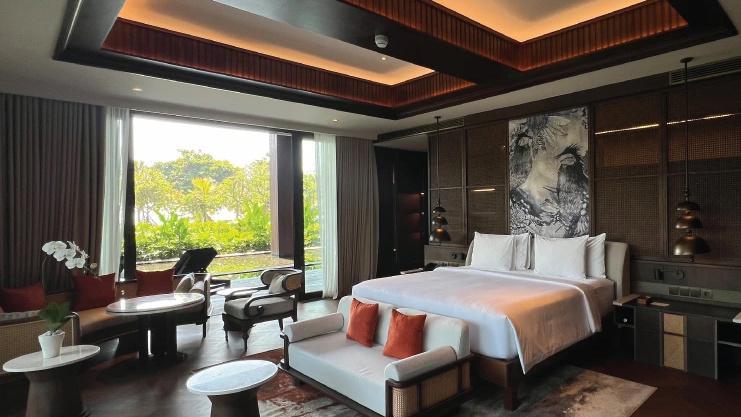
The Meru Sanur sits directly on Sanur’s beachfront, putting the main cycling path within a short walk of the property itself, a genuine advantage for anyone planning to make cycling in Sanur Bali a regular part of their stay rather than a single afternoon outing.
Active Wellness, the resort’s yoga and fitness program, pairs naturally with a cycling-focused stay. The Recharge PT session, 60 minutes combining personal training with recovery and stretching, suits riders wanting to work the legs harder before a longer ride, while The Wellness Sparks, a 30-minute mix of personal training, massage, and energy work, makes a genuinely restorative option after a longer ride like the Ubud route.
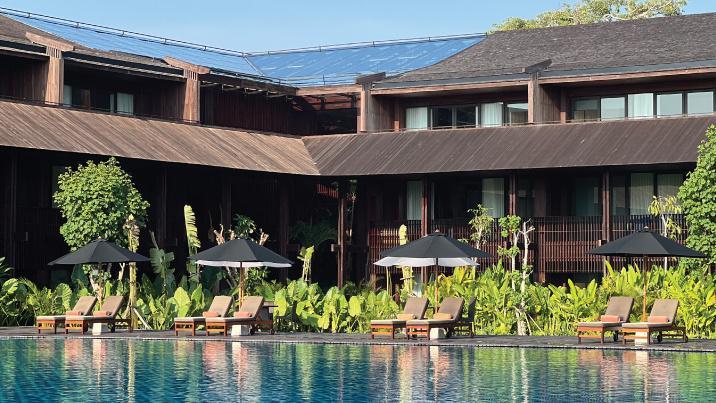
The Meru Pool, exclusive to guests and facing directly over Sanur Beach, gives riders an easy way to cool off immediately after a morning ride without needing to change locations first.
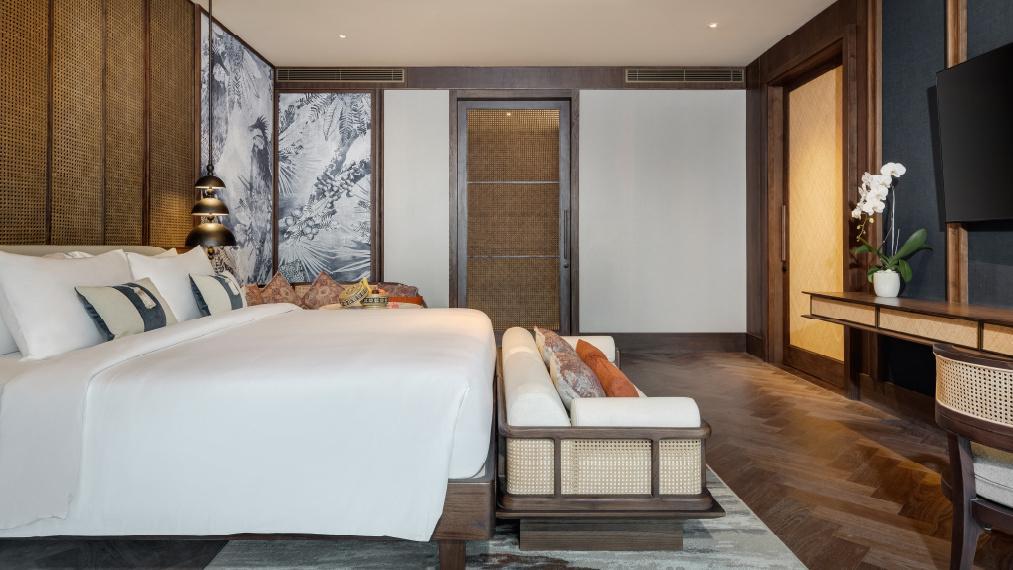
The resort’s genuinely all-suite layout, 184 suites with no standard rooms, means even a short cycling-focused stay comes with real space to store gear, dry out wet swimwear after a post-ride swim, and generally spread out rather than living out of a cramped hotel room between rides. The Tropical Suite, 83 square meters with a private balcony, works well for a couple wanting a straightforward base for a few days of cycling in Sanur Bali without paying for a larger category they won’t fully use.
For riders tackling the longer Ubud route specifically, the Meru Suite, 160 square meters with its own separate living room, gives enough space to genuinely rest and recover afterward rather than being confined to a single small room for the remainder of the day.
The resort’s own philosophy of Sekala Niskala, balancing the seen and unseen, actually maps onto a cycling-focused stay in a genuinely fitting way, structured, mindful movement through the day paired with equally deliberate rest and recovery back at the property, rather than treating either half as an afterthought.
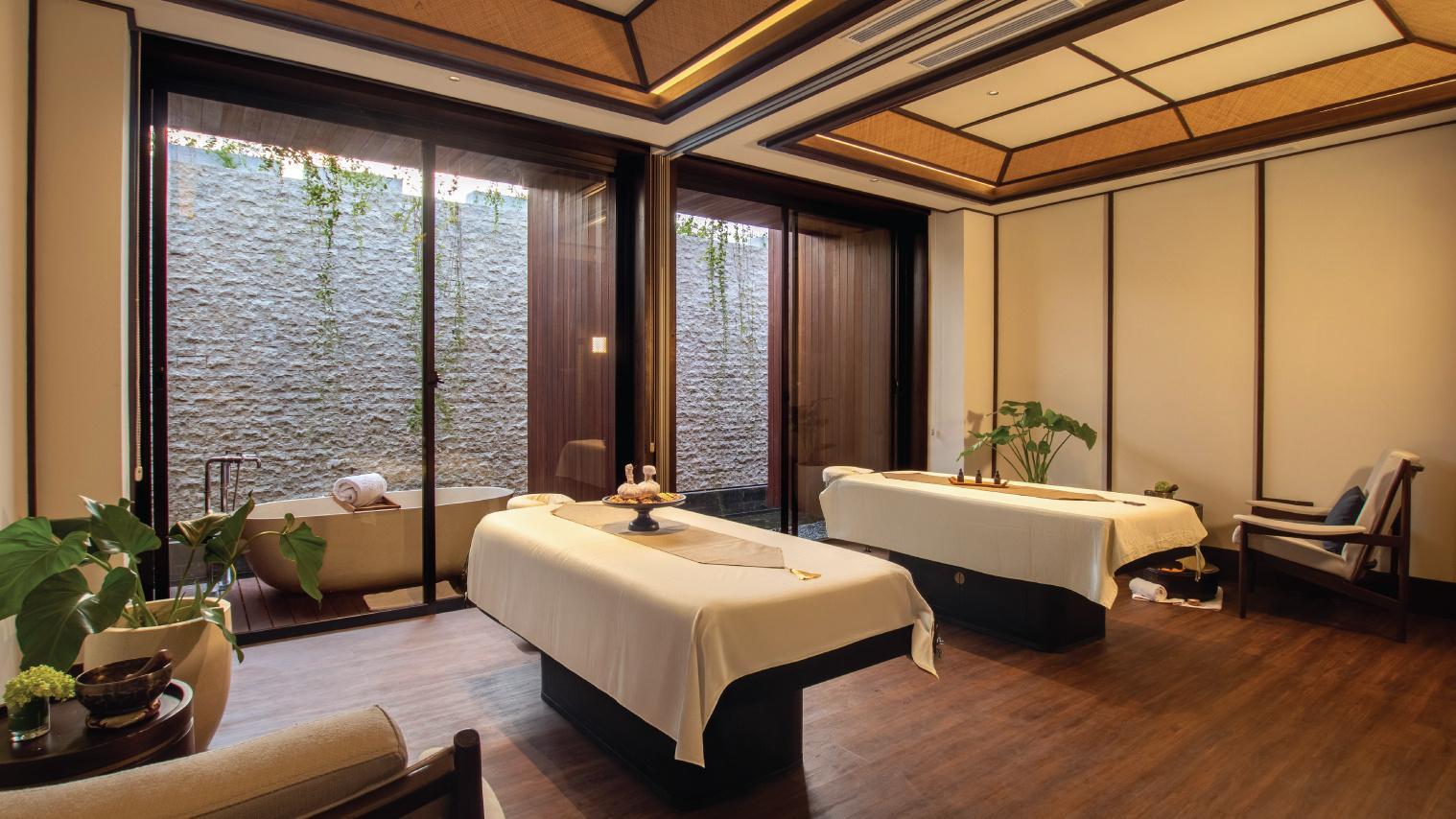
Crystal Quartz Massage‘s Seven Sacred Stones Massage, a 90-minute Balinese hot stone treatment with sacred sound bowl vibrations, works well as post-ride muscle recovery for anyone who’s tackled the longer Ubud route rather than just the flat coastal stretch. Taru Pramana Spa & Wellness‘s more traditional herbal compress massage is a solid, gentler alternative for riders who’d rather ease sore legs than commit to a longer specialty ritual.
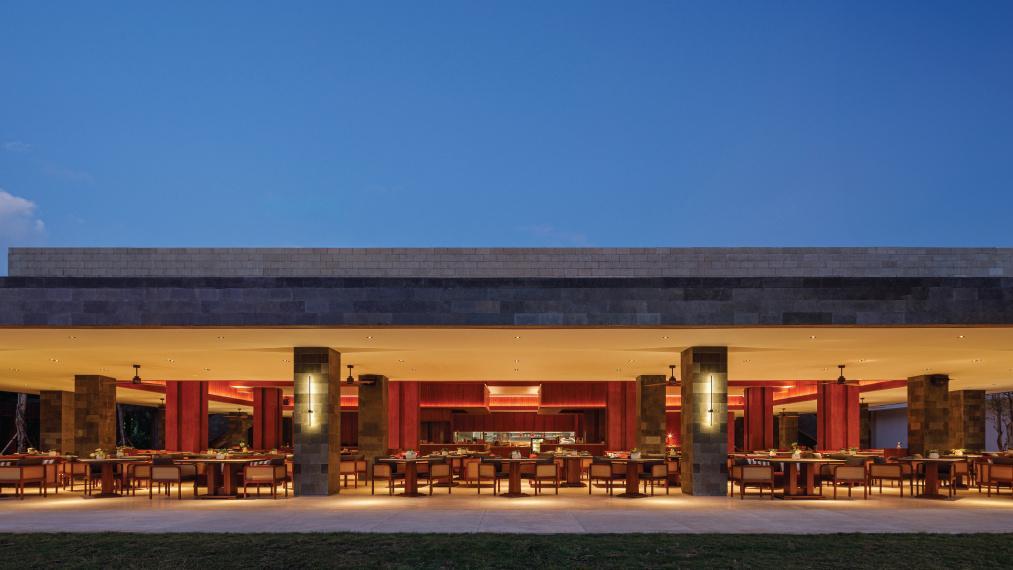
For breakfast before an early ride, Arunika Restaurant is included complimentary for Meru guests and runs from 6:30, early enough to fuel up before the path gets busy. Bali Beach Bar & Grill, right on the beachfront, makes a natural stop for a post-ride lunch without needing to leave the property at all.
Benang Jiwa, the resort’s weekly mindfulness workshop series, gives riders a genuinely different way to spend a rest day between longer rides, Sunday’s Akar Wangi soap bar making or Wednesday’s essential oil blend workshop both work as a relaxed, low-impact alternative to a second consecutive day of cycling.
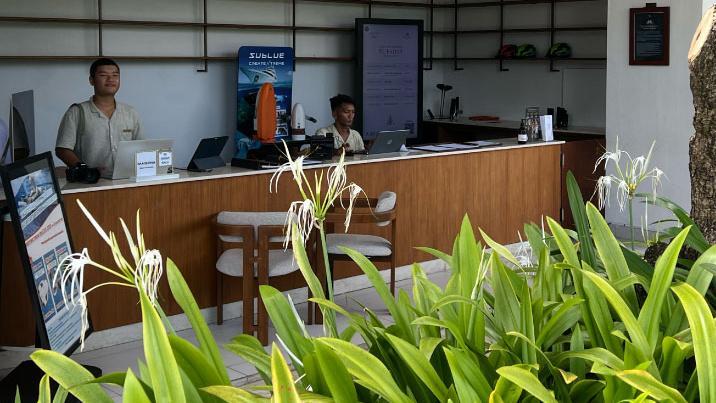
The Activity Desk, open 7:00 to 20:00, can also help arrange a guided cycling excursion or point guests toward a reputable rental service beyond the standalone boardwalk stands, useful for anyone who’d rather have the resort handle the logistics directly.
The resort’s Preferred Hotels & Resorts membership also means loyalty points and recognition carry over for members already enrolled elsewhere in the program, a small but genuine perk for repeat travelers who’ve booked with other Preferred properties on previous trips.
Detailed Information:
- Address: Jalan Hang Tuah, Sanur Kaja, Denpasar Selatan, Kota Denpasar, Bali 80227, Indonesia
- Phone Number: +62 361 2012000
- Reference Price: From roughly $210 USD per night, varying by suite category and season
*Prices are for reference only and may change without notice. Please contact us directly for current rates.
Conclusion
Between the flat, car-free coastal path, easy detours to Blanjong Temple and the Le Mayeur Museum, and an inland route toward Ubud for riders wanting real distance, cycling in Sanur Bali covers a genuinely wide range of styles for a single beach town.
Book a stay at The Meru Sanur to keep the whole cycling path within walking distance, with Active Wellness, Crystal Quartz Massage, and a beachfront pool all ready for whenever the ride wraps up and it’s time to properly rest.
Read more: Sanur Walking Tours 2026: Bali’s Charming Coastal Village
Frequently Asked Questions
Is Sanur good for cycling?
Yes. Sanur’s beachfront path is car-free and flat for its full length, making it one of the safest and most accessible places in Bali for casual cycling, suitable for riders of nearly any fitness level.
How long is the Sanur cycling path?
The main dedicated path runs roughly 5 kilometers, with the wider beachfront promenade continuing further along the coast beyond the marked cycling lane itself.
How much does it cost to rent a bike in Sanur?
Hourly rentals typically run around IDR 25,000, with full-day rentals starting around IDR 50,000, roughly $1.50 to $3 USD depending on the bike and rental stand.
What is the best time of day to go cycling in Sanur Bali?
Early morning, roughly 6:00 to 9:00 AM, and late afternoon from around 4:00 PM to sunset are the two best windows, both offering cooler temperatures and softer light than the middle of the day.
Is cycling in Sanur Bali suitable for beginners?
Yes. The main beachfront path is flat, paved, and closed to motor traffic, making it one of the more approachable cycling routes in Bali for riders with limited experience or fitness.
What should I bring for a day of cycling in Sanur Bali?
Water, sun protection, small cash for rentals and warungs along the way, and comfortable closed-toe shoes cover the essentials for most riders, with a dry bag worth adding for anyone stopping at the beach along the route.
Can I cycle from Sanur to Ubud?
Yes, an inland route of roughly 25 kilometers connects Sanur to Ubud through rice paddies and small villages, though it suits fitter, more confident riders rather than a casual beachfront outing.
Do I need to bring my own bike for cycling in Sanur Bali?
No. Rental stands are common along the beachfront path itself, and some services will deliver a bike directly to a hotel or resort ahead of time.
*Prices are for reference only and may change without notice. Please contact us directly for current rates.