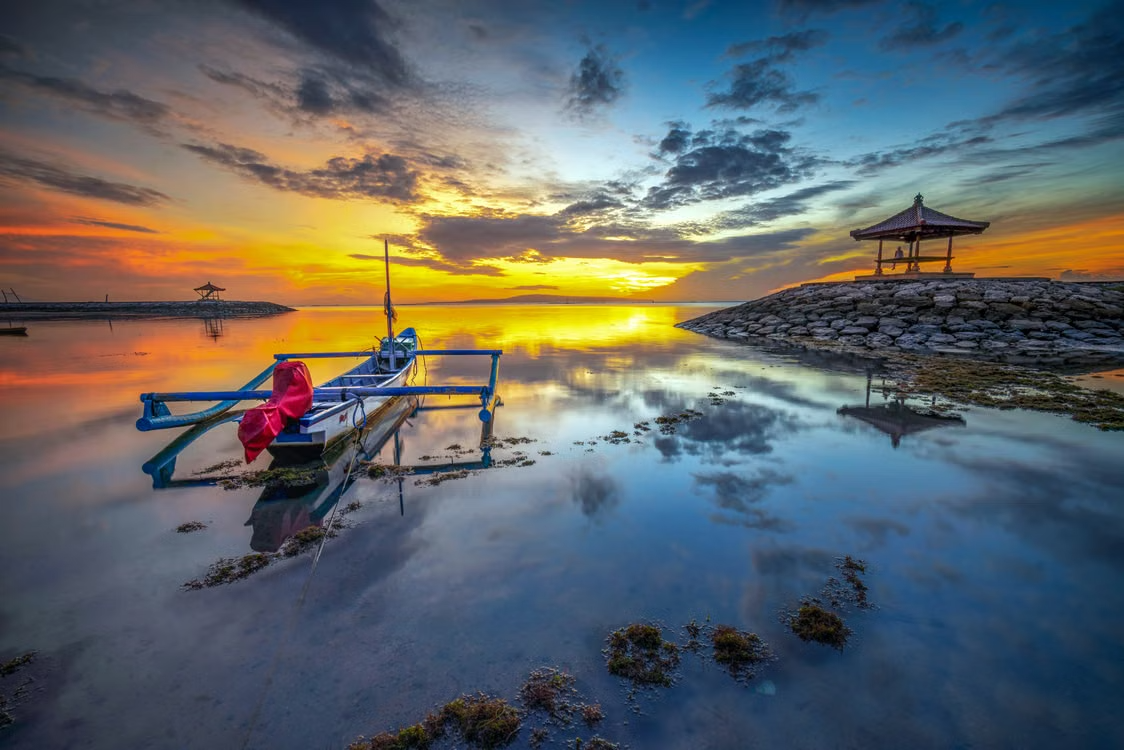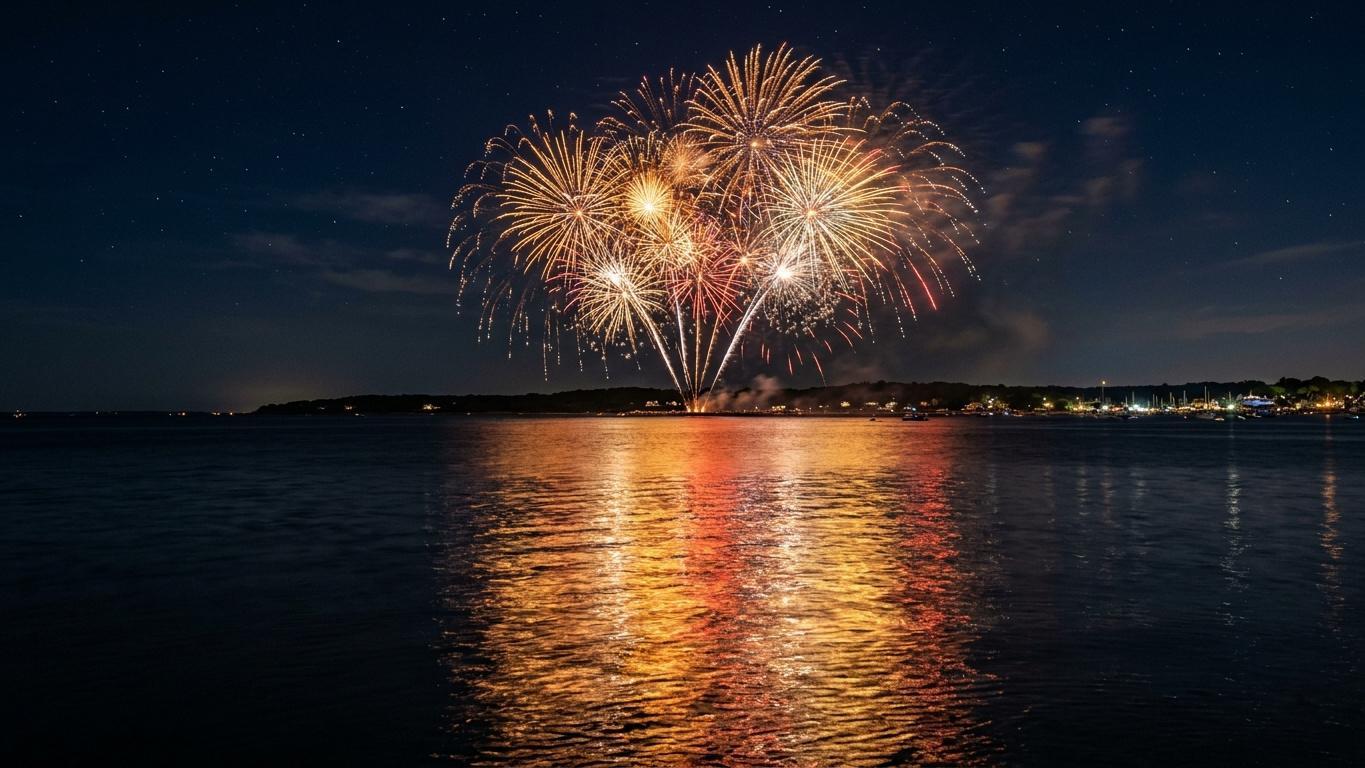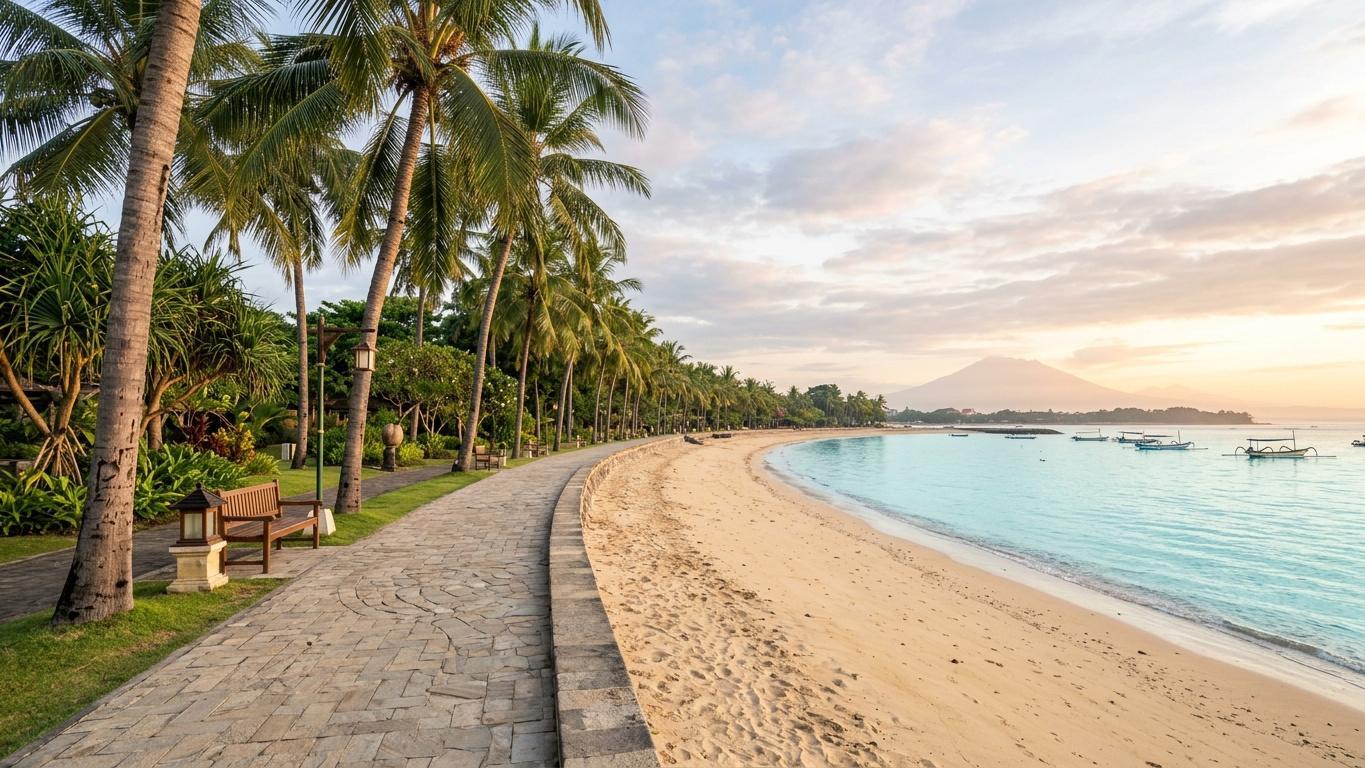
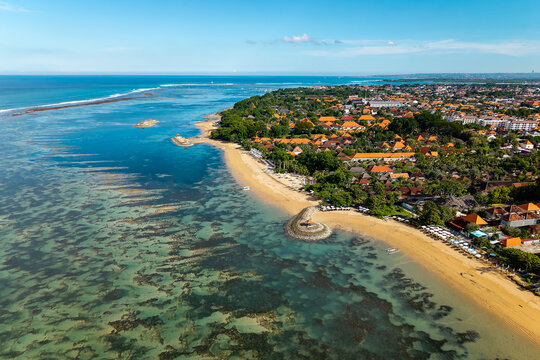
Sanur is the quiet elder of Bali tourism, the east-coast village where the island’s modern travel story began in the 1950s. It is famous for its calm, reef-sheltered lagoon, its sunrise over the ocean, and its slow, cultured pace. But there is another side to Sanur that surprises first-time visitors: it is one of the most festival-rich corners of Bali. The town is the spiritual home of Balinese kite flying, the birthplace of one of the island’s most celebrated community festivals, and one of the best places anywhere in Bali to witness sacred Hindu ceremonies on the beach.
This guide walks through every major festival and ceremony you can experience in Sanur, from the giant kites of the dry season to the white-robed purification processions before Nyepi. For each, you will find what it is, when it happens in 2026, where to go, and how to experience it respectfully, along with a full-year calendar and practical tips.
Sanur’s Festival Calendar, Explained
- Why Sanur: A few specific features make Sanur unusually well suited to hosting festivals compared to other parts of Bali.
- Signature Event: The Bali Kite Festival (Denpasar Kite Festival) is the event that most defines Sanur’s festival identity.
- Community Event: Sanur Village Festival (Sanfest) is the town’s flagship community celebration, drawing large crowds since it began.
- Kite Festival Timing: The kite festival traces back to the 1970s and continues to draw crowds into the 2026 event calendar.
- Attendance: Sanfest has drawn crowds as large as 100,000 visitors in past editions.
Why Sanur Is One of Bali’s Best Places to Experience a Festival
A few features make Sanur unusually well suited to festivals. Geographically, the town faces east, so its wide, flat beaches catch the steady dry-season trade winds, which is precisely why kite culture took root here. Historically, Sanur is one of Bali’s oldest established settlements, home to the 913 AD Blanjong Pillar, the oldest dated artefact on the island, which means its temple calendar and cultural traditions run deep.
Socially, Sanur is governed by an unusually active community structure. The Sanur Development Foundation (Yayasan Pembangunan Sanur, or YPS) has worked since 1965 to balance tourism growth with cultural preservation, and it is this same body that created the Sanur Village Festival. The result is a destination where festivals are not staged purely for visitors but grow from a living community.
For travellers, Sanur also offers comfort alongside culture. Its more than five kilometres of paved beachfront promenade, family-friendly atmosphere, and relaxed crowds make it far easier to enjoy a festival here than in the dense, traffic-heavy hubs of the south. You can watch a sacred procession in the morning and be back at a beachfront café within minutes.
It’s not one feature, it’s a combination
Sanur’s suitability for festivals comes down to a combination of specific, concrete features rather than any single one — its open beachfront space, its historical significance, and its relatively calm daily rhythm all play a role.
That combination is worth understanding if you’re comparing Sanur to other festival towns in Bali, since it’s the layering of advantages, not one standout trait, that sets it apart.
The Bali Kite Festival (Denpasar Kite Festival)
If one festival defines Sanur, it is the kite festival. Officially the Denpasar Kite Festival, or Festival Layang-Layang Denpasar, it is the island’s largest and most internationally recognised kite competition, and it unfolds on the beaches just north and south of Sanur during the windy dry-season months of July and August.
The origins are agricultural and spiritual. Kite flying in Bali began as an expression of joy at harvest time and as an offering to the Hindu gods, sending thanks for abundant crops and asking blessings on the rice fields. Over time, Sanur’s ideal coastal winds turned it into the favoured competition ground, and the tradition was formalised into an organised festival in the 1970s. Today, village teams known as banjar compete fiercely for trophies including the prestigious Governor’s Cup.
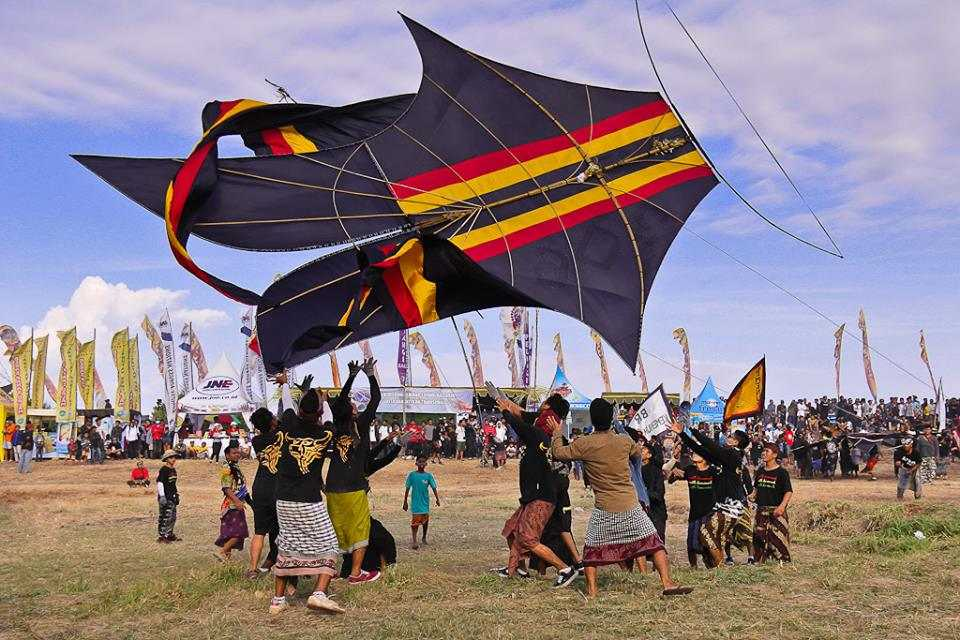
The spectacle is genuinely jaw-dropping. Competition kites can stretch up to 10 meters across, with tails trailing as long as 100 meters, and it takes teams of dozens hauling ropes in unison to launch a single one. Three classic forms dominate the skies: the fish-shaped Bebean, the leaf-or-diamond Pecukan, and the dramatic bird-and-dragon Janggan with its extraordinarily long tail. Some kites are fitted with vibrating bamboo bows called guwang that produce a deep, resonant hum audible from far across the beach. The atmosphere is festive throughout, with gamelan orchestras playing and crowds cheering each launch. Beyond local teams, the festival regularly draws international competitors from countries including Australia, China, Japan, South Korea, India, Sweden, Thailand, Malaysia, and Singapore.
To experience it, arrive at Padang Galak Beach or Mertasari Beach in the morning, when the competition kites launch around or shortly after sunrise to catch the best winds. Bring water, sun protection, and something to sit on, and keep well clear of the launch zones and the long lines running across the sand.
For further information:
- Bali Kite Festival (Denpasar Kite Festival) — Event Information Location: Padang Galak Beach and Mertasari Beach, Sanur, Denpasar, Bali
- When (2026): July–August (peak windy season; exact competition dates announced closer to the event and depend on wind conditions)
- Entry: Free on the public beach; grandstand areas may carry a nominal fee
- Best time to visit: Early morning, around sunrise
- Kite types to spot: Bebean (fish), Pecukan (leaf), Janggan (dragon)
- Official source: lovebali.baliprov.go.id
If you see one Sanur festival, this is the one that defines the town
If a single festival captures what makes Sanur distinct as an event destination, it’s the kite festival — the scale and visual spectacle of the kites over the open beachfront is something few other Bali locations could stage in the same way.
For travelers with limited time, prioritizing this festival over smaller local events is the more reliable way to see Sanur’s festival culture at its most representative.
Sanur Village Festival (Sanfest)
The Sanur Village Festival, known affectionately as Sanfest, is the town’s flagship community celebration and one of the most meaningful festivals in all of Bali. Its story is inseparable from a difficult moment in the island’s history.
Sanfest was founded in 2006 by the Sanur Development Foundation, led by Ida Bagus Sidharta Putra, as a direct response to the Bali bombings of 2002 and 2005, which had devastated the island’s tourism economy. The festival was conceived to rebuild international confidence, demonstrate that Sanur was safe and welcoming, and strengthen community bonds, all while showcasing local creativity. Its guiding philosophy, “The New Spirit of Heritage,” captures the idea that cultural traditions should be preserved but repackaged with fresh energy for younger generations. Today, Sanfest is recognized on Indonesia’s national tourism calendar, Kharisma Event Nusantara.
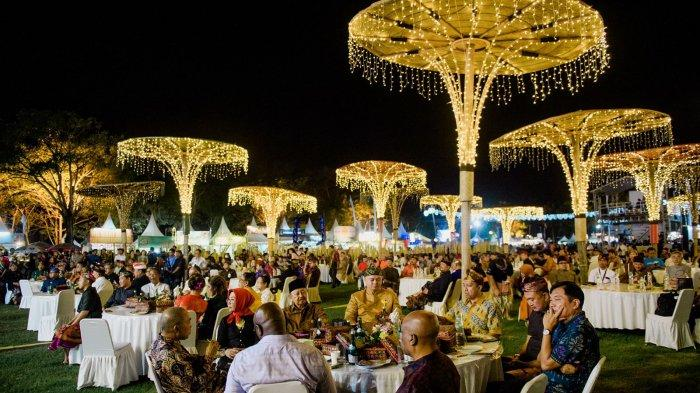
Its scale grew steadily. By 2017, the twelfth edition drew an estimated 100,000 visitors over five days and generated transactions worth roughly 45 billion rupiah, underlining how much a community festival can contribute to the local economy.
What can you expect? Sanfest typically centers on Matahari Terbit Beach, near the historic Grand Bali Beach area at the northern end of Sanur, and runs over several days. The program blends:
- Cultural performances and music, spanning jazz, blues, reggae, pop, Balinese pop, and traditional gamelan on beachfront stages.
- A food bazaar, showcasing Balinese and Indonesian cuisine alongside offerings from creative small businesses (UMKM).
- Water sports and beach activities, including traditional jukung boat races and fishing competitions.
- Environmental programs, such as beach clean-ups, coral planting, and turtle releases, reflect the festival’s strong sustainability ethos.
- Family-friendly fun, from kite-flying contests and body painting to beach games and mass yoga sessions.
One important planning note: although Sanfest was historically held in August to coincide with the kite season, its dates have shifted in recent years, with editions landing in October and November. If experiencing Sanfest is central to your trip, confirm the 2026 dates on the official channels before booking.
For further information
- Sanur Village Festival (Sanfest) — Event Information Location:
- Typically Matahari Terbit Beach, Sanur, Denpasar, Bali
- When (2026): Dates vary year to year — confirm before travel
- Entry: Free to attend (food, activities, and some attractions priced separately)
- Founded: 2006, by the Sanur Development Foundation (YPS)
- Attendance reference: ~100,000 visitors at the 2017 edition
- Official source: sanurvillagefestival.com / @sanurfestival
*Prices are for reference only and may change without notice. Please contact us directly for current rates.
The town’s own celebration, not an imported one
Sanfest stands apart from Sanur’s other festivals in being genuinely home-grown — the town’s own flagship community celebration rather than a broader Bali-wide event that happens to pass through.
That distinction matters for travelers seeking something more local and less touristic than the bigger island-wide festivals draw.
Indonesian Independence Day in Sanur (17 August)
Every 17 August, Indonesia marks the anniversary of its 1945 declaration of independence, and in 2026, the nation celebrates its 81st anniversary. While Bali’s observance is more low-key than Jakarta’s grand state parades, Sanur and its surrounding neighborhoods come alive with red-and-white flags strung across streets, homes, and businesses.
The most authentic celebrations happen at the level of the banjar, the local community hall, rather than in tourist zones. Expect flag-raising ceremonies and a rollicking series of traditional games: panjat pinang, where teams scramble up a greased pole to claim prizes at the top, and balap karung, the classic sack race. It is a national public holiday, so roads are busier than usual and some local businesses close for the day. For visitors, wandering into a neighborhood celebration offers a warm, genuinely communal glimpse of Indonesian life that the beach clubs cannot replicate.
Religious Ceremonies and Temple Festivals in Sanur
Beyond its named festivals, Sanur is one of the best places in Bali to witness sacred Hindu ceremonies, because its accessible beaches host some of the island’s largest ritual gatherings. These are not performances or tourist events but living acts of devotion, and observing them respectfully is a privilege. Our dedicated guide to Blanjong Temple traces this living devotion back to Bali’s oldest dated site.
Melasti: Purification on Sanur Beach
Melasti is among the most visually striking ceremonies in the Balinese-Hindu calendar. Held three to four days before Nyepi, it is a grand purification ritual in which entire villages process to the sea carrying their temples’ sacred objects, which are then cleansed in the ocean. The holy water collected is carried back to the village for the ceremonies that follow.
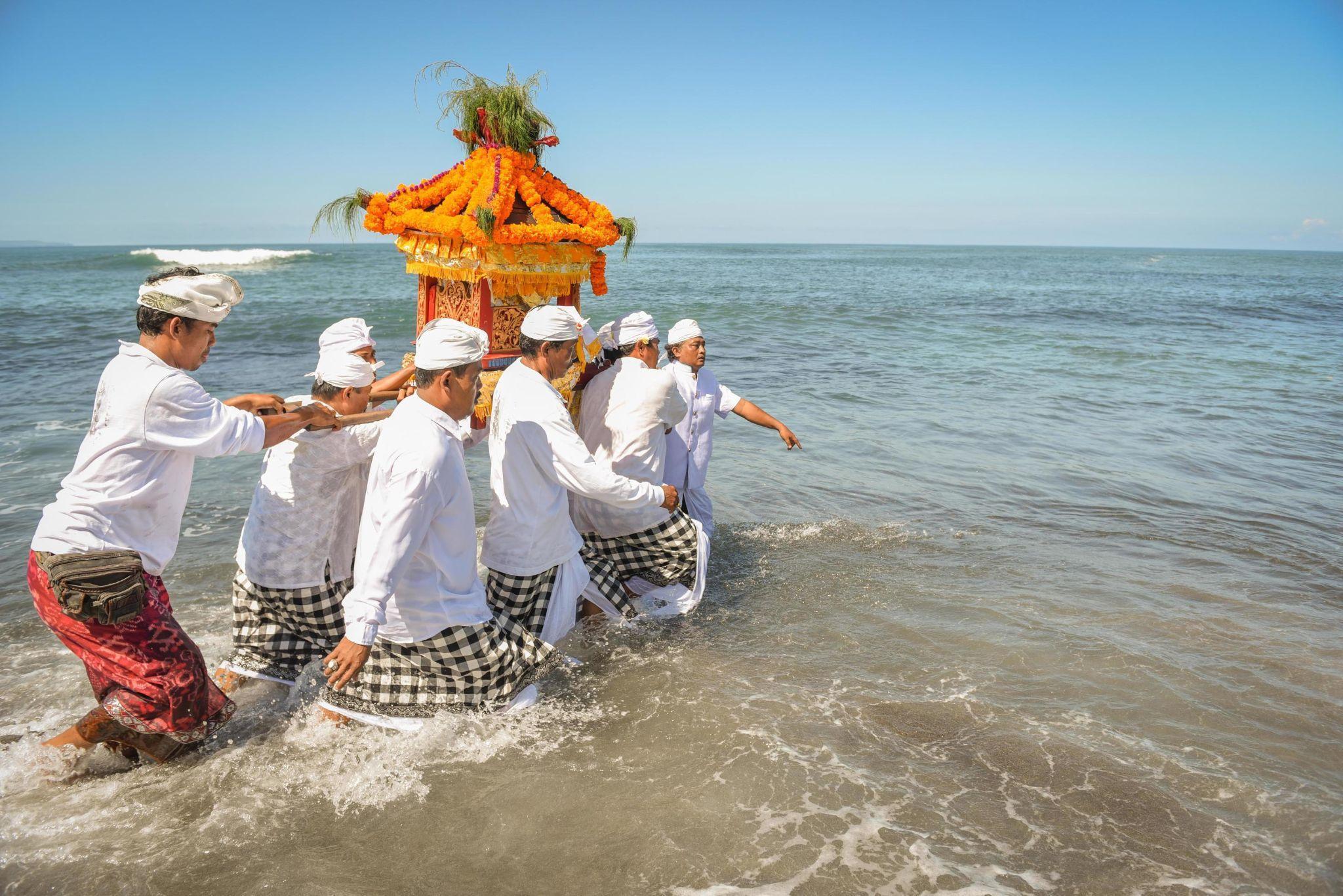
Sanur Beach is one of the very best places on the island to witness Melasti. Its wide, accessible shoreline receives large, organized processions from multiple villages throughout the day, with worshippers dressed in white and gold, gamelan music filling the air, and offerings of fruit and flowers carried to the water’s edge. In 2026, Melasti falls on Sunday, 16 March. Processions typically build throughout the late morning and afternoon, so arriving by mid-morning gives you time to find a respectful vantage point along the route.
For further information:
- Melasti Ceremony — Event Information Location: Sanur Beach (among Bali’s premier Melasti locations)
- When (2026): Sunday, 16 March (three days before Nyepi)
- Entry: Free to observe on the public beach
- Etiquette: Dress modestly with a sarong; stand to the side, never between the procession and the sea; ask before close-up photography of priests or sacred objects
Nyepi and the Ogoh-Ogoh Parade
Melasti is the opening act of a six-day sequence that culminates in Nyepi, the Balinese Day of Silence and the most extraordinary day on the island’s calendar. On the eve of Nyepi, villages stage the Ogoh-Ogoh parade, carrying enormous, intricately crafted demon effigies through the streets, accompanied by gamelan, torches, and chanting, before they are symbolically disposed of to drive away evil spirits. In Sanur, as across Denpasar, these parades are spectacular displays of months of community craftsmanship.
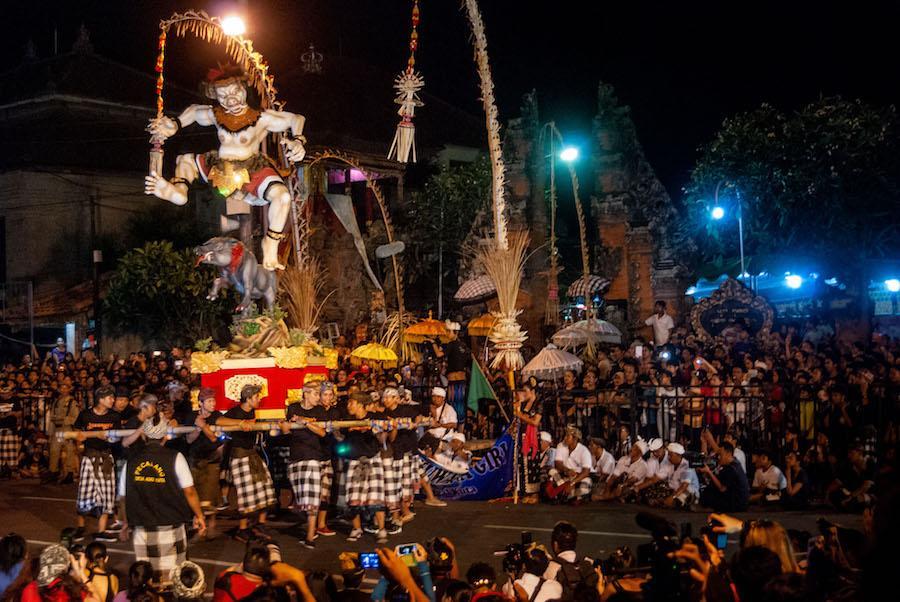
The following day, Nyepi itself, the entire island falls completely silent for 24 hours. No flights operate at Ngurah Rai Airport, streets empty, lights are kept low, and even tourists remain within their accommodation. In 2026, the Ogoh-Ogoh parade takes place on the evening of 18 March and Nyepi falls on Thursday, 19 March. If your stay overlaps with Nyepi, plan to spend the day at your hotel; many resorts, including those in Sanur, arrange in-house dining and quiet activities so guests can experience the stillness in comfort.
Galungan and Kuningan
Galungan celebrates the victory of dharma (good) over adharma (evil) and marks a ten-day period when ancestral spirits are believed to return to visit their families. Streets across Sanur are lined with penjor, the tall, gracefully arching bamboo poles decorated with palm leaves, flowers, and offerings, turning the whole town into an open-air gallery.
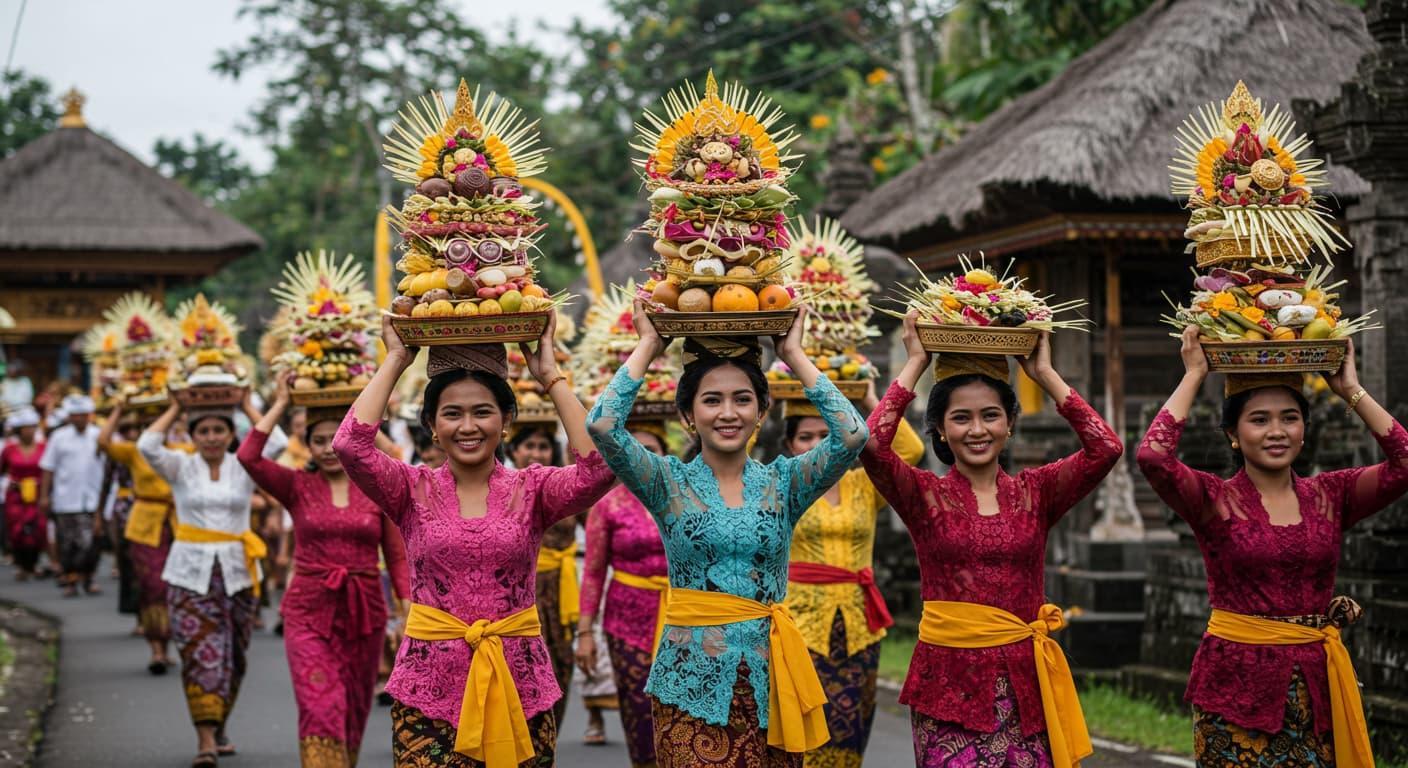
The period closes with Kuningan, a day of gratitude as the spirits return to the heavens. In 2026, Galungan falls on 17 June and Kuningan on 27 June. Because these dates follow the 210-day Pawukon cycle, they shift each year.
Odalan: Temple Anniversary Festivals
With more than 20,000 temples across Bali, an odalan, or temple anniversary festival, is almost always taking place somewhere. Each temple celebrates its consecration anniversary every 210 days, so the dates differ from temple to temple and cannot be predicted on a fixed annual calendar.
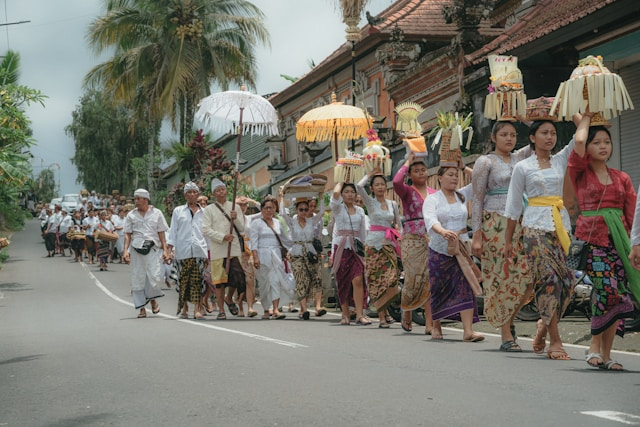
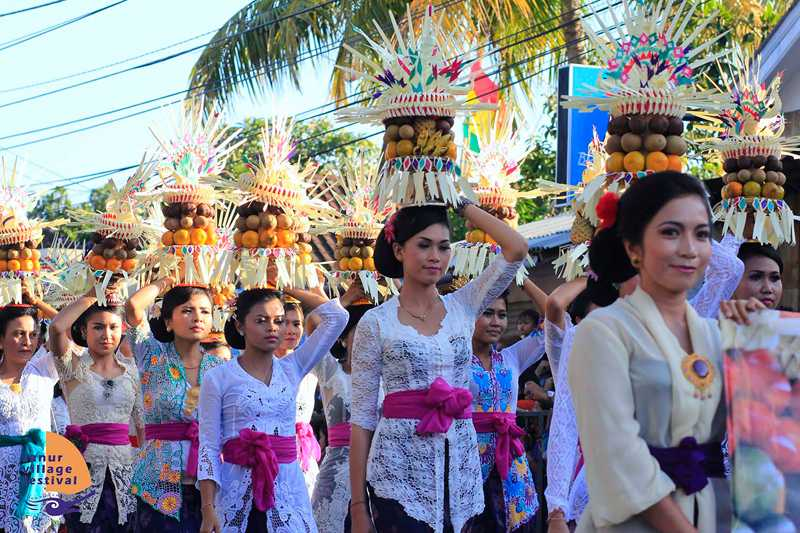
Sanur’s own temples, including the historic Pura Blanjong, hold their odalan with processions, offerings, gamelan, and ceremonial dance. Stumbling upon an odalan, with women carrying towering fruit offerings on their heads and the scent of incense in the air, is one of the most authentic cultural encounters a visitor can have. Ask your hotel whether any local temple festivals coincide with your stay.
Music and Contemporary Festivals in Sanur
Alongside its traditional calendar, Sanur hosts a growing roster of contemporary cultural events that draw on its relaxed, beachfront character.
Bali Rockin’ Blues Festival
The Bali Rockin’ Blues Festival brings live blues and rock to Sanur Beach, with local and visiting musicians performing in an easygoing seaside setting that suits the town perfectly. It is a relaxed, music-focused gathering rather than a mega-festival, and its dates vary year to year, so check current listings if it appeals.
As one of several Sanur festival 2026 dates worth building a trip around, the Rockin’ Blues Festival leans more low-key than the town’s larger cultural celebrations.
Film, Jazz, and Beyond
Sanur also features in the wider south-Bali cultural scene. The Balinale International Film Festival has historically staged pop-up screenings in venues around Denpasar and Sanur, while jazz lovers can pair a Sanur stay with the intimate Ubud Village Jazz Festival, typically held in early August, a short drive inland. These events round out a year in which there is nearly always something cultural happening within easy reach of Sanur.
Beyond the Sanur Village Festival 2026 itself, this wider cultural calendar is worth checking if you’re planning your trip around a specific event.
Sanur Festival Calendar 2026 at a Glance
| Festival / Ceremony | Type | 2026 timing | Location | Entry |
|---|---|---|---|---|
| Melasti | Religious (purification) | 16 March | Sanur Beach | Free |
| Ogoh-Ogoh Parade | Religious / cultural | Evening, 18 March | Denpasar & Sanur streets | Free |
| Nyepi (Day of Silence) | Religious | 19 March | Islandwide (observe indoors) | N/A |
| Galungan | Religious | 17 June | Sanur & islandwide | Free |
| Kuningan | Religious | 27 June | Sanur & islandwide | Free |
| Ubud Village Jazz Festival | Music | 7–8 August (nearby) | Near Ubud | Ticketed |
| Bali Kite Festival | Cultural | July–August | Padang Galak & Mertasari, Sanur | Free |
| Indonesian Independence Day | National | 17 August | Sanur & islandwide | Free |
| Sanur Village Festival (Sanfest) | Community / cultural | Dates vary — confirm | Matahari Terbit Beach, Sanur | Free |
| Odalan (temple anniversaries) | Religious | Every 210 days, varies by temple | Sanur temples incl. Pura Blanjong | Free |
| Bali Rockin’ Blues Festival | Music | Varies — confirm | Sanur Beach | Varies |
Religious dates follow the Balinese Saka and Pawukon calendars and shift each year; always reconfirm before travelling.
The Bali Kite Festival, held each July-August at Padang Galak and Mertasari, is just one entry in Sanur’s packed 2026 calendar, so it’s worth checking exact dates before you book.
Tips for Experiencing Festivals in Sanur Respectfully
Bali’s festivals are welcoming to visitors, but the sacred ones in particular call for awareness and courtesy. A few principles go a long way:
- Dress modestly at religious events. A sarong and sash over your clothes is appropriate for ceremonies and temple visits, and respectful for processions like Melasti.
- Keep to the edges. At processions, stand to the side of the route rather than in the middle, and never position yourself between worshippers and the sea.
- Photograph with care. Photos are generally fine from a respectful distance, but ask before taking close-ups of priests, sacred objects, or people in prayer, and never use flash near artworks or shrines.
- Never step over offerings. The small canang offerings placed on the ground are sacred; walk around them.
- Arrive early and travel light. For the kite festival and Melasti, mornings are best for both atmosphere and crowds; bring water, sun protection, and something to sit on.
- Plan around Nyepi. If your trip includes 19 March 2026, expect a full island shutdown and arrange to spend the day at your accommodation.
- Confirm dates in advance. Many festivals follow lunar or community calendars and are announced close to the event, so verify with official sources before booking around a specific celebration.
Where to Stay for Sanur’s Festival Season: The Meru Sanur
Choosing the right base transforms a festival trip, and few addresses place you closer to Sanur’s celebrations than The Meru Sanur. This all-suite beachfront resort by Meru Hotels sits directly on the white-sand Sanur shoreline within the 42-hectare Sanur Special Economic Zone, in the same historic northern stretch of beach that hosts the Sanur Village Festival and lies close to the kite-flying beaches and Melasti processions. When the town comes alive, you are already in the heart of it. For a fuller look at the neighborhood’s other options, see our guide to where to stay in Sanur.
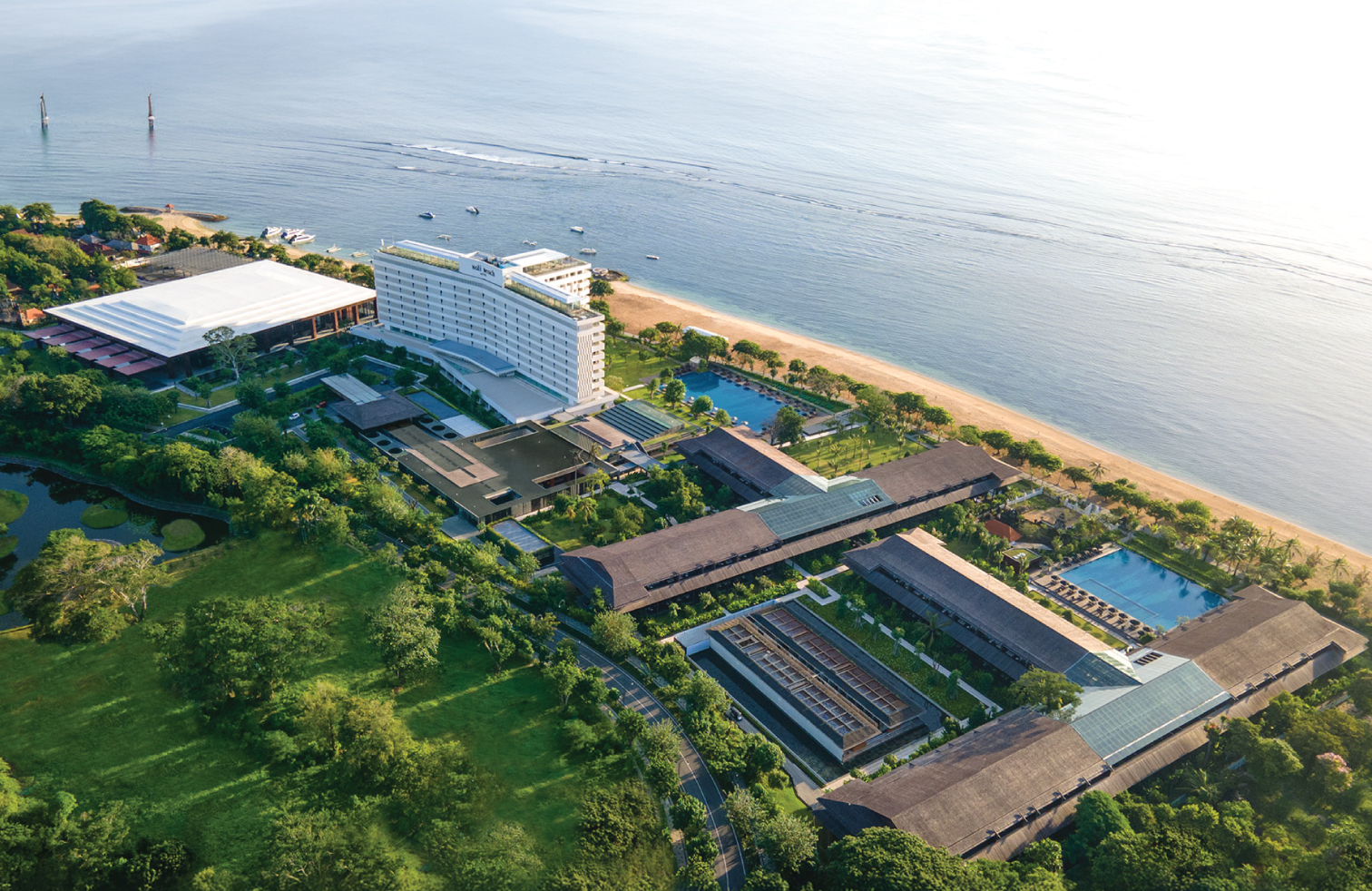
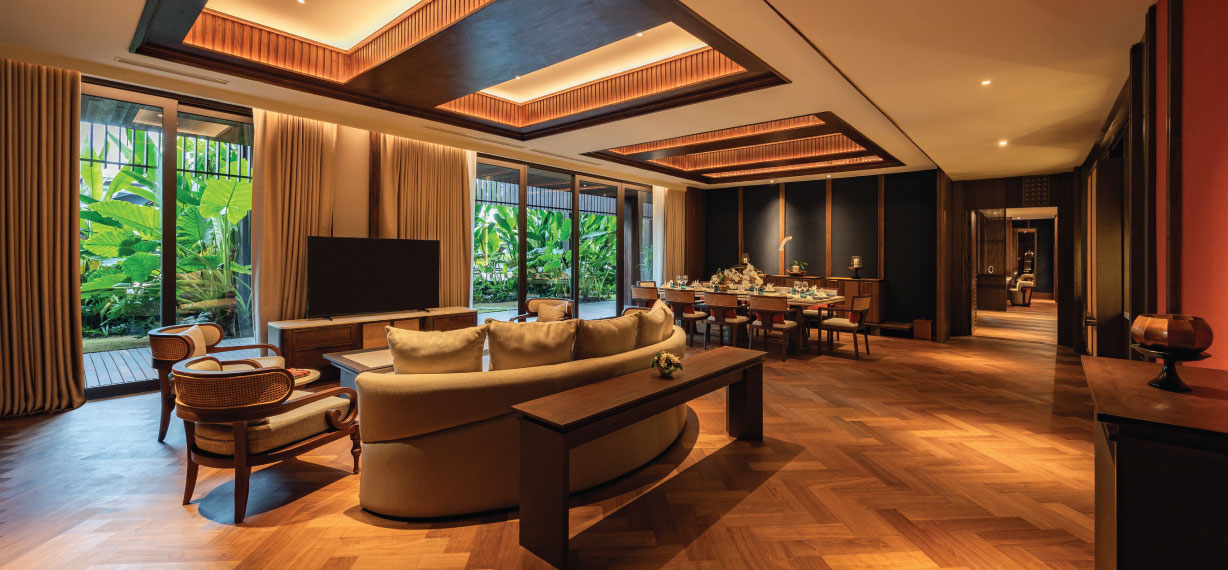
The Meru Sanur is designed as “a haven of wellbeing,” pairing tropical luxury with contemporary Balinese craftsmanship. Every accommodation is a suite, ranging from the generous 83 m² Tropical Suite up to the 209 m² Presidential Suite, each with a private balcony or terrace overlooking the gardens or the sea. That matters during festival season: after an early start at the kite festival or a dawn Melasti procession, having a serene, spacious retreat steps from the sand to return to is a genuine luxury.
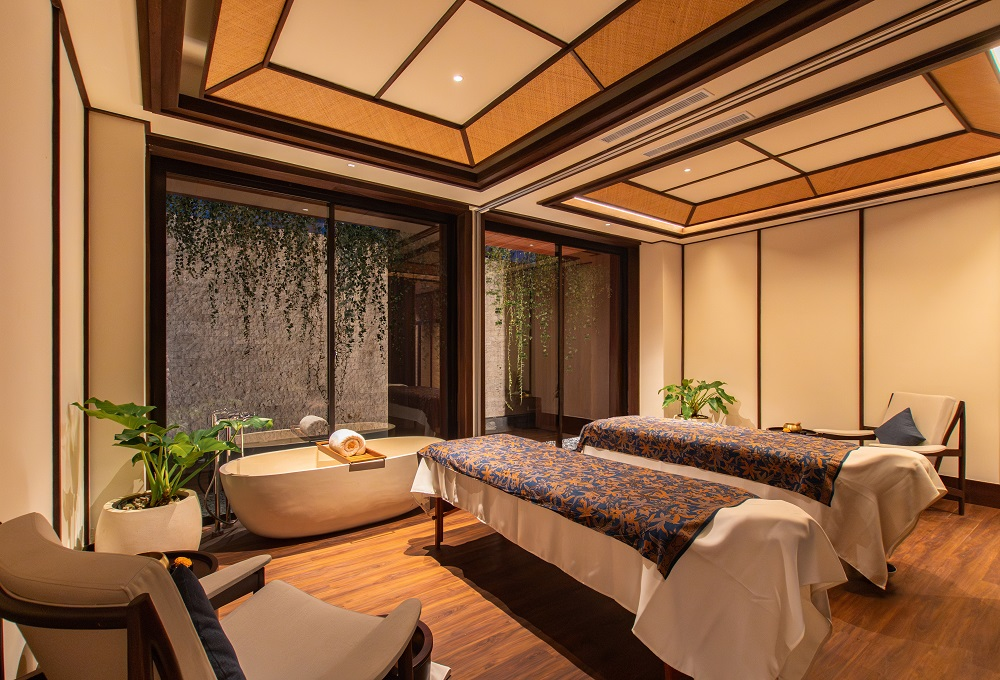
The resort’s wellness focus runs deep, built around a five-senses philosophy and anchored by the Taru Pramana Spa & Wellness. Dining spans Arunika for all-day local and international cuisine, Roso for Indonesian flavours from across the archipelago, the library-inspired Sutasoma Lounge for cocktails, and the beachfront Bali Beach Bar & Grill for fresh seafood at sunset.
As a member of Preferred Hotels & Resorts, The Meru Sanur also offers the reassurance of world-class standards. Crucially for travelers visiting during Nyepi, a full-service beachfront resort is the ideal place to experience the island’s Day of Silence in calm, comfortable surroundings, and the concierge can help you plan around the wider festival calendar.
If you are timing your visit around a festival, especially the July–August kite season, booking early is wise, as Sanur fills quickly during its busiest, most celebratory months.
Frequently Asked Questions
What is the most famous festival in Sanur, Bali?
The Bali Kite Festival (Denpasar Kite Festival) is Sanur’s signature event, held on Padang Galak and Mertasari beaches during the windy July-to-August dry season. It features giant traditional kites up to 10 meters long, competing teams from across Bali and internationally, and is free to attend.
When is the Sanur Village Festival in 2026?
The Sanur Village Festival (Sanfest) was historically held in August, but its dates have shifted in recent years, with editions falling in October and November. Confirm the 2026 dates via the official website (sanurfestival.com) or Instagram (@sanurfestival) before planning your trip around it.
Can tourists watch the Melasti ceremony in Sanur?
Yes. Melasti takes place on public beaches and is open to respectful observers. Sanur Beach is one of the best locations in Bali to witness it. Dress modestly with a sarong, stand to the side of the processions, and avoid positioning yourself between worshippers and the sea. In 2026, Melasti falls on 16 March.
What happens in Sanur during Nyepi?
During Nyepi, the Day of Silence, the entire island shuts down for 24 hours, including the airport, and everyone, tourists included, stays indoors. In 2026, Nyepi falls on 19 March, preceded by the Ogoh-Ogoh parade on the evening of 18 March. Resorts in Sanur typically arrange in-house dining so guests can observe the day comfortably.
Are festivals in Sanur free to attend?
Most are. The Bali Kite Festival, Melasti, Galungan, Kuningan, temple odalan, and Independence Day celebrations are all free to observe, though food, activities, and some grandstand or ticketed music events may carry a charge.
Is Sanur a good base for experiencing Balinese culture?
Very much so. As one of Bali’s oldest tourist villages, with the 913 AD Blanjong Pillar, an active community foundation, deep kite-flying traditions, and accessible beaches that host major ceremonies, Sanur offers a rich cultural calendar in a calm, family-friendly setting that is easier to navigate than Bali’s busier southern hubs.
Which months are best for festivals in Sanur?
July and August are the high point, combining the Bali Kite Festival, Independence Day, and (historically) the Sanur Village Festival. March is exceptional for sacred ceremonies, with Melasti and Nyepi, while June often brings Galungan and Kuningan. There is something cultural happening in or near Sanur in almost every month.
Read more: Sanur Bali in August: The Complete 2026 Guide to Weather, Festivals, and Things to Do
Final Thoughts
Festivals are where Sanur reveals its true character. Behind the calm beaches and sunrise walks is a community that has kept its traditions alive for centuries and built new celebrations to share them with the world. Watch giant kites ride the August winds, join the buzz of the Sanur Village Festival, stand quietly as white-robed processions carry their offerings to the sea at Melasti, and feel the whole island hold its breath on Nyepi. Plan around the calendar, observe with respect, and base yourself close to the action, and Sanur’s festivals will give you a side of Bali that most visitors never slow down enough to see.